 Historical Figure MBTI
Frederician Prussia
~1712 – 1786
Frederick the Great's Prussia — the flute-playing philosopher-king, the father who nearly broke him, and the court that made a kingdom a great power.
Frederick the Great played the flute, wrote French verse, corresponded with Voltaire — and turned Prussia into a military power that punched far above its size. As a boy he tried to flee his brutal father Frederick William I, who responded by having his son's closest friend Katte beheaded in front of him. The boy who survived that became one of the most effective and ruthless rulers of the age.
He was a paradox in a single body: an enlightened despot who wrote against tyranny and practiced it, a philosopher-king who invaded Silesia without warning, a man who wanted to be a poet and became a general. His sister Wilhelmine shared his miserable childhood and his love of music and left the memoirs that let us see behind the legend. Frederician Prussia is where the Enlightenment met raison d'état — and raison d'état usually won.
6 figures · sorted by birth year
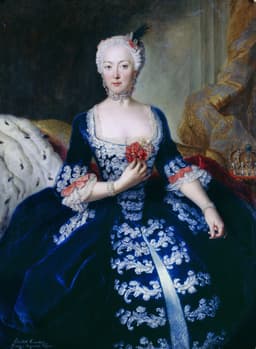
Elisabeth Christine of Brunswick-Bevern
notableISFJ
Frederick the Great's neglected ISFJ queen, who kept faith and quiet devotion through forty years he never returned
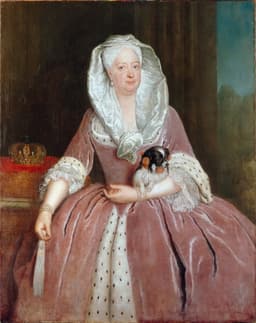
Sophia Dorothea of Hanover
notableENFJ
The cultured Hanoverian queen whose ENFJ warmth and grand dynastic schemes broke against her boorish Soldier King husband
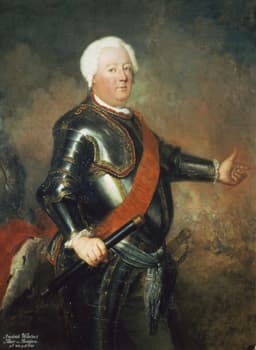
Frederick William I
notableESTJ
The architect of the Prussian state who forged an army, treasury, and bureaucracy by iron will — and beat and broke the son who would inherit it
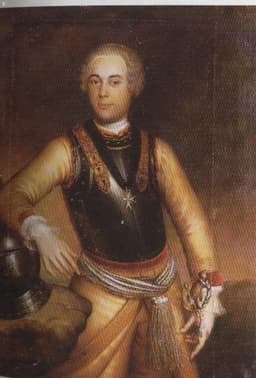
Hans Hermann von Katte
notableENFP
Cultured young officer and intimate friend of the future Frederick the Great, beheaded at Küstrin in 1730 — the ENFP whose devotion reforged a king
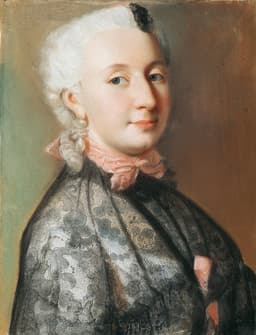
Wilhelmine of Bayreuth
notableINFP
Frederick the Great's beloved sister — a melancholic INFP whose guarded depth built Bayreuth's opera house and her candid Mémoires
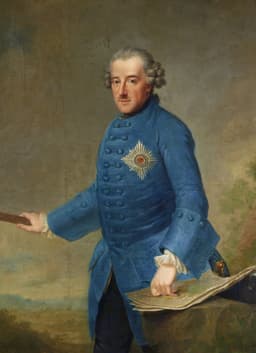
Frederick the Great
renownINTJ
King of Prussia, military genius, and reclusive philosopher-king of Sanssouci — the INTJ who ruled from an inner vision and fled the court he had to hold

Sign up for monthly insights
Monthly insights into history's most influential figures — examined through psychology, context, and cognitive pattern. Less stereotype, more structure. History, but with a mind map.
Powered by Buttondown