 Historical Figure MBTI
#334 · 3-30-26 · Frederician Prussia
Hans Hermann von Katte
Prussian Officer · Frederick's Friend · The Martyr of Küstrin
1704 — 1730
7 min read
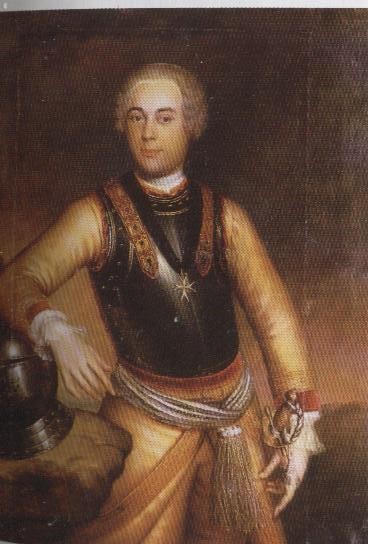
Portrait of Hans Hermann von Katte
The Friend Who Died for His Prince With a Thousand Joys
On the morning of 6 November 1730, in the courtyard of the fortress at Küstrin, a twenty-six-year-old Prussian lieutenant was led out to be beheaded. Hans Hermann von Katte had committed no crime the law judged worthy of death—the court-martial had recommended imprisonment—but the king overruled his own judges. The cruelty lay in the staging: at a window of the fortress, made to watch, stood the Crown Prince of Prussia, the future Frederick the Great, whose plan to flee his father's brutality Katte had shared. Frederick called out begging forgiveness. Katte answered there was nothing to forgive—that he died for his prince with a thousand joys. Then he knelt, and the boy at the window fainted before the sword fell.
Katte was not a soldier by temperament. He was a cultured officer of an old Brandenburg family—a reader of French books, a lover of music and philosophy. Into the suffocating court of Frederick William I—where military drill and Calvinist austerity crushed everything bookish or fine—Katte arrived as oxygen: witty, warm, unafraid, smuggling the prince the forbidden world of French verse and Enlightenment ideas. When their shared dream of escape curdled into an actual plot, he was swept along. The Soldier King, treating his heir's flight as desertion, took his revenge on the friend he could execute rather than the son he could not quite bring himself to kill.
Katte was the ENFP's Fi-devotion at its ultimate pitch—a young man who could tell his prince, across the courtyard where he was about to be killed, that there was nothing to forgive, that he died for him with a thousand joys, and mean every word of it.
The Door Into a Wider World
Ne — dominant
Dominant Ne is a restless delight in possibility, forever pointing past the wall to what lies beyond. This is precisely what Katte brought to the imprisoned inner life of the crown prince. He carried in the forbidden literature of the Enlightenment, the music the king mocked as effeminate, the philosophy that suggested the world might be ordered by reason rather than by the rod. Their friendship was conducted in the currency of shared enthusiasm—passed books, played duets, whispered plans—two people building a private world the king could not enter.
The escape plan itself was a characteristically Ne act—a leap toward imagined freedom that paid too little attention to the iron facts of the present. Katte knew it was dangerous, hesitated, and was swept along anyway. The flaw and the gift were the same: the mind that opened a frightened boy's horizons could not quite believe the horizon would end in a fortress courtyard and a sword.
A Thousand Joys
Fi — auxiliary
Auxiliary Fi supplied the loyalty that walked through Ne's open door and never looked back. Katte's attachment to the prince was not careerism—intimacy with a disgraced heir was a catastrophic bet—and it was not the deference an officer owes a royal. He held to it past every prudent point at which a more calculating man would have withdrawn. Under interrogation he might have damned the prince to save himself; instead he shielded him as far as he could.
And then came the scaffold. Frederick cried out for forgiveness; Katte answered there was nothing to forgive, that he died for his prince mit tausend Freuden—with a thousand joys. A man going to his death not bitter at the friend whose plan had killed him, but consoling that friend, taking the whole disaster onto himself. He died for one person, gladly, and made of that death a final gift to the prince his loyalty had not been able to save.
The Officer's Discipline, Half-Formed
Te — tertiary
Tertiary Te is the function of practical competence—the capacity to plan and make a scheme work in the hard world of consequences. In Katte it was the function his life never gave him time to develop. He had the trappings: commissioned officer, grandson of a field marshal, trained in the most disciplined army in Europe. But the discipline sat on him as a uniform rather than a temperament. A strong Te would have either executed the flight with cold operational care or refused it as too reckless; tertiary Te, harnessed to a Ne enchanted by the dream of freedom, did neither. Katte drifted in, hesitated, failed to extract himself, and left a trail of incriminating correspondence. What little Te he possessed surfaced only at the very end, in the steadiness with which he conducted himself through trial and execution.
No Time for Caution
Si — inferior
Inferior Si is the ENFP's blind spot—the function of memory, precedent, and caution. The Soldier King's reputation for merciless cruelty was no secret; the danger of conspiring with a disgraced heir was as concrete as a fortress wall. A personality with developed Si would have felt those facts as dread and drawn back. But Katte's Ne lit up the possibility of escape and his Fi bound him to the prince, and the sober sense of consequence was the faintest voice in him. He saw the open horizon. He did not, until far too late, see the sword.
The cruelest irony: the trait that doomed him was inseparable from the warmth that made him precious. The same loose hold on self-protective reality let him love without calculation and die without bitterness. A more cautious man would have saved himself and never been worth dying beside.
Why ENFP Over INFP
Why not INFP?
The inward, unbargaining loyalty that carried Katte to the scaffold can read as the dominant Fi of an INFP. But the INFP leads with feeling turned inward and meets the world warily. Katte was the opposite: outward, warm, the gregarious older friend who did the drawing-out. It was he who opened the prince's closed world, carried in the books and music and conspiratorial energy. The catalyst, not the recluse—dominant Ne with Fi in support, not dominant Fi behind an Ne that rarely ventures out.
In every account it is the lonely prince who is closed and inward, and Katte who is bright and outward. The INFP could have loved him as fiercely. Only the ENFP could have loved him that fiercely and been the one who first threw open the door.
Connected Figures
Further Reading
- Frederick the Great: King of Prussia — Tim BlanningThe most comprehensive modern biography; gives a full account of the 1730 escape attempt and Katte's execution.
- Frederick the Great: A Life in Deed and Letters — Giles MacDonoghTraces the Küstrin affair and its psychological aftermath in detail, drawing on primary sources.
- Memoirs of Wilhelmine, Margravine of Bayreuth — Wilhelmine of BayreuthThe essential primary source — Frederick's sister's firsthand account of the Katte disaster and the family atmosphere that produced it.
