 Historical Figure MBTI
#335 · 3-30-26 · Frederician Prussia
Frederick William I
The Soldier-King · Builder of the Prussian State · Frederick's Tyrant Father
1688 — 1740
5 min read
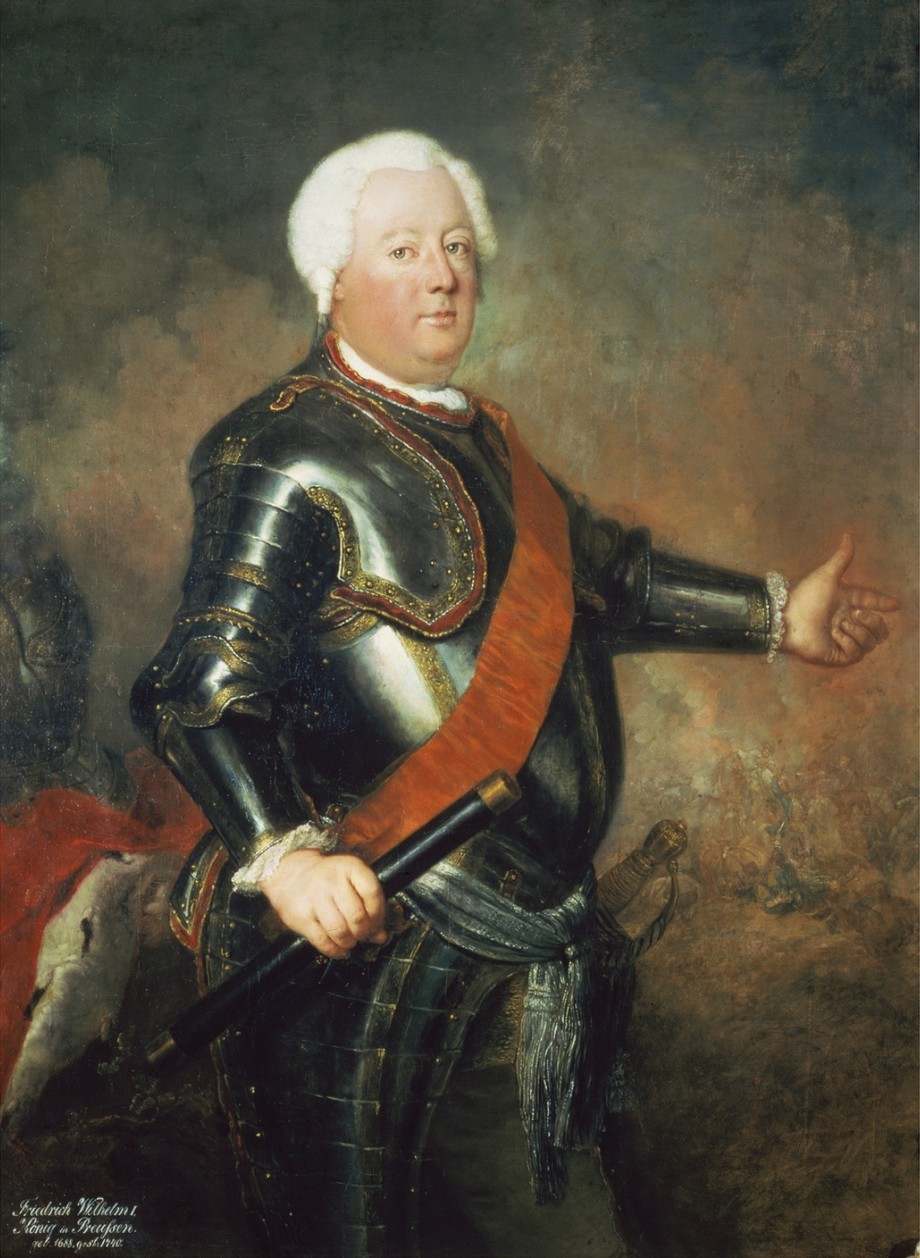
Portrait of Frederick William I
The Hard Machine Who Built a Kingdom and Nearly Destroyed His Heir
On the parade ground at Potsdam, a thickset king watched his prized Lange Kerls—a regiment of giants, some bought, some kidnapped for the crime of being tall. Frederick William I despised opera, philosophy, and French manners, but loved these enormous men with an almost childlike tenderness. The same hands beat his own heir in front of the court.
Coming to the throne in 1713, he slashed the court budget by three-quarters and poured every spare thaler into an army that grew from forty to over eighty thousand. He left his successor a full treasury and the fourth-largest army on the continent—the machine his more famous son would aim at the heart of Europe.
The mind that reduced a kingdom and a household alike to a regiment is the ESTJ at its hardest: concrete, proven, choleric, blind to anything that could not be drilled or commanded. He built an empire of order and was, inside his own house, a tyrant who nearly killed his heir for loving a flute.
Frederick William was the ESTJ turned tyrant—dominant Te that drilled an army and ran a family as interlocking machines of order, fused to an auxiliary Si that worshipped thrift and proven fact and distrusted everything new.
The Kingdom Run Like a Regiment
Te — dominant
Frederick William organized the state like a sergeant organizing a parade. The army is pure Te: built to over eighty thousand, but the number mattered less than the system—standardized drill, the iron ramrod, the canton recruitment scheme. He never fought a major war with it; the machine, perfected and held in reserve, was the point. He fused competing boards into a centralized directory in 1723 and treated the kingdom as one enterprise of which he was the hardest-driven official.
Te left nothing untouched—least of all his family. He drew up a timetable for his son's upbringing, forbade the flute and French books, and met every deviation with a commander's discipline. When the Crown Prince fled in 1730 with Hans Hermann von Katte, Frederick William overruled a court-martial and had Katte beheaded while forcing his son to watch from a window—love and disobedience alike collapsed into questions of order.
Thrift, Scripture, and the Distrust of Everything New
Si — auxiliary
In Frederick William Si shows as thrift—a miserliness he wore as a moral badge. He stripped the court of luxuries, kept the royal accounts by hand, and where his son would build the elegant Sanssouci, the father saw spending on beauty as substance squandered. The same instinct grounded him in faith: a rigorous Calvinist who read scripture as a manual of conduct, not a ground for speculation.
This explains his total blindness to his heir. The boy's love of music and ideas registered not as a different kind of value but as the absence of value—weakness, vanity, a betrayal of everything hard and Prussian. A flute was not beauty; it was softness.
The Suspicions of a Mind That Could Not Speculate
Ne — tertiary
Tertiary Ne in an ESTJ surfaces not as open possibility but as its shadow: dark, churning suspicion. A mind that cannot freely imagine generates alternatives anyway—it simply generates the worst ones. His Ne fed paranoid certainty that he was surrounded by waste and deceit.
Confronted with a boy who loved music and books, Frederick William could imagine only treachery. Once that hardened into conviction, he pursued the prince's 1730 flight with the machinery of a treason trial—an imagination he could not master, throwing up phantoms his Te then attacked with real force.
The Rage, and the Inner Lives He Could Not See
Fi — inferior
Inferior Fi is the ESTJ's blind spot and his volcano. Frederick William was ungovernably choleric—he struck servants with his cane, chased his children through the palace, screamed and kicked—eruptions of a powerful, primitive feeling-function with no inner channel. He could not perceive his son as a separate person: could not grasp that music was love, that humiliation might wound, that a child could be broken as well as disciplined.
He treated Sophia Dorothea of Hanover—a princess of refinement and dynastic ambition—as a domestic adversary. And yet inferior Fi is never wholly absent: it surfaced in the tenderness he showed his giant grenadiers, and in his deathbed reconciliation with the son he had nearly killed. He was not incapable of love—he was incapable of governing it.
Why ESTJ Over ISTJ
Why not ISTJ?
The thrift, the literal piety, and the reverence for tradition all tempt an ISTJ verdict. But Frederick William's organizing function pointed outward and commanded. He did not quietly uphold a structure; he seized the world and rebuilt it—forged an army, centralized a state, imposed his will on every person within reach. The ISTJ's lead function is the inward Si he expressed only second; the loud, choleric drive that defined him is dominant Te.
The ISTJ conserves from within; Frederick William imposed outward. His Si told him what to value—thrift, scripture, the tested and plain—but his Te always organized, commanded, and enforced. The ISTJ would have kept Prussia in good order. Frederick William tore it down and built the machine.
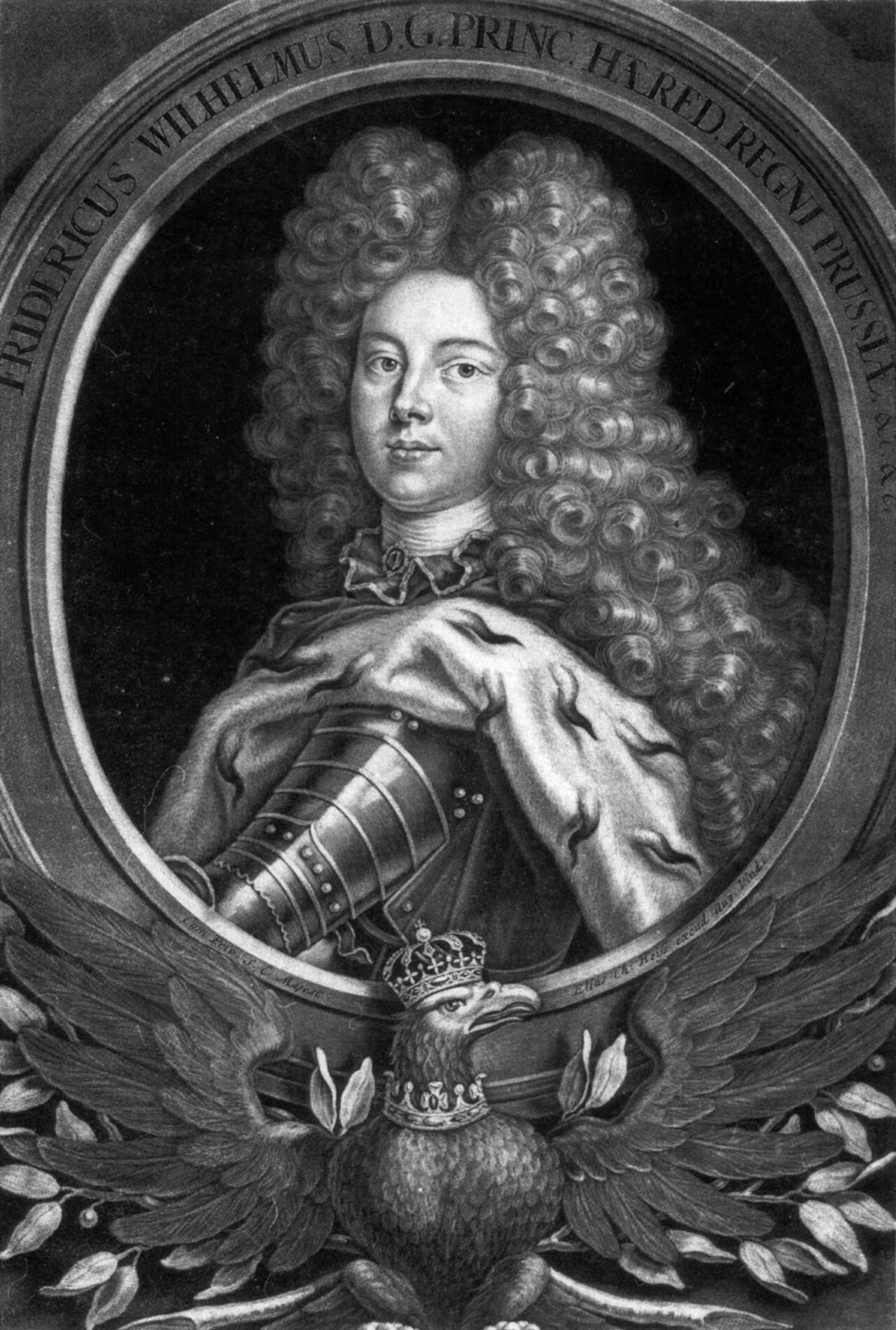
Connected Figures
Further Reading
- Frederick the Great: A Life in Deed and Letters — Giles MacDonoghTraces how Frederick's character was forged under — and in reaction to — his father's violent discipline.
- The Rise of Prussia, 1700–1830 — Philip G. Dwyer (ed.)Essay collection covering Frederick William I's army-building and administrative reforms as the true foundation of Prussian power.
- Frederick William I: Prussia's Soldier King — Robert AspreyThe most accessible English-language biography of Frederick William I — covers court life, the army, and the brutal relationship with his heir.
- The Soldier King — Edith SimonNarrative portrait of Frederick William I drawing on contemporary accounts and the memoirs of Wilhelmine of Bayreuth.
