 Historical Figure MBTI
#337 · 3-30-26 · Frederician Prussia
Elisabeth Christine of Brunswick-Bevern
Queen of Prussia · Frederick's Neglected Wife · The Faithful Forgotten
1715 — 1797
5 min read
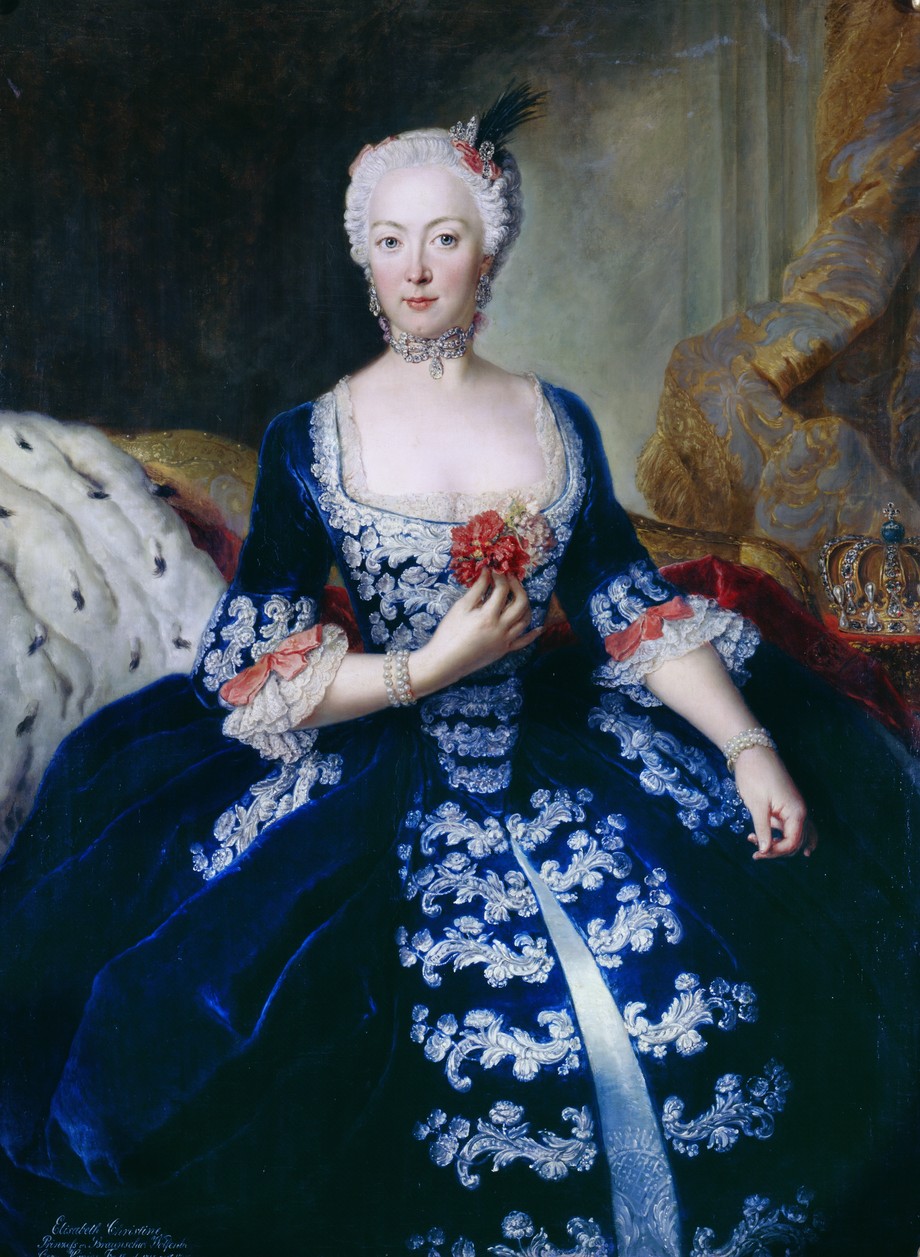
Portrait of Elisabeth Christine of Brunswick-Bevern
The Queen Who Was a Wife in Name Only
She was Queen of Prussia for forty-six years, and for most of them her husband would not cross the room to see her. Elisabeth Christine married the Crown Prince Frederick in 1733 because his father—the “Soldier King” Frederick William I— had chosen her and would brook no refusal. When Frederick became king he set her aside: installed her at Schönhausen, kept no shared court, fathered no children, and retreated to Sanssouci, where she was never invited to live.
What is remarkable is not the neglect but how she met it. She did not rage or scheme. She grew quietly devout—a serious Lutheran who read theology, translated edifying works, and gave much of her income to the poor—and went on loving the man who had abandoned her. When he greeted her after years apart by remarking only that Madame had grown stouter, she absorbed even that, and kept faith.
The shape of the life is the shape of the ISFJ: a steady, private, dutiful woman who built a constant inner world when the outer world gave her nothing to build on, and who practiced her loyalty where no one was meant to see. That, and not weakness, is what her quiet was made of.
The ISFJ in its most self-effacing form: a dominant Si that held a constant, religiously ordered life together through decades of neglect, fused to an Fe that went on tending a husband who never tended her in return.
The Constant Life
Si — dominant
Dominant introverted sensing builds a life out of continuity. Stripped of everything a queen was supposed to have, she did not improvise a new identity. She built a small, fixed world and lived inside it faithfully for half a century: the same devotions, the same charities, year upon unremarkable year.
Her piety was Si at its core—not a performance of sanctity but a private, ordered habit of the inner life. Faith for the dominant-Si type is a discipline. She kept it up through decades in which a less anchored person would have drifted into bitterness.
Si treats a vow as a vow. She dressed the part, defended Frederick's name, and carried the office through his long absences without complaint. The constancy that made her easy to overlook was the very thing that made her unbreakable.
Loving Where She Was Not Loved
Fe — auxiliary
Auxiliary extraverted feeling is the warmth the ISFJ turns outward. Elisabeth Christine's Fe was poured for forty years into a vessel that gave nothing back, and it is the central fact of her character that she poured it anyway—not because Frederick earned it, but because tending him was simply what a wife did.
She followed his wars with genuine anxiety, defended his reputation as if his coldness had never been, and sustained a marriage that existed only on her side of it. Her charity was the same impulse turned outward: she gave quietly to the poor, ran her court with a gentleness those around her loved, and asked no credit. The care was real; the audience was almost no one.
The Quiet Study
Ti — tertiary
Tertiary introverted thinking surfaced in Elisabeth Christine as a genuine, retiring intellectual life: she read widely in religious and moral literature, took up translation as serious work, and turned the long empty hours of a neglected queen into study. Hers was the scholarship of a quiet room, undertaken for faith, not reputation.
This inwardness cost her in the one arena that might have changed her fortunes. Frederick prized wit above almost anything; his table at Sanssouci ran on the performing cleverness of men like Voltaire. She had a real mind but no instinct to deploy it as spectacle, and a king who wanted to be amused simply did not see her.
No Gift for the Game
Ne — inferior
Inferior extraverted intuition is the ISFJ's most foreign country: possibility, maneuver, reinvention. Where an intuitive would have seen angles in Elisabeth Christine's situation—alliances to build, a public role to seize—she saw only the situation as fixed and to be borne. Her contemporary Catherine the Great, handed a far worse marriage, read every possibility and seized the Russian throne. Elisabeth Christine read no possibilities. She simply stayed, and prayed, and waited. A woman with a gift for the game would have played it; she could only keep faith.
Why ISFJ Over ESFJ
Why not ESFJ?
The ESFJ leads with extraverted feeling turned outward: it organizes the social world, draws energy from a visible role, and needs to be needed. Elisabeth Christine did none of that. Her devotion was retiring and undemanding; she built no faction and made no bid for a public life. That is auxiliary Fe in service of dominant Si—the self-effacing ISFJ—not the organizing energy of the ESFJ.
An ESFJ needs the bond to be mutual and would have found a husband's total indifference unbearable. Elisabeth Christine's loyalty was anchored in Si: a vow kept because it was a vow, a love sustained in private whether or not anyone returned it.
Connected Figures
Further Reading
- Frederick the Great: A Life in Deed and Letters — Giles MacDonoghThe fullest English biography of Frederick, covering his marriage and his treatment of Elisabeth Christine within the broader narrative of his reign.
- Frederick the Great: King of Prussia — David FraserA military and political biography with material on court life at Sanssouci and the domestic arrangements Frederick maintained away from his queen.
- Frederick the Great: A Military Life — Christopher DuffyFocuses on the campaigns Elisabeth Christine followed from a distance with genuine anxiety — useful for understanding the wars she experienced only through dispatches.
- The Bayreuth Memoirs — Wilhelmine of BayreuthFrederick's sister's candid memoir of court life under Frederick William I, including the arranged marriage that produced the unhappy union with Elisabeth Christine.
