 Historical Figure MBTI
#716 · 5-28-26 · The Aztec Empire
Ahuitzotl
Conqueror · Templo Mayor · The Widest Reach
c. 1452 — 1502
6 min read
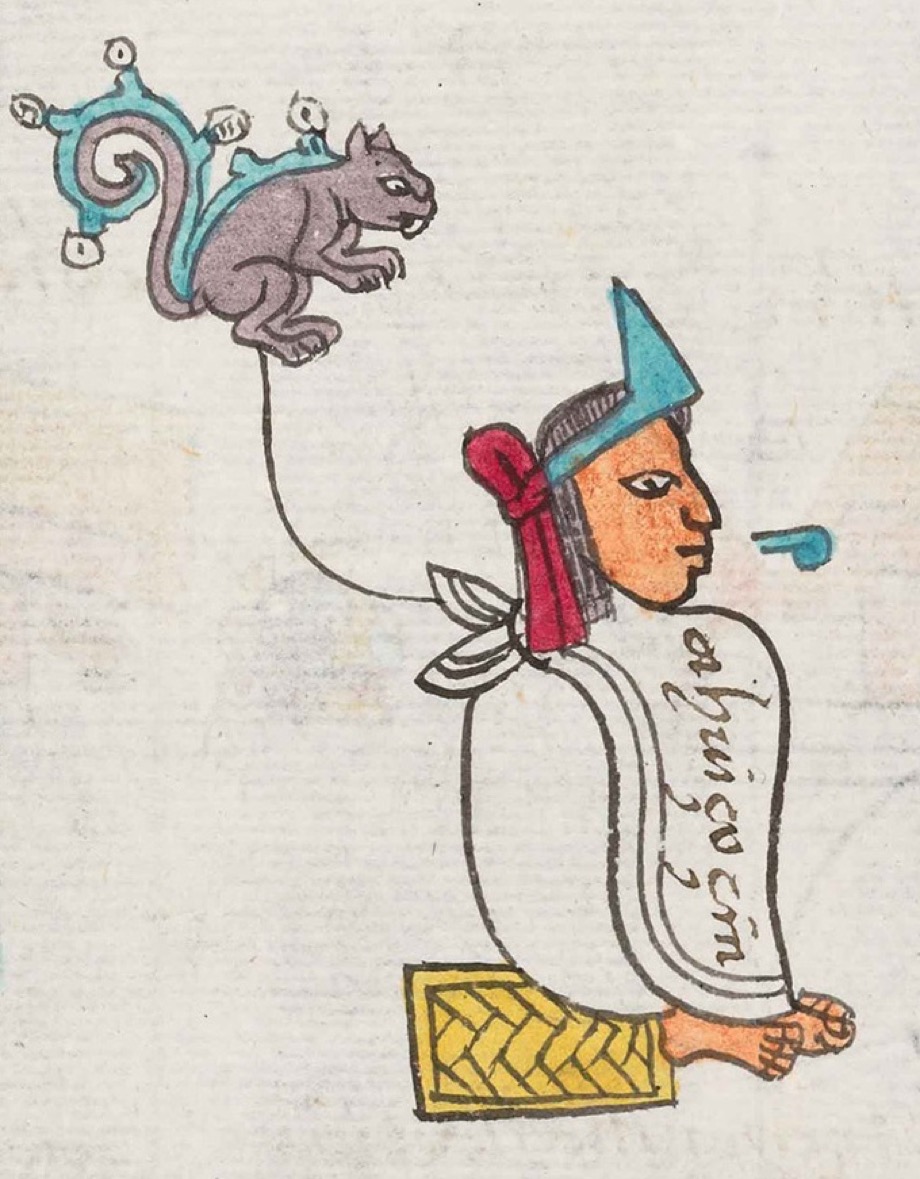
Ahuitzotl in the Codex Mendoza (folio 13r)
The Tlatoani Who Would Not Sit Still
Ahuitzotl inherited an empire from a brother, Tizoc, whose reign is remembered mainly for the campaigns he botched and the tribute he failed to collect. Ahuitzotl fixed that problem the way he fixed most problems: personally, immediately, at the head of an army. Within months of taking the mat of Tenochtitlan in 1486 he was in the field, and he stayed there for most of the next sixteen years, marching south through Oaxaca into the Isthmus of Tehuantepec and the Soconusco borderlands near Guatemala — territory no Mexica ruler before him had touched.
He was not a planner who dispatched generals and waited for couriers. He was the general. And when he wasn't campaigning, he was building spectacle: the 1487 rededication of the rebuilt Great Temple, four days of sacrifice on a scale later chroniclers strained to describe, announced to every subject king and rival in attendance exactly what kind of empire this now was. It is the same instinct — act first, worry about consequences later — that killed him. Late in his reign he ordered a new aqueduct built from the spring at Coyoacán, overruling advisors who warned the flow would overwhelm the city's causeways. It did. Ahuitzotl, by tradition, struck his head fleeing the flood, dying of the wound in 1502.
That is a life almost too neatly ESTP to be believed: a dominant-sensing conqueror who trusted his hands over any advisor's caution, backed by a blunt, engineering-minded Ti — and undone, in the end, by exactly that combination.
Ahuitzotl did not rule from Tenochtitlan so much as he kept leaving it — an ESTP tlatoani whose dominant Se needed the battlefield the way other rulers needed the throne room.
The Empire He Walked Across Himself
Nothing about Ahuitzotl's reign happened at a remove. His predecessors had certainly fought wars, but Ahuitzotl fought one nearly every year of his rule, marching with the army rather than sending it. The southern campaigns that carried the Mexica flag past Oaxaca and into the Soconusco — territory no earlier tlatoani had ever taxed — were the product of a ruler who wanted to be there when the fighting happened, who measured success in captives taken, not treaties negotiated.
The 1487 dedication of the rebuilt Great Temple is the same instinct turned toward theater instead of war. Four days of sacrifice, envoys from rival states seated in the plaza to watch, the entire spectacle engineered for maximum, immediate, sensory impact — this was not a ruler who trusted rumor to do his political work. He wanted witnesses. Se doesn't plan for how history will remember an act; it makes sure everyone in the room understands the act the moment it happens.
That same hunger for direct, physical intervention is what killed him. Told the new aqueduct might flood the city, Ahuitzotl did not commission a study — he ordered the water diverted and went to see what happened. What happened was a flood, and a fatal blow to the head sustained, by every account, because Ahuitzotl was physically present in the crisis he had caused, as he had been present for every crisis and triumph of his reign.
An Aqueduct, Ordered Over Every Objection
Ahuitzotl's Ti shows up not as philosophy but as engineering — solving problems by rearranging the physical world rather than by managing the people in it. Tenochtitlan's brackish lake water was a real logistical problem, and his answer was characteristically direct: build a new aqueduct, tap the fresh spring at Coyoacán, run it into the capital. It is the kind of solution a dominant-sensing, auxiliary-thinking mind reaches for instinctively — a mechanical fix evaluated on whether it works, not on whose feelings it manages.
The trouble is that Ti unsupported by outward-facing judgment is a blunt instrument. Advisors reportedly warned that the volume of water the new channel would carry could overwhelm the causeways during the rainy season — a structural objection, not a superstitious one. Ahuitzotl weighed it the way he weighed most counsel he didn't personally generate: as noise. His logic was internally consistent — the city needed water, the spring had water, connect the two — and internally consistent was, for Ahuitzotl, sufficient. It wasn't.
The same terse, self-contained problem-solving shows up in how he ran campaigns: little patience for prolonged siege or diplomatic maneuvering, a preference for fast, decisive engagements that settled the question of who controlled a given province without requiring further thought. Ti gave Ahuitzotl conviction. It rarely gave him pause.
Terror as a Tributary System
Ahuitzotl's tertiary Fe wasn't warmth — it was an acute, instrumental sense of audience. The Great Temple dedication only makes sense as extraverted feeling turned political leverage: rival lords weren't invited by accident. They were invited so the sight of mass sacrifice would travel home with them as a message about the cost of rebellion. Ahuitzotl understood that an empire this large held together as much through the emotional weather he could generate in a plaza as through garrisons he couldn't afford to station everywhere.
He used the same instinct to bind conquered elites into the tribute system rather than simply exterminating them — marriages and ceremonial honors for compliant nobility, alongside the far more visible threat facing those who weren't. It is Fe in service of Se and Ti: not a wish to be liked, but a working knowledge of how to make an audience feel exactly what the moment required.
Why ESTP Over ISTP
Why not ISTP?
An ISTP with the same appetite for hands-on problem-solving would have built the aqueduct quietly, for its own sake, with no particular need for the empire to watch him do it. Ahuitzotl needed the audience — the temple dedication staged for foreign witnesses, the campaigns fought at the front rather than directed from a distance. That craving for external, immediate impact is extraverted, not introverted, sensing. ISTP tinkers in a workshop; ESTP conquers in a plaza.
The distinction matters because it explains the flood, too. An introverted-sensing type methodically weighs a warning before acting on it; Ahuitzotl brushed past his advisors and ordered the water diverted because the idea was already, in his mind, as good as done. That is Se-Ti in its purest, most reckless form — a ruler who trusted what he could see and build over anything he was merely told, right up until the moment it drowned him.
Connected Figures
Further Reading
- Aztec Warfare: Imperial Expansion and Political Control — Ross HassigThe standard account of how Mexica campaigns like Ahuitzotl's southern conquests actually worked.
- The Aztecs — Michael E. SmithA broad, source-grounded survey of Mexica society, economy, and imperial politics.
- The History of the Indies of New Spain — Fray Diego DuránA 16th-century chronicle drawing on Indigenous sources, including the Templo Mayor dedication and Ahuitzotl's death.
- The Aztecs — Richard TownsendA concise, well-illustrated history of Mexica civilization and its rulers.
