 Historical Figure MBTI
#715 · 5-28-26 · The Aztec Empire
Nezahualcóyotl
Poet-King · Lawgiver · Builder of Texcoco
1402 — 1472
9 min read
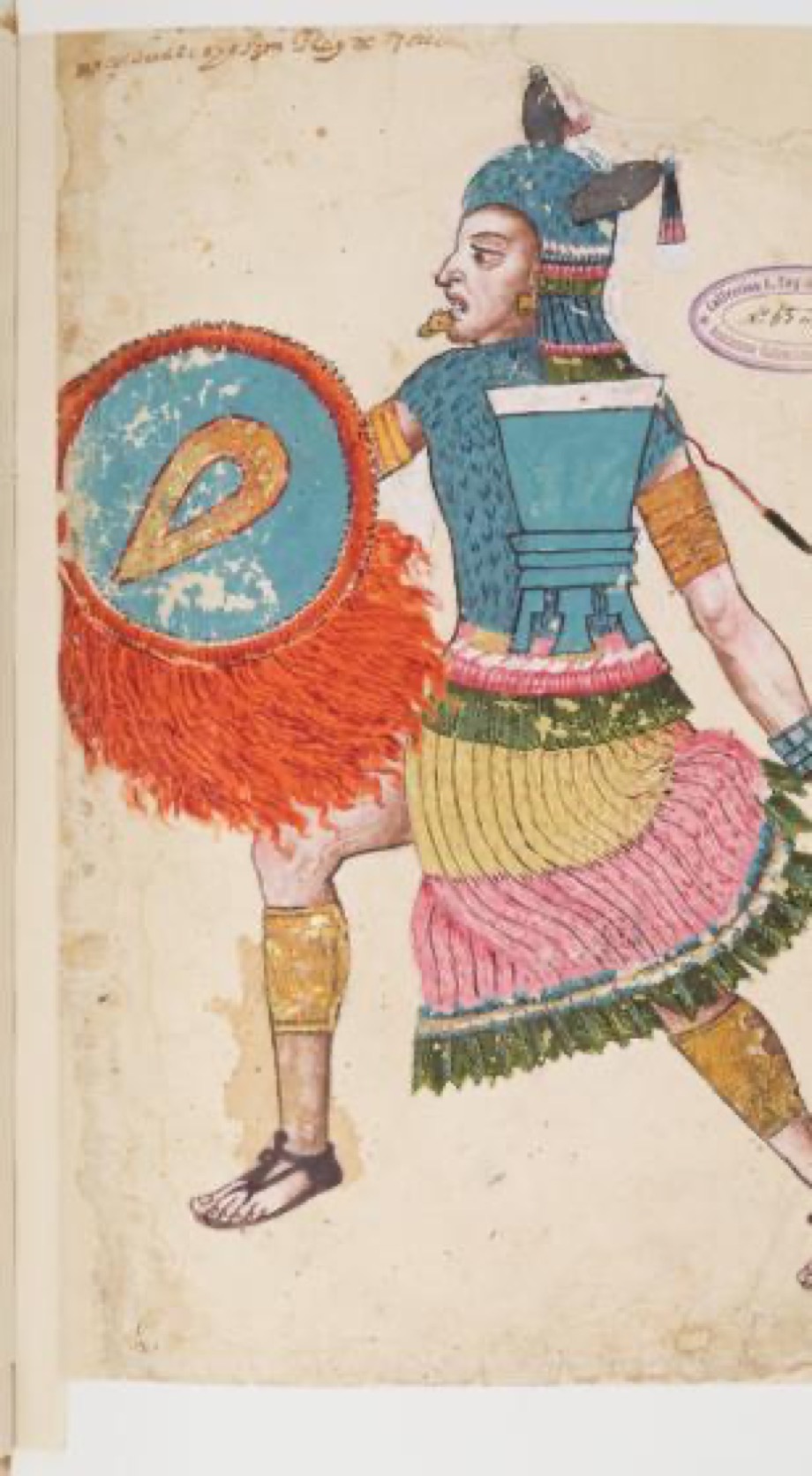
Nezahualcóyotl in the Codex Ixtlilxochitl
The Hunted Boy Who Designed a Kingdom
He was fifteen or sixteen when he watched his father die. Ixtlilxochitl I, lord of Texcoco, had refused to bend to Tezozomoc of Azcapotzalco, and the Tepanec answer came the way such answers always came — a war of extermination, a flight into the hills, and finally a stand in a ravine where the old king turned to fight so that his son could keep running. The boy hid in a tree and watched. Then he ran for ten years.
Most men who survive that become one of two things: a wolf, or a ghost. Nezahualcóyotl — the name means something like Fasting Coyote, the coyote who goes hungry — became neither. He became an engineer of order. When he finally came back, allied with Itzcoatl of Tenochtitlan and the Tepanec splinter-lords of Tlacopan, and Azcapotzalco fell in 1428, he did not spend the next forty years avenging himself on the world. He spent them building a dike across a lake, writing eighty laws, laying aqueducts through stone, and composing poems about a god nobody could see.
That combination — the decade-long private vision held through exile, then discharged outward into institutions rather than inward into grievance — is the whole psychological signature. Texcoco under him became the intellectual and juridical capital of the Triple Alliance while Tenochtitlan took the military and priestly role. He was not the strongest of the three kings. He was the one who decided what the arrangement would mean.
Nezahualcóyotl is the archive's clearest pre-Columbian INFJ — a dominant Ni that spent ten years of exile refining a single image of just and lasting order, then forty years pouring it into law, water, and verse.
The Kingdom He Carried While He Had None
The exile years — roughly 1418 to 1428 — are the load-bearing decade. Tepanec patrols hunted him with a price on his head; he moved among sympathetic lords in Huexotzinco and Tlaxcala, slept in caves and cornfields, and by every chronicle account was hidden more than once by commoners who could have sold him. A man oriented to the present would have taken one of the several offers of comfortable obscurity available to him. Nezahualcóyotl instead spent the decade doing what dominant Ni does with deprivation: converting it into a single fixed image of the future and refusing every partial version of it.
What makes it Ni rather than mere stubbornness is what he did with the victory. In 1428 he had the thing exiles dream about — the man who killed his father, deposed and dead, and an army at his back. The obvious move was restoration: take Texcoco, punish Azcapotzalco, rule as his father had. He did something structurally stranger. He accepted a three-way settlement in which Tenochtitlan held the sword and Texcoco held the law, and then spent four decades making the second half of that bargain real enough that nobody could revise it. He was designing the shape of a civilization's memory, not the borders of a reign.
The poems attributed to him say the same thing in the other register. They circle one idea obsessively — that jade shatters, that quetzal plumes tear, that nothing on earth endures — and reach past the crowded Nahua pantheon toward Tloque Nahuaque, the Lord of the Near and the Nigh, an unseen and imageless giver of life. He is said to have raised a tower to that god with no idol in it. Whether or not every line survives in his own words, the intellectual gesture is Ni to the root: distrust of the manifest surface, and a conviction that behind the visible multiplicity there is one thing that is actually the case.
Water, Law, and the Patronage of Everyone Cleverer Than You
The dike is the argument. Lake Texcoco was brackish; the western springs and the southern lakes were fresh; every flood pushed salt into the chinampa beds that fed the valley's cities. Nezahualcóyotl designed and, with Mexica labor, built a causeway-dike some ten miles long that split the lake in two and held the sweet water on the Tenochtitlan side. It was an enormous public work whose main beneficiary was his ally's capital, not his own. He did the same at home in a different key — the aqueduct that carried water down from Mount Tetzcotzinco into terraced gardens, baths cut into living rock, hillsides engineered into agriculture.
Then the code. Eighty laws, arranged by jurisdiction, with a tiered court system and appellate review above it — theft, drunkenness, adultery, treason, judicial corruption, each with its penalty attached and many of those penalties lethal. Auxiliary Fe is not softness; it is the conviction that a shared standard, applied visibly and without exception, is what holds a people together. He is supposed to have had one of his own sons executed under it. The story may be a chronicler's moral flourish, but it is the story his own descendants chose to tell about him, which tells you what he was understood to be.
And he built an audience for the thing he actually loved. Texcoco under Nezahualcóyotl became the place poets, historians, astronomers, and legal scholars went; he convened song-contests, kept archives, drew the valley's intellectual life into his court and gave it a room. Fe turns private meaning into a public institution. He did not simply write verse — he made a state in which writing verse was a form of high office.
The God With No Face
Tertiary Ti in an INFJ shows up as the private auditing of received systems — a quiet, sustained checking of whether the official account is internally coherent. Nezahualcóyotl ran that audit on the state religion of his own alliance, and failed it. His verse is not devotional toward the gods of the pantheon; it asks where they go, whether the dead can hear, whether anything said or built lasts. Against a Mexica theology being deliberately systematized in these same decades to justify conquest and mass sacrifice, that is not mysticism. It is dissent conducted in the only medium available.
The same faculty is visible in the legal code, which is Ti made administrative: offenses classified, jurisdictions separated, courts stacked so that a judgment can be reviewed rather than merely obeyed. Nothing in Nahua statecraft required that degree of structural tidiness. He wanted the system to hold together when examined, and built the mechanism for examining it.
Jade Shatters, Quetzal Plumes Tear
The inferior function is where a type is both most vulnerable and most beautiful, and with Nezahualcóyotl you can hear it. The physical world arrives in his poetry at maximum saturation — flowers, gold, feathers, jade, the smoke of copal, the painted book — and always at the moment of its destruction. He cannot simply enjoy a thing; he sees it and immediately sees it ending. That is inferior Se: the sensory present felt with overwhelming intensity precisely because it is experienced as already lost.
It has a shadow side too. He is said to have taken the wife of a subordinate lord, Cuacuauhtzin, by sending the man to die in a Tlaxcalan war — the Nahua David and Bathsheba, and one of the few episodes in which the lawgiver visibly breaks his own law. Inferior Se in a man of forty years' discipline surfaces exactly like that: rarely, hungrily, and in flat contradiction to everything he has otherwise built. That the affair produced Nezahualpilli, the son who succeeded him and carried the Texcocan tradition another forty years, is the kind of irony he would have written a poem about.
Why INFJ Over INFP
Why not INFP?
The melancholy poet-king is the archetypal INFP reading, and it collapses on contact with what he actually did with his life. Dominant Fi organizes a life around fidelity to an inner value, and its characteristic output is self-expression and principled withdrawal — the poems would be the point, and the kingship the burden. Nezahualcóyotl inverts that: the poetry is real but peripheral, and the load-bearing work is a lake dike, an eighty-law code, a court system with appeals, and a forty-year alliance he engineered and then maintained. Even his verse faces outward — performed at court, aimed at posterity and at how a people should understand its own impermanence, never at the private clarification of his own feelings.
The exile settles it as well. An Fi-dominant hunted for a decade tends toward exactly what he did not do — a life lived at an angle to power, integrity preserved by refusing the compromised throne. Nezahualcóyotl allied with the Mexica, whose imperial religion he privately could not accept, and stayed allied with them for forty years because the alliance was the only vehicle for the order he had envisioned. That is Ni choosing the instrument and Fe operating it, with Ti keeping a private ledger of the cost. He is not a man who sang because the world disappointed him. He is a man who built because he had seen what it should be, and sang about the fact that even that would not last.
Connected Figures
Further Reading
- Obras Históricas (Historia de la nación chichimeca) — Fernando de Alva IxtlilxochitlThe indispensable and thoroughly partisan source — a direct descendant writing in Spanish a century later, who gave us the exile narrative, the eighty laws, and the tower without an idol.
- Fifteen Poets of the Aztec World — Miguel León-PortillaThe standard introduction to Nahua poetry in English, with Nezahualcóyotl as its central figure and the fullest case for reading him as a genuine philosopher.
- The Allure of Nezahualcoyotl: Pre-Hispanic History, Religion, and Nahua Poetics — Jongsoo LeeThe necessary corrective — argues that the monotheist philosopher-king is substantially a colonial and nationalist construction. Read it against León-Portilla.
- Cantares Mexicanos: Songs of the Aztecs — John Bierhorst (trans.)The manuscript itself in translation, where the poems attributed to him actually live — and where the attribution problems become visible.
- The Aztecs — Michael E. SmithArchaeological grounding for the hydraulic works, the Tetzcotzinco terraces, and how Texcoco's role in the Alliance looks in the material record rather than the chronicles.
