 Historical Figure MBTI
#713 · 5-28-26 · The Aztec Empire
Itzcoatl
Founder · Alliance-Builder · The Man Who Burned the Histories
c. 1380 — 1440
7 min read
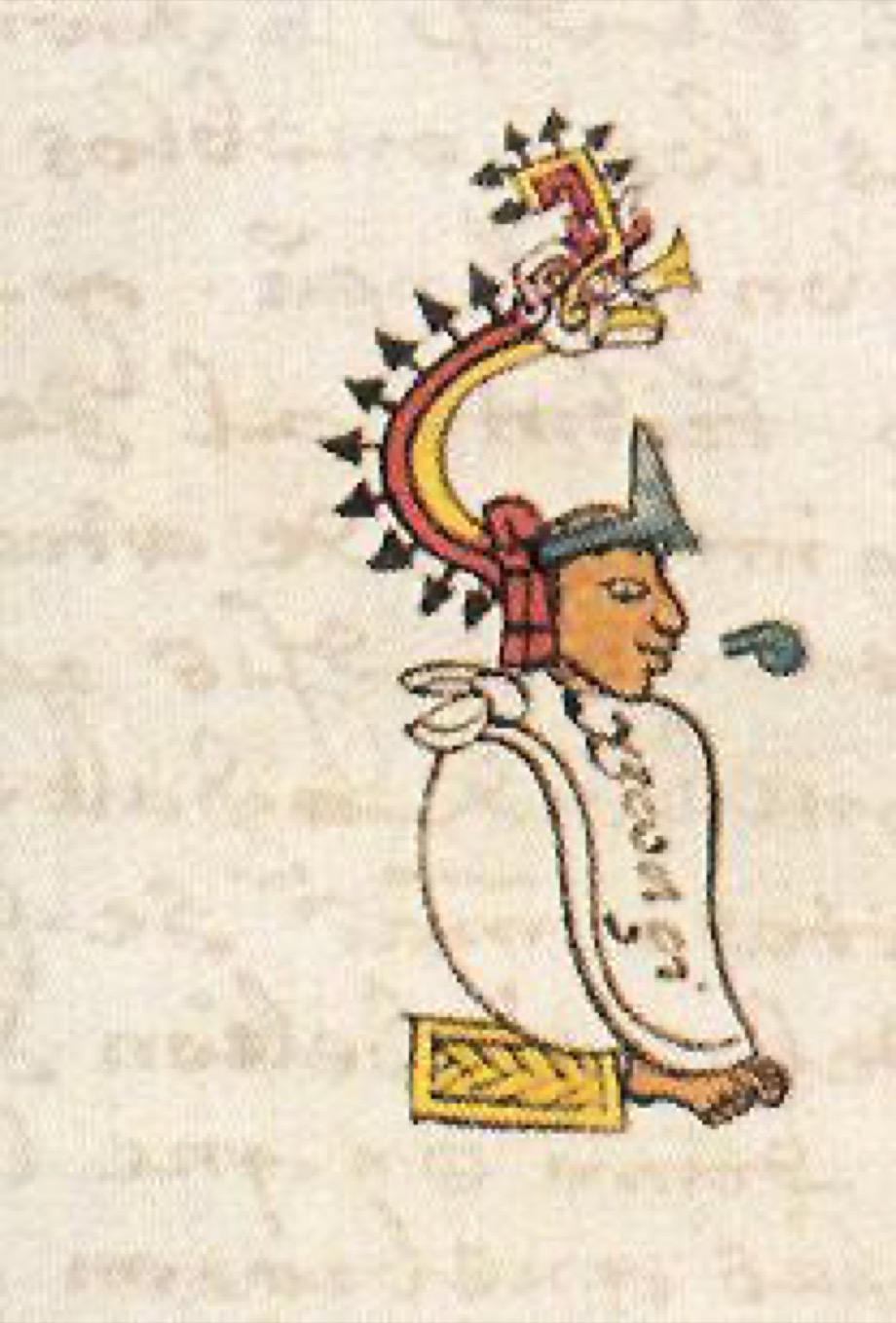
Itzcoatl in the Codex Mendoza (folio 5v)
The Tribute-Payer Who Rewrote the Books
For most of his early life, Itzcoatl was proof that Tenochtitlan did not matter. He was born to Acamapichtli, the city's first tlatoani, by a slave woman from the marketplace at Azcapotzalco — a lineage that marked him, in the eyes of the Mexica nobility, as capable but never quite legitimate. It mattered less than it might have, because Tenochtitlan itself was not yet a power. The island city paid tribute to the Tepanecs of Azcapotzalco, fought their wars as a subject people, and took orders from a ruler, Maxtla, who treated the Mexica as useful muscle and nothing more. Itzcoatl came to the throne in 1427 inheriting that arrangement, and within a year he had ended it.
He did it by building something new rather than by simply winning a battle. Working with Nezahualcoyotl, the exiled prince of Texcoco whose father Maxtla had murdered, and with the lord of Tlacopan, Itzcoatl assembled the Triple Alliance — a formal three-city compact that crushed Azcapotzalco in 1428 and replaced a single overlord with a shared imperial project the Mexica would come to dominate. Then he did something stranger still. According to the accounts that survive, he ordered the old pictorial histories burned, the codices that recorded Tenochtitlan's decades as a tributary client, and had them replaced with a new official history in which the Mexica had always been a chosen people marching toward dominion. He did not just win independence. He edited the record so that dependence had never happened.
Both acts came from the same place: a conviction that institutions, not individuals, are what last, and that a ruler's job is to build the structure the future will stand on — even if that means burning the one the past left behind.
Itzcoatl was an ENTJ, and everything he is remembered for is dominant Te in action — not conquest for its own sake, but the deliberate construction of durable structures: an alliance, a tribute system, a state ideology built to outlast him.
An Alliance Built to Outlive Its Builder
The Triple Alliance was not a coalition of convenience assembled to win one war and then dissolve. Itzcoatl structured it as a going concern: Tenochtitlan, Texcoco, and Tlacopan would divide conquered tribute by a fixed formula, each city would retain its own ruler and court, and the arrangement would bind Itzcoatl's successors as much as it bound him. That is the signature of dominant Te — not the impulse to win, but the impulse to build the machinery that keeps winning after you are gone. He had every reason, after Azcapotzalco fell, to simply absorb its territory and rule alone. He chose instead to formalize a shared imperial system, because a system survives a single ruler's death and a personal conquest does not.
The same instinct shows in how he governed the tribute economy afterward. Itzcoatl reorganized Tenochtitlan's land and labor obligations, rewarding the warriors and nobles who had backed the revolt against Azcapotzalco with grants of conquered land, and set the precedent — followed by every tlatoani after him — that Mexica expansion would be run as an administered enterprise, with clear obligations flowing upward through a hierarchy, rather than as a loose confederation of raiding parties. He thought in structures. Where a lesser ruler would have counted a defeated enemy, Itzcoatl counted a functioning empire.
Burning the Books, Writing the Future
The burning of the old histories is the single act that most sets Itzcoatl apart, and it was not vandalism — it was long-range vision executed as policy. Tradition holds that his advisor Tlacaelel urged the destruction, but Itzcoatl was the one with the authority to order it and the throne to answer for it, and the logic behind it was entirely his kind of logic: a subordinate people cannot become an imperial one while its own histories keep reminding it that it was once subordinate. The old codices recorded generations of tribute payments and humiliations under Azcapotzalco. Itzcoatl understood that Tenochtitlan's future as an imperial center required a past to match it — a narrative in which the Mexica had always been destined for dominion, sanctioned by the gods from the beginning rather than accidental beneficiaries of a war they nearly lost.
That is Ni: not prophecy, but the capacity to see a distant, unproven end-state — an independent Mexica empire commanding tribute from a hundred cities — clearly enough to reorganize the present around it, including the uncomfortable present of one's own recorded past. Itzcoatl was gambling that ideology, deliberately manufactured, could do as much work as armies. Within two generations, under Moctezuma I and then Ahuitzotl, that gamble had paid out in full — the rewritten history became simply the history, and the notion that the Mexica had ever bent the knee to Azcapotzalco survived only as a memory the state had worked hard to erase.
The Revolt That Could Not Wait
Every element of Itzcoatl's statecraft depended on one fact he never lost sight of: none of it existed until Azcapotzalco was actually beaten on the ground. Maxtla, once he sensed Tenochtitlan slipping from his grip, moved to have Itzcoatl assassinated outright. Itzcoatl's answer was not delay or diplomacy but immediate, decisive war — mustering the Mexica alongside Nezahualcoyotl's Texcocan forces and Tlacopan's Tepanec dissidents and striking Azcapotzalco directly in 1428, rather than waiting to see whether the coalition might hold together on its own or whether Maxtla might be reasoned with.
That readiness to act in the moment, without hesitation, is tertiary Se doing its work in service of the larger Te plan — the vision and the structure meant nothing if the army did not take the field and win. Mexica accounts remember Itzcoatl personally directing the final assault that killed Maxtla and broke Tepanec power for good. He was not a distant strategist issuing orders from a throne room; he was a battlefield ruler who understood that grand designs collapse the instant they are not backed by force applied at the right instant.
Why ENTJ Over INTJ
Why not INTJ?
It is tempting to hand the burning of the histories to Ni and call the case closed — that is exactly the kind of long-range ideological engineering an INTJ mind produces. But Itzcoatl did not work the plan alone in the manner of an introverted-thinking architect; he built the Alliance through visible, hands-on coalition management, and personally led the assault on Azcapotzalco rather than directing it from a remove. That combination — extraverted structure-building plus immediate, forceful action — reads as Te-Se, not Ni-Te. The strategist traditionally credited with actually conceiving the burned-histories plan, his nephew Tlacaelel, is the more plausible INTJ; Itzcoatl was the one with the authority and the army to make it real.
The distinction explains the division of labor that ran Tenochtitlan for the rest of the century. Tlacaelel served as cihuacoatl under four successive tlatoque, generating the ideological architecture of Mexica supremacy from behind the throne. Itzcoatl was the one who forged the alliances and swung the sword. ENTJ builds in public, in the world, with other people; INTJ builds in private and hands the vision off. Tenochtitlan needed both, and got them from two men in the same family.
Connected Figures
Further Reading
- The Broken Spears — Miguel León-PortillaNahua accounts and the historiography of Mexica self-narration that Itzcoatl's rewritten histories set in motion.
- Aztec Warfare: Imperial Expansion and Political Control — Ross HassigOn the Triple Alliance's military and tributary structure after the fall of Azcapotzalco.
- The Aztecs — Michael E. SmithA standard synthesis covering Itzcoatl's reign and the founding of the Alliance in 1428.
- Aztecs: An Interpretation — Inga ClendinnenOn Mexica ideology and the cultural logic behind rewriting a people's own origin story.
