 Historical Figure MBTI
#717 · 5-29-26 · The Conquest of Mexico
Diego Velázquez de Cuéllar
Governor of Cuba · Patron · The Expedition He Lost
c. 1465 — 1524
6 min read
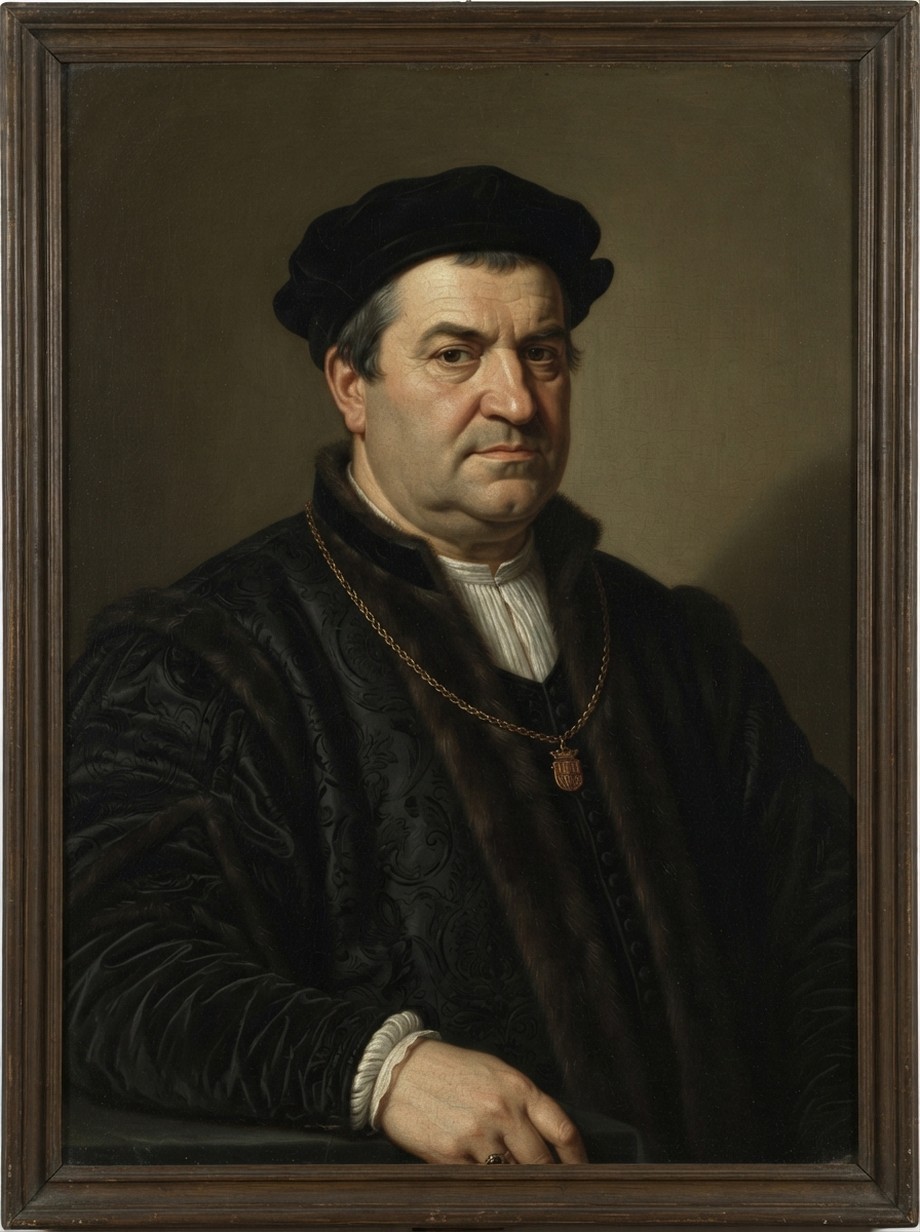
AI-assisted Portrait of Diego Velázquez de Cuéllar
The Administrator Who Commissioned His Own Undoing
Diego Velázquez de Cuéllar did not conquer Cuba so much as process it. He arrived with Columbus on the second voyage in 1493, spent two decades learning the Indies under Nicolás de Ovando in Hispaniola, and in 1511 led the invasion that made the island Spanish — then stayed to run it. He founded towns in a methodical wave across the coastline, Havana among them, and built the institutional scaffolding of colonial rule: encomiendas parceled out, gold panned by conscripted labor, a governor's office that functioned less like a conqueror's camp than a ledger. He was, by every account, exceptionally good at this.
He was less good at judging men. In 1518, looking to expand westward toward the mainland rumors coming out of Yucatán, Velázquez financed and commissioned an expedition and gave its command to a minor official in his own household, Hernán Cortés. Within months he regretted it, tried to revoke the commission, and watched Cortés sail anyway, in open defiance, taking most of the governor's own fleet with him. What followed was not a war Velázquez fought but a claim he pursued — through petitions, through a second expedition under Pánfilo de Narváez sent to arrest the man he had made, through lawsuits that outlived him. He built an empire on procedure and lost its greatest prize to someone who had none.
Velázquez was ESTJ to the marrow — a Te-dominant administrator who could organize a colony from nothing, and who never understood that the ambition he prized in Cortés was the same quality that made Cortés impossible to command.
The Colony as a Filing System
What Velázquez did in Cuba between 1511 and 1518 is the clearest Te record in the archive's conquistador cluster, precisely because it is the least dramatic. He did not improvise a colony; he installed one. Towns were founded in sequence, each assigned a function — a port, a mining camp, an administrative seat — and Havana was sited and re-sited with an eye toward harbor logistics rather than glory. Encomiendas were distributed with an accountant's attention to who had served and how, gold yields tracked, labor apportioned. This is a man organizing external reality into systems that produce measurable results, and for a decade the results were undeniable: Cuba became the staging ground for everything that followed in the Caribbean.
The same Te governed his response to Cortés's defiance. Velázquez did not chase the fleet down the coast in a rage; he wrote to the Crown, appointed a rival commander, filed the paperwork of a wronged authority. It was the correct move by every institutional logic he had spent thirty years building — and it was catastrophically slow against a man who had already stopped playing by institutional logic at all.
An Eye for Opportunity He Could Not Then Control
Velázquez was not a cautious man dragged into the Mexican mainland by circumstance. He pursued the rumors of gold and great cities coming back from earlier scouting voyages — Hernández de Córdoba's 1517 landfall, Grijalva's the year after — with real appetite, reading in fragmentary reports a possibility his more literal-minded officers did not see. Commissioning Cortés was itself a Ne judgment: a recognition, however badly it turned out, that this restless, charismatic, faintly untrustworthy man had exactly the improvisational brilliance the venture required. Velázquez saw the potential in Cortés before anyone else did. That was the whole problem.
Tertiary Ne in an ESTJ reads as this kind of intermittent, high-stakes gamble laid on top of an otherwise disciplined operator — a flash of vision Velázquez could conceive but not sustain control over once it left the harbor. He backed the right instinct and hired the wrong instrument for a governor who needed obedience more than genius, and by the time he understood the difference, Cortés was already burning his ships on the Veracruz coast.
A Grievance That Never Closed the File
What makes Velázquez's final years legible as inferior Fi rather than ordinary political frustration is how personal the wound stayed. This was not simply a governor who had lost jurisdiction over an expedition; it was a patron who had raised Cortés, married him into his own household's circle, trusted him with money and men, and been repaid with open contempt. Bernal Díaz's account preserves the sting of it — Velázquez shouting from the shore as Cortés's ships pulled away, a betrayal too raw to be only about property.
He never let it go. The Narváez expedition of 1520 was framed as law enforcement, but its energy was unmistakably grievance — a wounded authority sending men to physically drag back what had been taken from him, and losing even that. The lawsuits that consumed his last years, largely unsuccessful, kept reopening a wound that pure Te logic would have written off as a sunk cost. Velázquez died in Santiago de Cuba in 1524, by contemporary report broken as much by the injury as by illness — an inferior function finally overwhelming the dominant one that had built everything around it.
Why ESTJ Over ISTJ
Why not ISTJ?
An ISTJ governor would have been just as procedural and just as loyal to precedent, but he would not have gambled the colony's greatest opportunity on an unproven, faintly disreputable subordinate — that is a Ne judgment, not a Si one. Velázquez's willingness to see mainland gold in fragmentary rumors and back an untested favorite for it is extroverted intuition reaching outward for possibility, not introverted sensing cataloguing what has already been proven safe. The founding of towns and the running of encomiendas look ISTJ-adjacent on the surface; the decision to hand Cortés a fleet does not.
What separates the two types here is exactly what the Cortés commission reveals: a dominant Te that wanted results and was willing to take a real risk to get them, paired with a tertiary Ne sharp enough to spot the man for the job and blind to how little that man would respect the chain of command that had appointed him.
Connected Figures
Further Reading
- Conquest: Montezuma, Cortés, and the Fall of Old Mexico — Hugh ThomasThe fullest account of Velázquez's break with Cortés and its political fallout.
- The True History of the Conquest of New Spain — Bernal Díaz del CastilloEyewitness detail on Velázquez's fury as the fleet departed without him.
- When Montezuma Met Cortés — Matthew RestallReassesses the conquest narrative and Velázquez's institutional role in launching it.
