 Historical Figure MBTI
#1119 · 8-19-26 · The Age of the Buddha
Ajatashatru
The Patricide Who Built an Empire
c. 492 – 460 BCE
6 min read
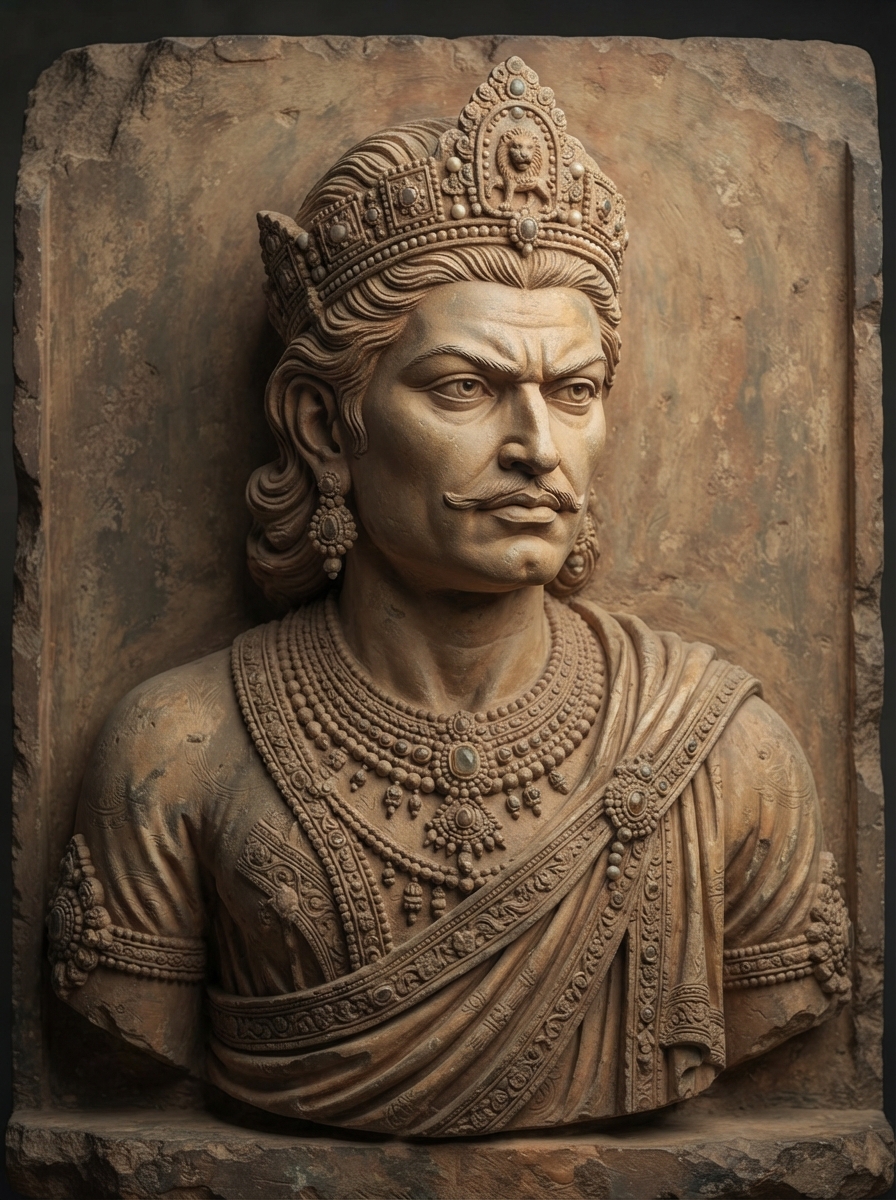
AI-assisted Portrait of Ajatashatru
The Prince Who Would Not Wait
Ajatashatru did not inherit the throne of Magadha. He took it — from his own father, while the old man was still breathing — and having taken one thing by force, he found the habit useful and never really put it down. He is ESTP, and the case is almost embarrassingly literal: a man who read a room, an army, or a fortified republic the way other rulers read scripture, and who acted on what he saw before the moment could close.
The bones of the story are these. His father, King Bimbisara, was a patron and admirer of the Buddha and had ruled Magadha for decades with patient, accretive statecraft. Ajatashatru wanted none of that patience. Egged on, tradition says, by the Buddha's own estranged cousin Devadatta, he seized Bimbisara, threw him in prison, and let him die there — starved, by most accounts, in a cell his son controlled absolutely. He did not agonize over the plan for years. He moved.
Ajatashatru is what happens when Se meets a throne within reach: he did not plot the future, he closed his hand around the present.
A Kingdom Taken in the Present Tense
Dominant Se reads as appetite for the immediate and the physical, and Ajatashatru's entire early reign is a demonstration of it. The coup against Bimbisara was not the product of a long campaign of persuasion or a slow accumulation of allies — it was a door that opened and a man who walked through it. Once he held Magadha, he did not consolidate quietly. He turned outward, absorbing the kingdom of Kosala through a mix of marriage and open war, and then set his sights on the Vajji confederacy, a rare non-monarchical republic of allied clans that had resisted Magadhan expansion for a generation.
The Vajji campaign shows the same instinct scaled up: years of grinding, opportunistic warfare rather than one clean stroke, pressing wherever the confederacy's unity showed a crack. Tradition holds that he learned the decisive insight — that the Vajjis' strength lay in their unbroken solidarity, and that the solidarity, once broken, would break everything else — secondhand, from a report of something the Buddha had said to a minister. He did not need to originate the theory. He needed only to recognize a usable fact when it was placed in front of him, and then apply it with force until the confederacy that had never fallen to a king finally fell to one.
The Weakness Worth Exploiting
Auxiliary Ti in an ESTP shows up not as elaborate theorizing but as a sharp, private sense of mechanism — an instinct for where the load-bearing weakness in a system actually sits. The Vajji war is again the clearest evidence: a monarch grasping, correctly, that a republic's power was structural rather than personal, and that unity itself, not any single general or fortress, was the target worth attacking. That is not the analysis of a man who conquers by momentum alone. It is calculation, applied cold, over a campaign that reportedly took years.
The same logic runs through his handling of his own inheritance. Bimbisara had not been weak; he had been beloved, allied to the Buddha, secure. Ajatashatru's read was that none of that mattered if the man holding the keys to the palace changed his mind about loyalty. He did not contest his father's legitimacy in open debate. He identified the actual mechanism of power — physical custody of the king — and seized it directly.
The Guilt That Arrived Late
Tertiary Fe in an ESTP tends to surface not as a running social sensitivity but as a delayed, almost startling reckoning — an emotional debt that gets paid all at once, decades after it was incurred. For most of his reign Ajatashatru shows no recorded second thoughts about his father's death. Then, tradition says, the guilt arrived, and it arrived heavily: he sought out the Buddha himself for counsel, by then reportedly consumed by remorse, and became a devoted lay patron of the faith his father had quietly favored and his own accomplice had tried to corrupt.
The clearest expression of that late Fe is not private penance but public architecture. After the Buddha's death, Ajatashatru sponsored and provided the venue for the First Buddhist Council at Rajagaha, the gathering that formally compiled the Buddha's teachings for transmission. It is a striking reversal for a man who built his throne on force: having spent a reign acting alone and immediately, he closed it by building, and funding, a shared communal institution meant to outlast him.
Why ESTP Over ESTJ
Why not ESTJ?
An ESTJ reading would frame Ajatashatru as an institution-builder executing a settled plan of inherited administration — but that is not what the record shows. His rise was a single opportunistic seizure, not a procedural succession; his conquest of the Vajjis unfolded as an improvised, situational grind rather than a codified campaign; and the strategic insight that broke the confederacy came to him secondhand and was applied on the spot, not derived from any standing doctrine. Se-Ti reads as reactive mastery of the moment. Te reads as the machinery of policy. Ajatashatru is unmistakably the former.
Set the two side by side and the difference is really a difference in what came first — the plan or the opening. An ESTJ inherits a system and administers it forward. Ajatashatru inherited nothing he was willing to wait for; he took what was in front of him, sized it up, and pressed until it gave.
Connected Figures
Further Reading
- Samannaphala Sutta — The Pali CanonRecords Ajatashatru's visit to the Buddha and his account of the patricide.
- A History of Ancient and Early Medieval India — Upinder SinghDefinitive modern account of Magadha's rise under Bimbisara and Ajatashatru.
- Early India: From the Origins to AD 1300 — Romila ThaparSituates the Vajji conquest within the broader shift toward centralized monarchy.
