 Historical Figure MBTI
#1116 · 8-19-26 · The Age of the Buddha
Devadatta
The Cousin Who Tried to Seize the Sangha
c. 5th century BCE
5 min read
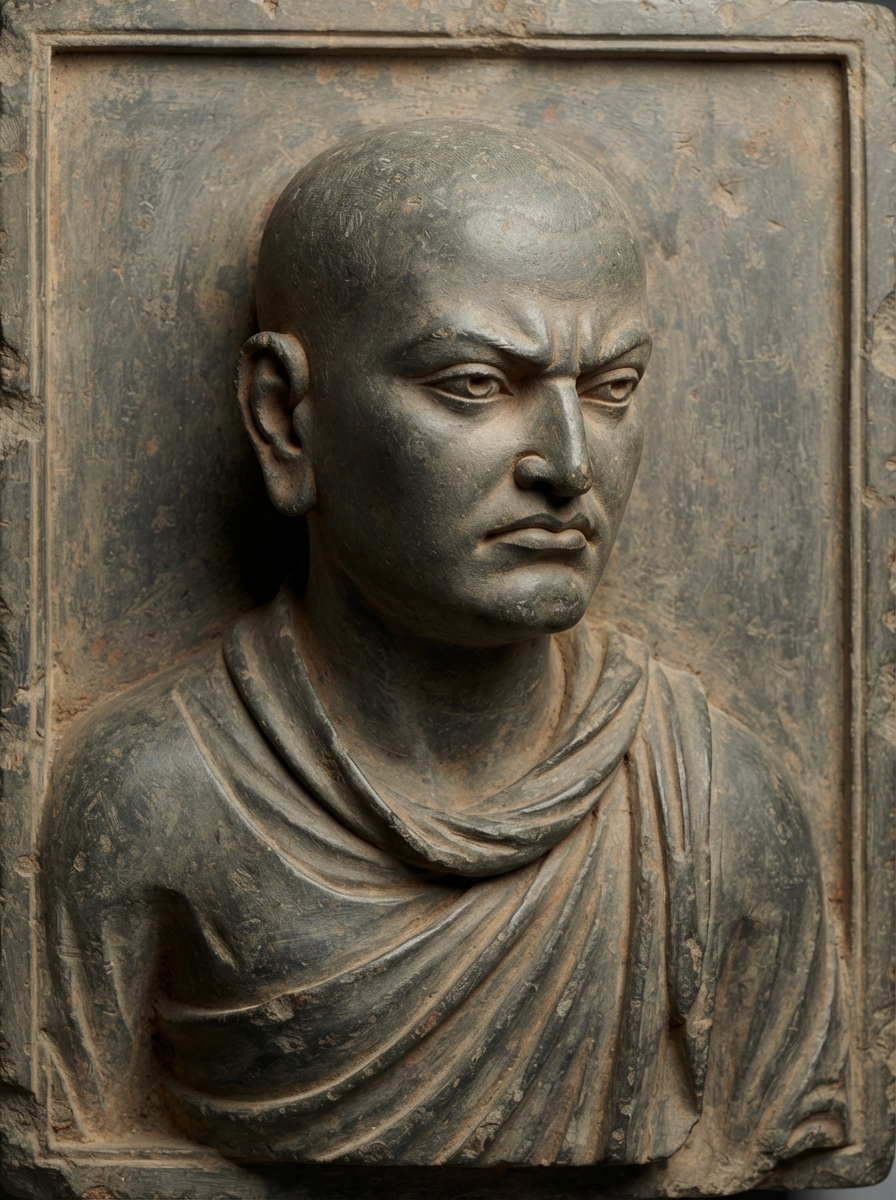
AI-assisted Portrait of Devadatta
The Understudy Who Wanted the Stage
Every religious movement built around a single charismatic teacher produces at least one figure like Devadatta — the insider who watches the founder age and concludes, not unreasonably, that someone competent ought to be planning for what comes next. Devadatta was a cousin of Siddhartha Gautama, one of several Shakya princes who joined the Buddha's order in its early years, and by most accounts he was no dabbler: tradition credits him with real discipline, real attainment, and a following of his own. What he lacked was patience for the Buddha's refusal to name an heir or install a governing structure at all.
That refusal is the hinge of the story. Devadatta did not skulk or scheme in the shadows — he walked up to the aging Buddha, in front of the assembled Sangha, and asked to be handed the order outright. Rebuffed, he escalated toward violence and finally toward open schism, launching a breakaway monastic faction built on rules he judged more rigorous than the Buddha's own. It is a psychology recognizable in miniature: a ENTJ temperament colliding with an authority it could not be talked out of overturning, and choosing confrontation over patience at every turn.
Devadatta was an ENTJ who wanted the Sangha run properly — and was willing to ask for the throne, then take it by force, rather than wait to be offered it.
The Direct Ask for the Throne
Dominant Te wants authority organized, explicit, and handed to the person best equipped to wield it — and it says so out loud. According to the Pali Canon, Devadatta did not build a whisper campaign or wait for the Buddha to falter. He approached the aging teacher directly and asked him to retire, formally, and cede leadership of the Sangha. It was an administrative proposal dressed as a request: the order was growing, its founder was old, and someone needed to run it. Devadatta simply nominated himself.
When the Buddha refused — on principle, since he had never appointed anyone to head the order and had no intention of starting — Devadatta did not accept the answer as final. He went and secured the patronage of Prince Ajatashatru of Magadha, a concrete institutional backer with real resources and real power, converting a personal grievance into a functioning rival power base. That is Te's signature move: when the existing structure won't yield the position you want, build a competing structure that will.
Even his later break with the Sangha was administrative in form. He did not simply walk away in disgust; he drew up five specific rules — permanent vegetarianism, forest-dwelling, rag-robes, tree-shelter, no meat or fish — and proposed them as binding policy for the whole order. Rejected, he took the rules and left with a faction to run under his own charter. It reads less like heresy than like a hostile reorganization.
The Purer Order He Could See
Where Te supplied the demand, auxiliary Ni supplied the vision behind it — a single, coherent picture of what a truly rigorous monastic order would look like, held with enough conviction that Devadatta was willing to split the Sangha over it. His five ascetic rules were not a grab-bag of grievances; they formed one consistent theory of what discipline required, more austere at every point than the Buddha's own middle-path teaching.
That is the tell of Ni rather than a simple lust for power: Devadatta did not merely want the position the Buddha held, he wanted to run the institution differently, according to a stricter internal logic he was convinced was the more authentic path. He positioned himself publicly as the more rigorous, uncompromising leader — the one who would not soften the rules to keep the order comfortable — and some monks found that vision compelling enough to follow him out.
Tradition's verdict on the schism is telling too: most of the monks who left with Devadatta eventually drifted back to the Buddha's Sangha. A pure power grab keeps its followers as long as the leader keeps winning; a vision-driven splinter dissolves once the vision fails to outperform the original it was built to correct.
The Elephant and the Boulder
Under tertiary Se, frustration stopped being political and became physical. When persuasion and patronage failed to dislodge the Buddha, tradition holds that Devadatta turned to direct, bodily action — hiring assassins, then, when that failed, releasing the rampaging elephant Nalagiri into the Buddha's path in the streets of Rajagaha, and on another occasion rolling a boulder down a hillside toward him as he walked below.
Both attempts are notable for their crudeness relative to Devadatta's evident intelligence — these are not the poisonings or slow institutional strangulations a more cerebral schemer might have favored, but immediate, visible, physical assaults, staged in public and aimed at removing an obstacle by force in the moment. The boulder only grazed the Buddha's foot; the elephant reportedly knelt before him instead of trampling him. Legend reads these as miracles. Psychologically, they read as a tertiary function reaching for the bluntest tool available once subtler ones had already failed.
Why ENTJ Over INTJ
Why not INTJ?
An INTJ pursuing the same ambition would have worked quietly — cultivating influence behind the scenes, letting the Buddha's authority erode on its own, and stepping into the vacuum once it opened. Devadatta did the opposite at every turn. He asked the Buddha for the leadership directly, in the open, rather than maneuvering unseen toward it. When he broke away, he did not retreat into a private circle of the like-minded; he publicly proposed a rival set of rules, campaigning for followers on the explicit claim that his order was the stricter, truer one. Confrontation in daylight, not concealment in shadow, was his method from first request to final schism.
Every stage of Devadatta's story is visible and declarative rather than covert — the direct request for succession, the public rule-making, the open assassination attempts, the recruitment drive for a breakaway faction. That is the mark of extraverted judgment driving the whole campaign, not introverted calculation working quietly toward the same end. ENTJ fits; INTJ does not.
Connected Figures
Further Reading
- Cullavagga (Vinaya Pitaka) — Pali CanonThe primary early account of Devadatta's schism and its five ascetic rules.
- Buddhist Saints in India — Reginald RaySituates Devadatta within the wider pattern of monastic dissent and rival ascetic ideals.
- The Buddha: A Short Biography — Karen ArmstrongA readable narrative account of the succession crisis late in the Buddha's life.
- The Historical Buddha — H.W. SchumannWeighs the layered, partly legendary sources behind the Devadatta episodes.
