 Historical Figure MBTI
#1022 · 7-29-26 · The Second World War
Albert Kesselring
Smiling Albert · Southern Front Commander · The Optimist of a Losing War
1885 — 1960
4 min read
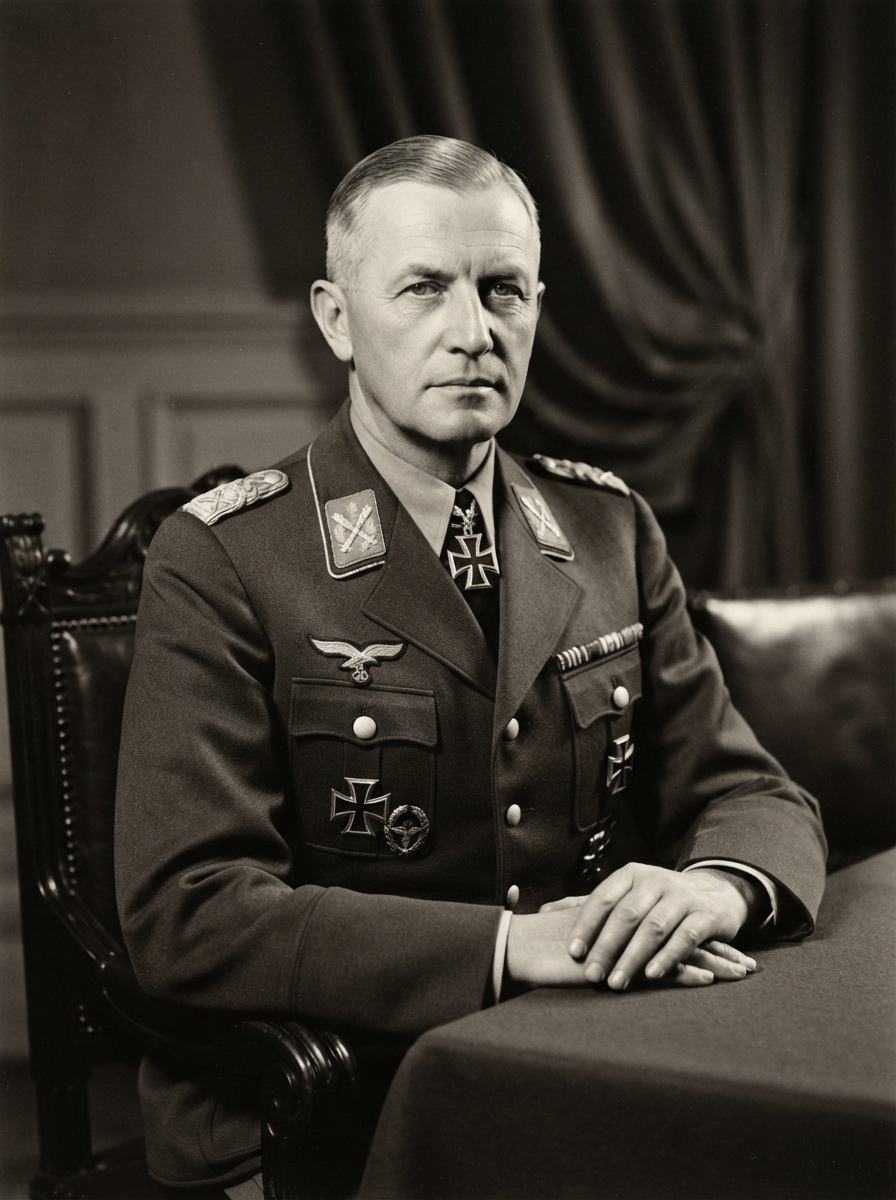
AI-assisted Portrait of Albert Kesselring
The Smile That Would Not Break
Every retreating army needs someone who refuses to act like it is retreating. From the fall of Sicily in 1943 to the last defensive lines north of the Po Valley in 1945, Albert Kesselring was that man for the German forces in Italy — a commander whose relentless, almost theatrical optimism earned him the nickname "Smiling Albert" from both his own troops and the Allied soldiers fighting him. He orchestrated one of the war's most skillful fighting withdrawals: mountain by mountain, river line by river line, trading space for time against a numerically superior Allied advance, all while projecting an outward confidence that never seemed to waver.
That confidence was not naivety. Kesselring understood the strategic war was lost well before most of his peers admitted it. What he brought instead was command presence — the capacity to keep an army functioning, disciplined, and fighting hard for a cause that had no realistic chance of victory, purely through the force of organized, assertive leadership. He was, in other words, a man for whom leading well and believing the mission was righteous were two entirely separate questions.
Kesselring was an ESTJ whose relentless outward confidence (dominant Te) held an already-lost campaign together for two brutal years.
Command by Sheer Assertion
Kesselring's dominant extraverted thinking is the engine behind everything he is remembered for. He did not simply plan the Italian campaign's defensive lines — the Gustav Line, the Gothic Line — he projected, publicly and repeatedly, that they would hold, and organized every subordinate command around executing that conviction. Where a quieter, more private type might have kept morale-building to internal memoranda, Kesselring made his optimism a visible instrument of command: touring the front, addressing officers directly, betting his personal credibility on outcomes he then worked ruthlessly to deliver.
This assertiveness extended to how he handled superiors. Kesselring argued forcefully, and often successfully, against Hitler's more suicidal directives, pushing instead for the orderly, resource-conscious withdrawals that Te values above symbolic last stands. He measured success in the currency Te understands best — lines held, casualties avoided, time bought — and treated the emotional temperature of the war as a lever to be managed, not a truth to be privately absorbed.
Even his artillery and Luftwaffe background before Italy shows the same pattern: rapid rise through organizational competence, comfort commanding large, complex structures, and an instinct for imposing order on chaos through decisive, externally-directed action.
The Discipline Beneath the Smile
What kept Kesselring's optimism from collapsing into bluster was his auxiliary introverted sensing — a deep reliance on established procedure, terrain knowledge, and lessons carried forward from prior campaigns. His fighting withdrawal up the Italian peninsula was not improvised bravado; it was built from a careful, almost bureaucratic accounting of supply lines, defensible ground, and the hard-won precedents of earlier retreats on other fronts.
Colleagues and Allied historians alike noted his textbook precision: each defensive line was prepared methodically in advance, each withdrawal timed and resourced rather than left to chance. That is Si at work behind Te's public face — the quiet, procedural competence that made his relentless confidence credible rather than empty, because it was backed by genuinely careful staff work.
Why ESTJ Over ISTJ
Why not ISTJ?
Kesselring shared an ISTJ's procedural discipline, but not its quiet, private mode of authority. His nickname came from a relentlessly public, morale-projecting demeanor — he led by visibly asserting confidence to troops and superiors alike, not by working diligently behind the scenes and letting results speak for themselves. That outward, assertive command style is Te-dominant, and it is precisely what an ISTJ, governed by inward Si, does not naturally supply.
The distinction is not cosmetic. An ISTJ commander in Kesselring's position might have executed the same fighting retreat with equal technical skill, but would not have become known for his smile. Kesselring's legend was built as much on projected confidence as on tactical competence — and that fusion of assertive presence with procedural care is the signature of Te leading, Si supporting.
Connected Figures
Further Reading
- A Soldier's Record — Albert KesselringHis own memoir of the North African and Italian campaigns
- Kesselring: German Master Strategist of World War II — Kenneth MackseyThe standard English-language biography
- The Battle for Italy 1943-1945 — Ian W. WalkerOperational history of the Italian fighting retreat
- Fighting the Peace: The Ardeatine Massacre and Its Aftermath — Robert KatzOn the reprisal killings and postwar trial
