 Historical Figure MBTI
#979 · 7-19-26 · The Second World War
Bernard Montgomery
Field Marshal · Methodical Set-Pieces · Victor of El Alamein
1887 — 1976
6 min read
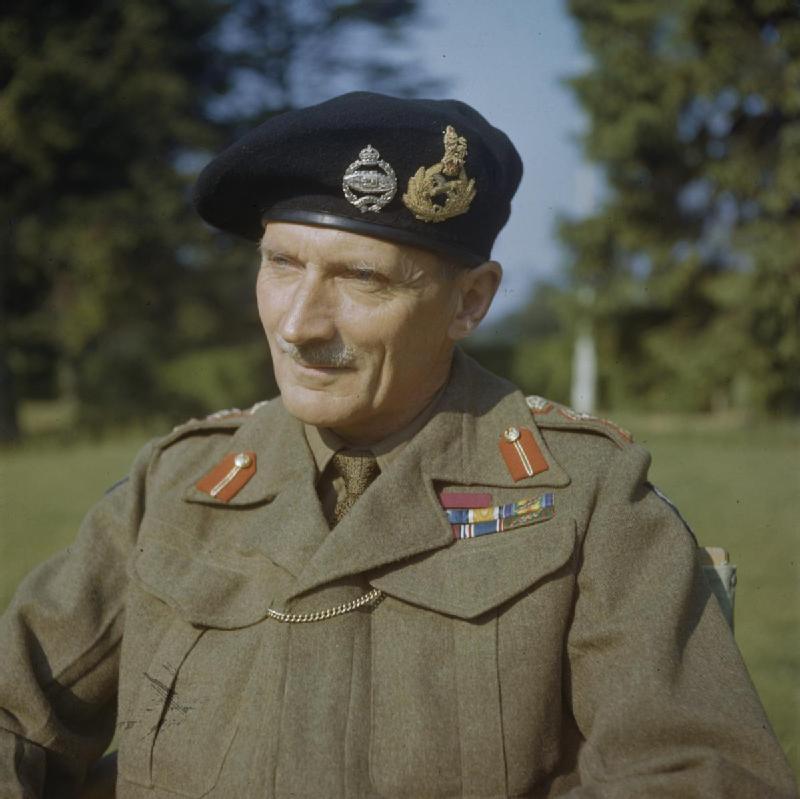
Portrait of Bernard Montgomery, England, 1943
The General Who Would Not Be Hurried
He was, by wide agreement, insufferable. Vain, tactless, incapable of conceding that anyone else had contributed to a victory, and possessed of a self-belief so armoured that American colleagues found dealing with him a diplomatic ordeal for three straight years. He was also the general who broke the Afrika Korps, and he did it by being the exact opposite of the man he beat. Where Erwin Rommel improvised, Bernard Montgomery rehearsed. Where Rommel attacked on an opportunity, Montgomery declined to attack until his margin was overwhelming, his supply dumps were full, his infantry had trained on ground mocked up to resemble the objective, and every subordinate could recite the plan back to him.
It was not glamorous and it was never meant to be. Britain in 1942 had lost four desert campaigns to flair, and what the Eighth Army needed was not another dashing commander but someone who would tell it exactly what was going to happen and then make that happen. He was an ISTJ dropped into a theatre that had been run on improvisation, and his first act was to abolish improvisation.
An ISTJ whose dominant Si turned battle into rehearsal — the least romantic commander of the war, and the one who stopped losing it.
Nothing Until Everything Is Ready
Taking over the Eighth Army in August 1942, Montgomery’s first orders were about withdrawal plans: he cancelled them. Contingency plans for falling back on the Delta were burned, and the army was told it would fight where it stood. This was not bravado — it was the Si commander removing every option that might tempt anyone into movement. Then he refused to attack. Churchill pressed for a September offensive; Montgomery would not move until late October, when he had two-to-one superiority in armour, a rehearsed artillery programme, and mine-clearing procedures his sappers had practised until they were mechanical.
Second El Alamein, when it finally came, was a twelve-day grinding match — a set-piece battle of barrage, corridors through minefields, and attritional pressure applied at a point of his choosing until the enemy’s reserves were used up. There is almost nothing brilliant in it and that was the point. It was the first unambiguous British land victory of the war against the Germans, and Montgomery spent the rest of the campaign repeating the formula: build up, rehearse, hit, consolidate, refuse to be drawn into a mobile battle on Rommel’s terms. His caution cost opportunities — the pursuit after Alamein was too slow to trap the Panzerarmee — but he was trading exploitation for certainty on purpose.
The Machinery of Certainty
Montgomery’s executive gift was organisational clarity. He inherited an army in which divisions were routinely broken into ad hoc battle groups and corps commanders improvised against each other; he restored formation integrity, unified the artillery under central control so that hundreds of guns could be brought onto one target, and installed a system of liaison officers who went out daily and reported directly back to him, so his picture of the front was current without his having to be in it. He briefed down to battalion level in plain, confident, repetitive language — every man was to know what he was doing and why — which is Te doing what Te does best: converting a plan into an unambiguous procedure everyone can execute.
The same faculty made him a disastrous colleague. Te with no diplomatic register states the efficient answer and expects agreement, and Montgomery genuinely could not understand why Eisenhower would not simply adopt his single-thrust proposal for the advance into Germany because it was, in his assessment, correct. Market Garden in September 1944 — the one time he gambled — failed partly because the plan’s optimistic assumptions went unchallenged by subordinates who had learned that challenging him was pointless.
The Arithmetic of Other Men’s Sons
The abrasiveness with peers coexisted with something his troops recognised instantly: he would not spend them cheaply. Montgomery had been badly wounded as a young officer in 1914 and had watched the Western Front consume a generation under commanders who attacked on schedules rather than on readiness. His refusal to move before he was ready was a moral position as much as a professional one, held privately and intensely, and it is why the Eighth Army — abrasive little man, beret, two cap badges, tank-top jersey — adored him while the general staff found him unbearable.
Fi in the tertiary position also produced the vanity. His memoirs settled scores decades later, slighting colleagues and inflating his own foresight, and he could not tolerate a version of events in which his judgement had been wrong. The same inward standard that made him protective of his soldiers made him incapable of a graceful apology to anyone else.
The One Improvisation
Inferior Ne shows up rarely and badly. Operation Market Garden — an airborne carpet laid across the Dutch rivers to seize a bridge at Arnhem and cross the Rhine before winter — was uncharacteristically imaginative, and it came from the wrong place: not from a patient reading of the situation but from a sudden conviction that the German army was collapsing and a single bold stroke could end the war. Intelligence indicating SS panzer formations refitting near Arnhem was set aside. The methodical man, when he finally reached for inspiration, reached without the scepticism he applied to everything else.
It is a useful corrective to the caricature of him as a mere plodder. The plodding was a deliberate discipline over a temperament that could, under enough pressure and enough flattery, leap. Given the Ardennes crisis three months later he was back on solid ground — calmly reorganising the northern shoulder of the Bulge, and then infuriating everyone by holding a press conference about it.
Why ISTJ Over ESTJ
Why not ESTJ?
He commanded with tremendous public confidence, which invites the extraverted reading — but ESTJ command is socially fluent, coalition-building, at ease in the room. Montgomery was notoriously prickly, poor at reading peers, and preferred a small circle of hand-picked young liaison officers to the give and take of an allied staff. More decisively, his caution came from the inside: an internal standard of when conditions were sufficient, derived from his own accumulated experience of what went wrong at Ypres and Dunkirk, and immovable by external pressure from a prime minister. That is dominant Si setting the terms, with Te as the instrument — not Te leading.
The Alamein decision is the clean test. An externally-driven commander attacks when his political master, his allies, and the strategic calendar all demand it. Montgomery, offered every one of those pressures at once, said no for two months and would have said no for longer. He was not asserting himself against Churchill so much as refusing to move before his own internal picture of readiness was satisfied — and that picture had been built, brick by brick, out of remembered experience going back to 1914.
Connected Figures
Further Reading
- Monty: The Making of a General / Master of the Battlefield / The Field Marshal — Nigel HamiltonThe authorised three-volume life, exhaustive and largely sympathetic.
- Alanbrooke War Diaries 1939–1945 — Alan Brooke, ed. Danchev & TodmanThe unvarnished diaries of his patron — the clearest record of how Brooke managed both Montgomery and Churchill.
- The Memoirs of Field-Marshal Montgomery — Bernard MontgomeryHis own account: confident, self-serving, and the source of several long-running feuds.
- Alamein — Jon LatimerOperational history of both Alamein battles and the build-up Montgomery insisted on.
- Monty's Men: The British Army and the Liberation of Europe — John BuckleyRevisionist assessment of Montgomery's north-west Europe campaign and the army he shaped.
