 Historical Figure MBTI
#980 · 7-19-26 · The Second World War
Claude Auchinleck
General · "The Auk" · Stopped Rommel at First Alamein
1884 — 1981
5 min read
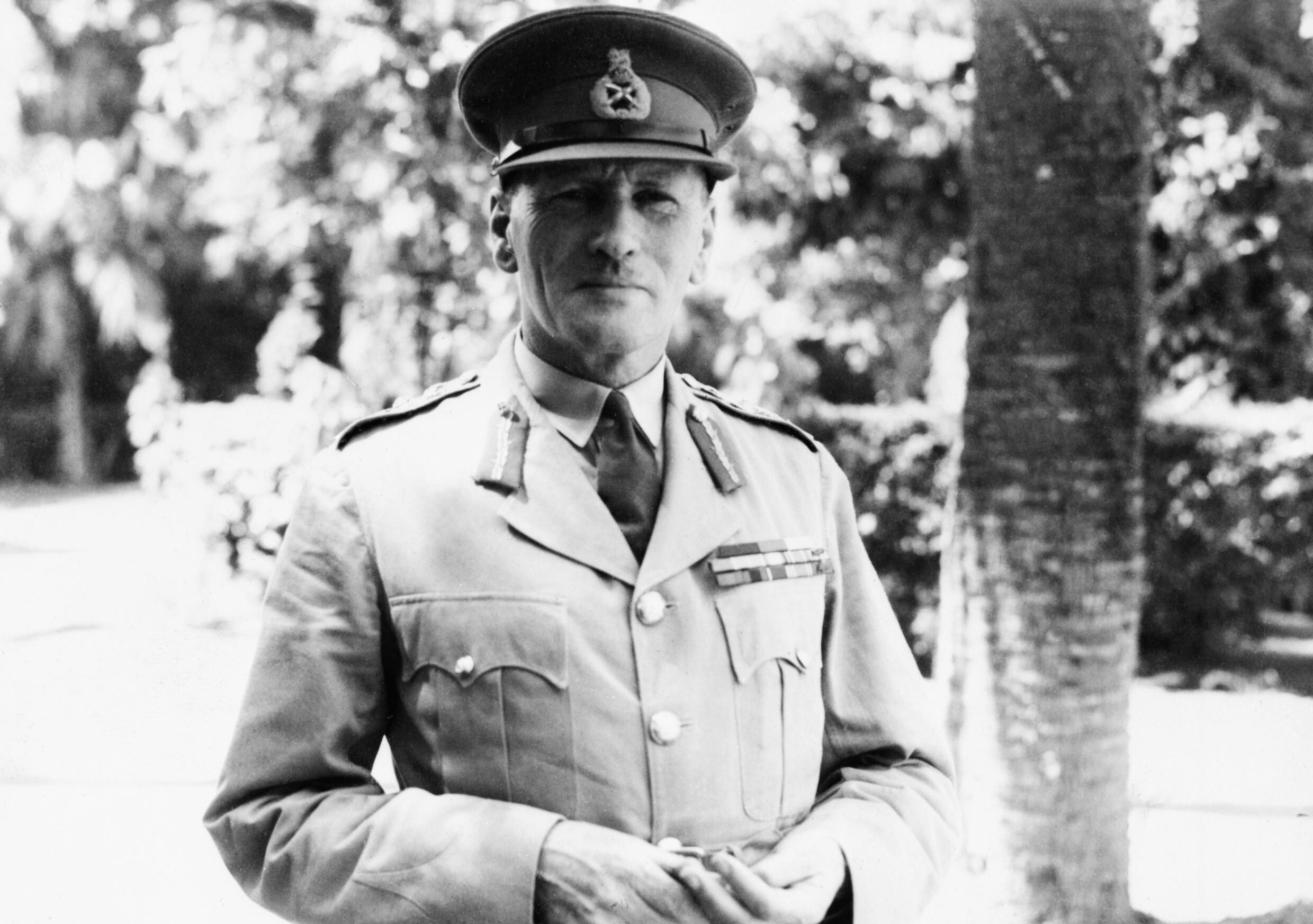
Portrait of Claude Auchinleck
The Turning Point Nobody Named After Him
In the first days of July 1942 the Eighth Army was in retreat across Egypt, Alexandria was burning its secret papers, and the Afrika Korps was closer to the Nile than it had ever been. Claude Auchinleck, Commander-in-Chief Middle East and therefore a man whose job was to sit in Cairo directing a theatre, went forward and took personal command of the army in the field. He sacked the corps commander, abandoned the doctrine of scattered brigade groups, pulled his artillery back under central control, and fought Rommel to a standstill on a forty-mile bottleneck between the sea and the Qattara Depression. That was First Alamein. It is arguably the moment the North African campaign turned, and almost nobody remembers it.
Six weeks later Churchill sacked him. The offensive to follow up the defensive success did not come fast enough, the prime minister wanted a new face, and the new face — Bernard Montgomery — inherited a stabilised front, a defensive plan already drafted, and the reinforcements that had been on their way to Auchinleck. Montgomery went on to win the battle everyone remembers, and never once acknowledged what he had been handed. The Auk, an INTJ of formidable independence and almost no talent for self-promotion, went quietly to India.
An INTJ whose dominant Ni saw the shape of the whole campaign before it happened — and who was dismissed for refusing to attack a month before the strategic picture said he should.
Reading the Whole Board
Auchinleck’s defensive stand was not simple caution. It rested on a specific strategic read: that Rommel’s pursuit had outrun its supply, that his own line could be anchored on two impassable flanks so that armoured manoeuvre — the German advantage — became impossible, and that a series of local counterattacks against the weaker Italian formations would bleed the Panzerarmee faster than it could be replaced. That is what he did through July, and it worked. He was not defending because defence felt safer; he had identified the one piece of ground in Egypt where his opponent’s greatest strength was structurally cancelled, and he went to it.
The same long view had governed his earlier arguments with London. He had insisted, against furious pressure, that Operation Crusader be delayed until his armour was properly worked up, and that offensives launched on political timetables rather than material readiness would fail — a judgement the record of 1941 and 1942 mostly vindicates. The Ni-dominant is the type that will hold an unpopular position for months on the strength of an internal picture nobody else can see, and will be no good whatever at explaining that picture persuasively to an impatient superior.
The Reorganiser
When he took the Eighth Army in hand he did what auxiliary Te does: he identified the structural fault and corrected it by fiat. The British had been dispersing divisions into self-contained “Jock columns” and brigade groups that Rommel destroyed piecemeal; Auchinleck re-concentrated the artillery, restored divisional integrity, and issued instructions that made the army fight as one instrument. His later work as Commander-in-Chief India was the same faculty on a vastly larger administrative canvas — rebuilding, training and expanding the Indian Army into the force that fought Fourteenth Army’s Burma campaign, an achievement of organisation rather than command that he considered the real work of his life.
Te also produced the famous order of the day telling his commanders to stop referring to Rommel as though he were a superhuman, and to speak of “the Germans” or “the enemy” instead. It reads as a small thing and is in fact a precise diagnosis: the legend had become an operational liability, and he treated it as a problem in the system to be corrected by instruction.
The Silence Afterwards
He never fought his corner in public. When Montgomery’s memoirs disparaged the state of the army he had inherited, and when Churchill’s history arranged the events of 1942 to his own advantage, Auchinleck largely declined to answer, on the private ground that a soldier does not conduct campaigns in print. The rehabilitation was done for him, decades later, by historians and by junior officers who had been there. Tertiary Fi of this kind is a set of internal standards held so firmly that being misjudged is preferable to defending oneself badly.
The same interior conviction shows in his refusal, in 1947, to preside over the partition of the army he had spent forty years building — he resigned as Supreme Commander rather than administer the division of Indian and Pakistani forces he regarded as a betrayal of the men under him. He had been a lifelong Indian Army officer, spoke Punjabi, and objected to British condescension toward Indian troops long before it was fashionable to do so.
Why INTJ Over ISTJ
Why not ISTJ?
Both types would have refused Churchill’s demand for a premature offensive, so the refusal alone proves nothing. The difference is in the reasoning. An Si-dominant declines because the preparations are not complete against a known standard; Auchinleck declined because he had formed an independent strategic reading of the theatre — where the ground neutralised armour, where the enemy’s supply line would break, which formations in the opposing army were the soft ones. First Alamein was an original interpretation of the situation, not the correct application of a procedure, and his willingness to overturn established British practice mid-battle is the opposite of Si conservatism.
The contrast with his successor makes the point cleanly. Montgomery took the same ground and won on it by rehearsal and material weight; Auchinleck had chosen the ground in the first place because of what he foresaw happening on it. Both were right. Only one of them was any good at being seen to be right.
Connected Figures
Further Reading
- Auchinleck: The Lonely Soldier — Philip WarnerThe standard biography, sympathetic and strong on the Indian Army years.
- Auchinleck — John ConnellEarly official-style life written with access to Auchinleck's papers.
- Alamein — Jon LatimerCovers First Alamein in detail and weighs it against the more famous second battle.
- Alanbrooke War Diaries 1939–1945 — Alan Brooke, ed. Danchev & TodmanContemporary record of the command crisis and Churchill's pressure for a change in Cairo.
- The Desert Generals — Correlli BarnettThe book that opened the revisionist case for Auchinleck against the Montgomery legend.
