 Historical Figure MBTI
#1066 · 8-9-26 · The Amarna Period
Ay
The Old Fixer
r. c. 1323 – 1319 BCE
4 min read
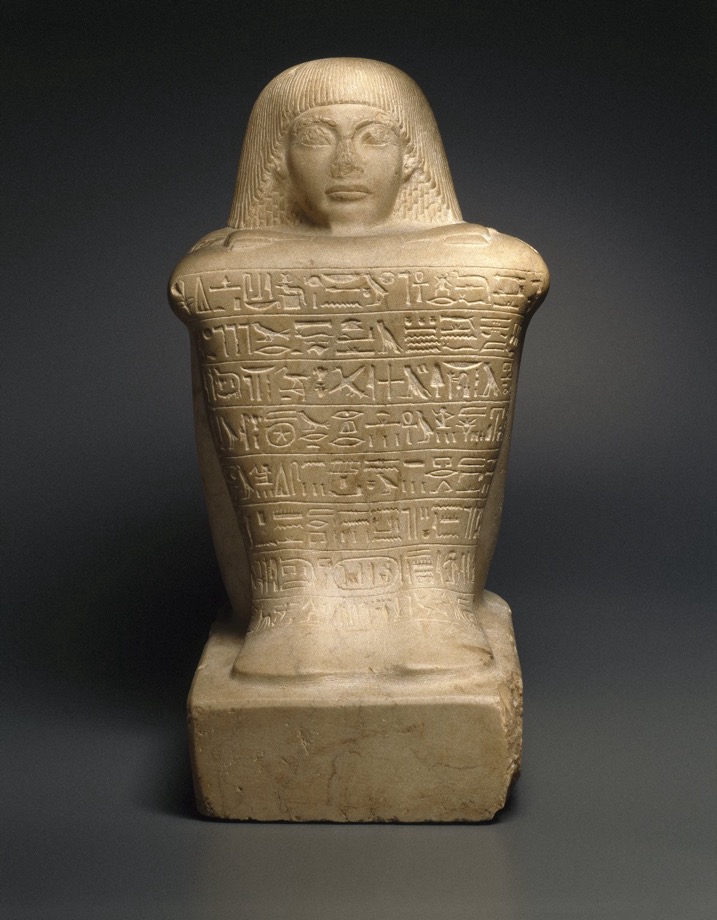
Block statue of Ay
The Man Who Outlasted Every Faction
Ay is first visible at the Amarna court as a senior official under Akhenaten, likely the brother of Queen Tiye and uncle to Nefertiti — already positioned at the very center of power during Egypt’s strangest religious upheaval. He survived Akhenaten’s death, the brief reigns that followed, and the child-king Tutankhamun’s restoration of the old gods, remaining a trusted senior advisor through every reversal of policy and every shift in faction. When Tutankhamun died suddenly and without an heir, Ay — by then an old man — took the throne himself.
His claim to legitimacy was staked visually as much as politically: tomb paintings show Ay performing the Opening of the Mouth ritual on Tutankhamun’s mummy, a rite normally reserved for the direct heir. It is the act of a man who had spent decades positioning himself for exactly this moment, and who intended everyone watching to understand it that way.
Ay is an INTJ, and a survival spanning three or four reigns and every Amarna faction, ending in a calculated, decades-deferred claim to the throne itself, is dominant Ni’s long game played to its natural conclusion.
A Throne Held in View for Decades
Where other Amarna-era courtiers rose and fell with each reversal of religious policy, Ay adapted and endured through all of them — serving the radical monotheist Akhenaten, the shadowy transitional reigns after him, and the restorationist child-king Tutankhamun, without ever losing his position at the center of power. That kind of unbroken survival across contradictory regimes is not luck; it is the product of a mind reading the deep, underlying trajectory of events rather than reacting to their surface turbulence.
His final act — performing the Opening of the Mouth on Tutankhamun’s mummy, then claiming the throne as an elderly man with no obvious dynastic right to it — reads as the payoff of a plan held privately in view for years, possibly decades, waiting for the one moment it could be executed cleanly. Dominant Ni does not improvise a coup; it recognizes the single convergent moment a long-anticipated outcome becomes reachable, and moves.
That he ruled only briefly afterward, likely already old, suggests the throne itself may have mattered to him less than the vindication of finally reaching it — a fitting, almost melancholy capstone to a career built entirely on deferred, private calculation.
The Machinery Behind Three Reigns
Ay’s decades of usefulness to successive kings rest on more than survival instinct — he held real administrative titles, including Overseer of All the Horses and, later, the powerful office of vizier under Tutankhamun, managing the practical machinery of a court recovering from religious upheaval. Auxiliary Te is what made him indispensable enough to keep at the center through regime after regime: competence too valuable for any faction to discard.
As the power behind Tutankhamun’s throne — the boy-king ascended around age nine — Ay, alongside the general Horemheb, is credited with the practical work of restoring Egypt’s traditional temple cults after Akhenaten’s upheaval: reopening shrines, reinstating priesthoods, rebuilding an administrative and religious order that had been deliberately dismantled. That is Ni’s long view executed through Te’s hands.
A Private Claim, Publicly Staked
Tertiary Fi shows in the specificity of how Ay chose to legitimize his reign: not primarily through military force or new conquest, but through a deeply personal ritual act — standing in as heir at Tutankhamun’s funeral rites — and, by most reconstructions, through marriage to the widowed Ankhesenamun, binding himself to the royal bloodline directly rather than simply seizing power by decree.
That preference for legitimacy rooted in personal, symbolic connection to the dynasty — rather than naked administrative or military assertion — suggests an inner conviction about rightful succession that mattered to him beyond mere practical control, even after a lifetime spent as consummate operator.
Why INTJ Over ENTJ
Why not ENTJ?
An ENTJ in Ay’s position, with his access and ability, would likely have moved to seize power far earlier and more visibly, treating each reign as an opportunity for direct assertion. Ay instead spent decades operating just behind the throne, patient across multiple kings and multiple ideological reversals, only stepping forward at the single cleanest opening. That extended, private patience — control exercised almost entirely through influence rather than open command — points to introverted Ni leading, with Te as a supporting executive function rather than an outward-driving one.
The decades matter: an ENTJ’s ambition tends to compress timelines. Ay’s stretched across an entire dynasty’s worth of upheaval before it resolved.
Connected Figures
Further Reading
- Amarna Sunset — Aidan DodsonDetailed account of Ay's role across the Amarna succession crisis.
- The Unknown Tutankhamun — Marianne Eaton-KraussCovers Ay's regency and eventual succession after Tutankhamun's death.
- A History of Ancient Egypt — Nicolas GrimalGeneral dynastic overview of the Amarna period's collapse and restoration.
