 Historical Figure MBTI
#486 · 4-16-26 · Plantagenet England
Aymer de Valence
Earl of Pembroke · The Moderate in the Middle
c. 1275 — 1324
7 min read
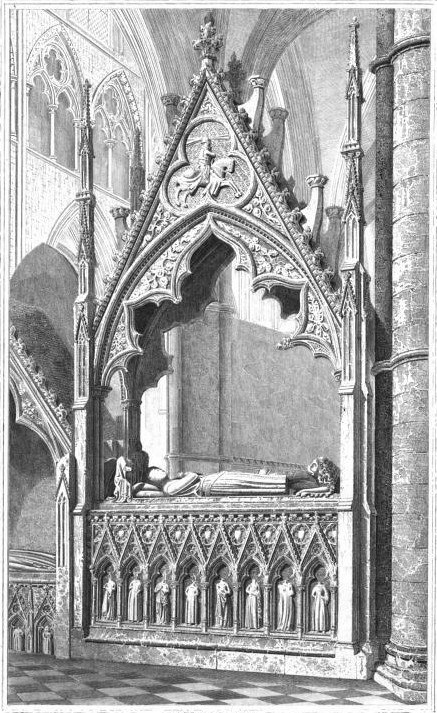
AI-assisted Portrait of Aymer de Valence
The Steadiest Man in a Reign of Extremes
Aymer de Valence, Earl of Pembroke, was the closest thing the chaotic reign of Edward II had to a fixed point. A senior magnate of royal blood, an experienced soldier, and a patient diplomat, he spent two decades trying to do something that the men around him found nearly impossible: keep the realm working. Where others chose a side and pushed it to the breaking point, Pembroke kept looking for the centre — the workable compromise, the precedent that might hold, the arrangement that let the king govern without provoking civil war.
He had the credentials for it. He fought the Scots through the worst years of the war, beating Robert the Bruce at Methven in 1306 and then losing to him at Loudoun Hill the following year — a soldier who knew both victory and defeat at first hand. He was one of the Ordainers who tried to bind the crown with reform in 1311, but a moderate one, and he emerged as the leader of the so-called “middle party” that tried to hold a stable course between Edward and the radical baronial opposition under Thomas of Lancaster. That instinct for the steady, dutiful, precedent-bound middle is the heart of the man.
Pembroke was the ISTJ caught between two extremes: the careful, experienced, conscientious servant of the realm — Si steadiness married to Te competence — whose whole project was to make the system work, and who was finally crushed because the system around him would not.
The Keeper of the Working Order
Si — dominant
Dominant Si is the orientation of the man who trusts the tested, the precedented, and the orderly. Pembroke was, by temperament, a conserver. He valued the steady working of the realm above any faction's triumph, and his politics consistently bent toward stability rather than victory. He had been raised inside the machinery of the Plantagenet state under Edward I — a long apprenticeship in how government was supposed to run — and he carried that template forward as a kind of standard against which the chaos of the new reign was always measured and always found wanting.
You see it in the shape of his whole career: not a grab for personal power, but a patient effort to restore a familiar equilibrium. Where Lancaster wanted to remake the constitution by force and Edward wanted to govern as if no constraints existed, Pembroke wanted the older balance back — king and magnates each keeping to their accustomed place. That is Si as a political creed: the conviction that things have a proper, time-tested way of working, and that the statesman's duty is to preserve it.
Soldier, Administrator, Broker
Te — auxiliary
If Si supplied the goal — stability — auxiliary Te supplied the competence to pursue it. Pembroke was genuinely capable across the three trades a great medieval magnate needed: as a commander he campaigned hard in Scotland and won real victories; as a royal lieutenant he could run the practical business of government; as a negotiator he had the patience and credibility to bring hostile parties to terms. Te is the executive function that gets things organized and done, and Pembroke was a doer, not a theorist.
His diplomacy is the clearest Te signature. The middle party was not a programme of ideas but a working arrangement, brokered and re-brokered through years of patient effort — treaties, indentures, formal reconciliations designed to keep king and earls from each other's throats. He labored at it with the steady, unglamorous persistence of a man who measures success by whether the machinery is still turning. It was thankless work, and it rarely held for long, but it was competent work — the application of practical skill to the concrete problem of keeping a fractured realm governable.
The Wound of a Broken Word
Fi — tertiary
Tertiary Fi in an ISTJ shows up not as open emotion but as a quiet, load-bearing code of personal honor — a private sense of what one owes, and what it costs to fail it. In 1312 Pembroke personally guaranteed the safe-conduct of Piers Gaveston, Edward's hated favourite, pledging his own word for the man's safety while he was held in his custody. When Gaveston was seized and killed in spite of that guarantee, the injury to Pembroke was not merely political. His pledged word had been trampled; his honor had been made worthless in front of the realm.
That breach of personal honor — more than any calculation — pushed him decisively toward the king's side. It is a revealing moment, because it shows the inner value system beneath the careful statesman. Pembroke kept his commitments and expected others to keep theirs, and a violation of that order registered as something close to a personal violation. Tertiary Fi rarely announces itself, but here it surfaced unmistakably: the steadiest man of the reign moved by the quiet, immovable conviction that a guarantee given is a debt that must be honored.
Blind to the New Thing
Ne — inferior
Inferior Ne is the ISTJ's blind spot — a weak grip on the unprecedented, the volatile, the situation that refuses to behave like the ones before it. Pembroke's tragedy is, in part, an inferior-Ne tragedy. His entire method assumed that the realm could be returned to a known equilibrium if only the right settlement could be reached. But the reign kept generating possibilities his temperament was poorly equipped to foresee: a king who would not be steadied, favourites who reappeared in new forms, and finally the Despensers, whose rise broke the very balance Pembroke had spent his life defending.
The patient middle course worked only if both extremes wanted equilibrium more than they wanted to win — and neither did. A more Ne-driven mind might have read the regime's drift toward catastrophe earlier and abandoned the doomed centre. Pembroke, steady to the last, held his course until the course itself ran out. He died in 1324, his moderation already overwhelmed, before the final ruin he had spent two decades trying to prevent.
Why ISTJ Over ESTJ
Why not ESTJ?
The ESTJ leads from the front — projecting command, asserting dominance, organizing the world by force of will from an outward position. That is the mode of his great rival, Thomas of Lancaster, who claimed the realm's leadership and pressed his authority openly. Pembroke worked the opposite way: as a reserved, behind-the-scenes broker and dutiful servant, a mediator holding a middle course rather than a man seizing the centre for himself. His strength was steadiness and reliability, not the assertion of dominance — the introverted Si-first pattern, not the extraverted Te-first one.
Both types share the Te competence and the respect for order; the difference is where the energy is anchored. Pembroke never sought to rule. He sought to preserve — to keep the king governing and the realm intact — and he pursued that conservative aim with the patient, unassertive constancy of a man who measures himself by duty done, not ground won. That is ISTJ.
Connected Figures
Further Reading
- Aymer de Valence, Earl of Pembroke, 1307–1324 — J. R. S. PhillipsThe definitive scholarly biography — the indispensable account of Pembroke's career and his role at the centre of Edward II's reign.
- Edward II — Seymour PhillipsThe authoritative modern life of the king Pembroke served, setting his moderation against the full chaos of the reign.
- Thomas of Lancaster, 1307–1322 — J. R. MaddicottThe standard study of Pembroke's great rival — essential for understanding the radical opposition the middle party tried to balance.
