 Historical Figure MBTI
#481 · 4-16-26 · Plantagenet England
Edward II
King of England · The Favorites' King, Murdered at Berkeley
1284 — 1327
11 min read
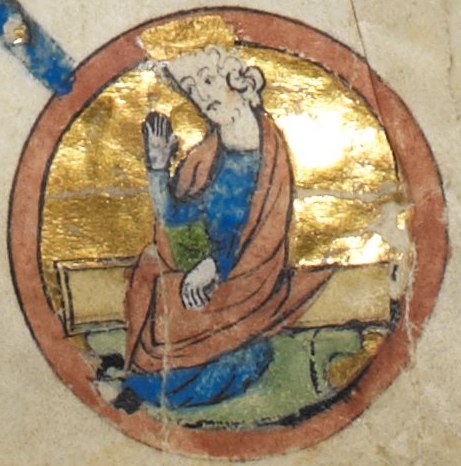
AI-assisted Portrait of Edward II
The King Who Only Wanted to Be Himself
He was the son of a giant. Edward I—the “Hammer of the Scots,” the lawgiver, the iron warrior who conquered Wales and broke the Scottish lords—left his throne to a boy who was, by every visible measure, his physical double: tall, athletic, fair-haired, magnificent to look at. And then that boy proceeded to disappoint nearly everyone who had ever known his father. Born in 1284 at Caernarfon and king from 1307, Edward II had no appetite for war, no gift for governance, and no interest in performing the part of the medieval sovereign. What he wanted instead was to dig ditches, thatch roofs, row boats, swim in rivers, and stage theatricals with the men he loved—and to be left alone to do it.
The English political class found this incomprehensible, and then intolerable. A king was supposed to be a war-leader and a fount of justice; Edward was a craftsman who happened to wear a crown. But the trait that defined him, and that ultimately destroyed him, was not the rowing or the digging. It was the ferocity of his personal attachments. Edward loved a few people with an exclusive, total, self-immolating devotion—first Piers Gaveston, the witty Gascon he raised to an earldom and could not surrender even when the barons exiled him three times and finally beheaded him in 1312; later the rapacious Despensers, Hugh the Younger and his father, who ruled England alongside him as grasping co-tyrants. For these people Edward would defy his barons, his Parliament, his treasury, and his own survival. He was a man governed entirely from the inside—by love and loyalty rather than by duty or calculation.
That is the ISFP at its most extreme and its most tragic: a person ruled by private feeling, devoted to the few rather than the many, attuned to physical pleasure and craft, and constitutionally incapable of the cold organizational command that a throne demands. Almost everything that went wrong in his reign flowed from that core. He was not a stupid man, and not, in any ordinary sense, a cruel one. He was simply the wrong soul poured into the wrong office—and the gap between the man and the crown widened until it swallowed him.
Edward II is the ISFP on a throne he never fit: Fi devotion so total it overrode every duty of kingship, Se craftsman's hands more at home with a spade than a sword, and an inferior Te that turned the machinery of rule—armies, finances, alliances—into one long catalogue of disaster.
The Love That Outweighed a Kingdom
Fi — dominant
Dominant Fi is a private moral compass that answers to no external authority. It does not ask what is politic, or expected, or even safe; it asks what feels true to the self and to the people the self has chosen. In a balanced life it produces quiet integrity and fierce, discriminating loyalty. In a king with a hostile baronage, it produced catastrophe—because Edward's loyalties were not negotiable, and a medieval monarchy ran entirely on the negotiation of loyalties.
Gaveston is the whole psychology in miniature. The two had been raised together; Edward loved him with what was almost certainly a romantic and physical attachment, and what was unmistakably the central relationship of his life. When he became king he poured upon Piers everything he had—the earldom of Cornwall, normally reserved for royalty, plus jewels, lands, and the regency itself when Edward crossed to France to marry. The barons were not merely jealous; they saw a king handing the realm to an upstart Gascon on the strength of private affection. They forced Gaveston into exile. Edward brought him back. They forced him out again. Edward brought him back again. When they finally seized and beheaded him in 1312, the king did not learn the lesson a calculating ruler would have learned. He grieved, he nursed the wound for years, and—most tellingly—he did exactly the same thing all over again with the Despensers a decade later. Fi does not update its attachments to suit the political weather. It loves whom it loves.
And underneath the favorites lies the deeper Fi pattern: the refusal to be the king other people wanted. Edward would not pretend to relish war, would not feign the lawgiver's gravity, would not stop consorting with grooms and carpenters and oarsmen because it embarrassed the court. Where an external-feeling type might have performed the role to keep the peace, Edward insisted—against every pressure his office could generate—on living as himself. It reads as obstinacy or weakness to his chroniclers. It is better understood as the dominant-Fi conviction that betraying one's own nature is the one unbearable thing, worse than losing a war and, in the end, worse than losing a throne.
Three times the barons tore Gaveston away; three times Edward dragged him back. A calculating king learns from the first exile. A dominant-Fi king cannot—because to him, abandoning the person he loves to keep his crown is not prudence. It is treason against himself.
The King with a Spade in His Hands
Se — auxiliary
Auxiliary Se grounds the ISFP in the physical, immediate world—the pleasure of the body in motion, the satisfaction of skilled hands, the texture of real materials rather than the abstractions of statecraft. For most ISFPs this shows up as craft, sport, or a sensual delight in the tangible. For a fourteenth-century king it showed up as the single most scandalous feature of his personality, because the things Edward loved to do with his hands were the things a peasant did with his.
The chroniclers recorded it with horror that survives the centuries. The king dug ditches. He thatched roofs. He shod horses, rowed and swam for the joy of it, worked as a smith, dabbled in carpentry, hedging, and the building trades, and surrounded himself with the rough, hands-on men—grooms, ditchers, oarsmen, actors—whose company he plainly preferred to that of his earls. He loved theatricals and entertainments. To a medieval aristocracy that understood kingship as a sacred and martial dignity, a sovereign who took visible delight in manual labor was very nearly a contradiction in terms—a profanation of the office. It was not that Edward was incapable of the physical courage chivalry prized; he was big and strong and physically fearless. It was that his Se found its pleasure in the wrong arena entirely.
What makes this specifically auxiliary Se rather than mere eccentricity is how it served his dominant Fi. The crafts and the river and the workshop were where Edward could simply be present in his own body and his own preferences, free of the performance the throne demanded. They were of a piece with the favorites: both were the king choosing, again and again, the immediate and the authentic over the symbolic and the expected. He was happiest with mud on his hands and his beloved at his side. He was most himself precisely where a king was supposed least to be.
The Fixed Idea and the Grudge
Ni — tertiary
Tertiary Ni in an ISFP is a strange, narrow searchlight. It does not give the broad strategic foresight of a Ni-dominant; it gives the type a capacity to lock onto a single vision—one outcome, one enemy, one fixed conviction—and pursue it with a tunnel-visioned intensity that can override better judgment. Healthy, it lends the ISFP a quiet long-range sense of meaning. Under stress, it curdles into obsession and the nursing of grievance.
Edward's reign is full of the curdled version. He could not see the wide board—could not anticipate how the barons would react, could not read the slow tightening of the trap his wife was building—but he could fixate. After Gaveston's murder he carried the wound for a decade, and when the moment came he discharged it with cold finality: Thomas of Lancaster, his cousin and the baron most responsible for Piers's death, was defeated at Boroughbridge in 1322 and beheaded—a royal cousin executed almost as an act of long-deferred personal revenge. The vengeance was patient, single-minded, and total. That is tertiary Ni serving Fi: not strategy, but a fixed idea finally consummated.
The same narrowness explains his blindness to the larger pattern. Having destroyed Lancaster, Edward did not consolidate or conciliate; he simply replaced one fixation with another and bound himself to the Despensers exactly as he had bound himself to Gaveston, unable to perceive that he was rebuilding the very situation that had nearly killed him before. Ni in the tertiary slot gives intensity without breadth—the power to commit utterly to a single vision, and the corresponding inability to see everything the vision leaves out.
The Catastrophe of Command
Te — inferior
Inferior Te is the ISFP's great weakness: the impersonal machinery of organization, logistics, and command—marshalling resources, imposing structure, making the cold systemic decisions that ignore who you love and what you feel. For most ISFPs the cost is modest, a discomfort with spreadsheets and chains of authority. For a king at war, the cost was a kingdom. Edward had to be exactly the thing his inferior function could not produce: a competent organizer of armies, finances, and men. He was not, and the failures were enormous.
Bannockburn is the monument to it. In 1314 Edward led a large, well-supplied English army into Scotland against Robert the Bruce's far smaller force—and through poor ground, poor coordination, and a total absence of generalship, presided over one of the most humiliating defeats in English history. The army that should have crushed the Scots was broken and routed; the king fled the field. It was not a lack of nerve—Edward was personally brave—but a lack of the Te competence to organize, position, and command a host. The disaster confirmed Scottish independence for a generation and hung over the rest of his reign.
And the same inferior Te governed his rule at home. He could not manage his barons, balance his factions, or run his administration through anything but favorites—substituting personal attachment for institutional structure, which is precisely the inferior-Te move: when the impersonal system is beyond you, you fall back on the people you trust, and let them run everything. The Despensers filled that vacuum and looted the realm through it. A ruler with strong Te builds machinery that outlasts any single relationship. Edward built nothing of the kind. He had only his loves—and when those failed him, there was no structure left to hold the throne up.
Why ISFP Over ESFP or ISFJ
Why not ESFP?
The pleasure-loving, physical, hands-on king can look extroverted, and an ESFP reading is the obvious near-miss. But Edward's emotional life was the opposite of the ESFP's outward, gregarious warmth. His attachments were intense, private, and exclusive—one beloved at a time, held with a depth that shut the wider world out, not the social butterfly's broad and easy affection. The ESFP performs for the room and feeds on its energy; Edward retreated from the room into a tiny circle of intimates and craftwork. That inward-turned, Fi-dominant exclusivity—loyalty as a private absolute rather than a social glow—marks the introvert, not the extrovert.
Why not ISFJ?
An ISFJ shares the introversion and the sensory grounding, and one might imagine the gentle, domestic king as a dutiful guardian. But the ISFJ is governed by Si-fed duty—the felt obligation to serve the institution, uphold the role, and protect the realm entrusted to him. That is the one thing Edward conspicuously would not do. He served his own loves and his own pleasures (Fi), not the guardianship of the kingdom; he abandoned the duties of office precisely where an ISFJ would have clung to them. His failures were not the dutiful guardian buckling under strain—they were a man who placed personal devotion above the obligations of his crown, on principle, to the very end.
The thread that runs through every alternative is the same: Edward was ruled, first and last, by a private and uncompromising loyalty to the people and pleasures he had chosen for himself. Not the ESFP's need for an audience, not the ISFJ's need to serve the institution—but the dominant-Fi need to remain true to his own heart, whatever it cost. He let that loyalty override an army, a treasury, a Parliament, and finally his own life. It is the most ISFP tragedy imaginable: a man who would rather lose everything than be someone other than himself—and who, wearing a crown he never fit, did lose everything as a result.
Connected Figures
Further Reading
- Edward II: The Unconventional King — Kathryn WarnerThe most accessible modern reassessment — sympathetic, deeply sourced, and excellent on the man behind the chroniclers' caricature.
- Edward II — Seymour PhillipsThe definitive scholarly biography in the Yale English Monarchs series; exhaustive and authoritative on the reign and its collapse.
- King Edward II: His Life, His Reign, and Its Aftermath, 1284–1330 — Roy Martin HainesA thorough political and institutional study of the reign and the regime that replaced it.
- The Greatest Traitor: The Life of Sir Roger Mortimer — Ian MortimerTells the deposition and Edward's mysterious end from Mortimer's side — gripping on the invasion of 1326 and the events at Berkeley.
