 Historical Figure MBTI
#684 · 5-22-26 · The Roman Republic
Cassius Longinus
Cold Organizer · Recruited Brutus · Overruled on Antony
c. 86 BCE — 42 BCE
4 min read
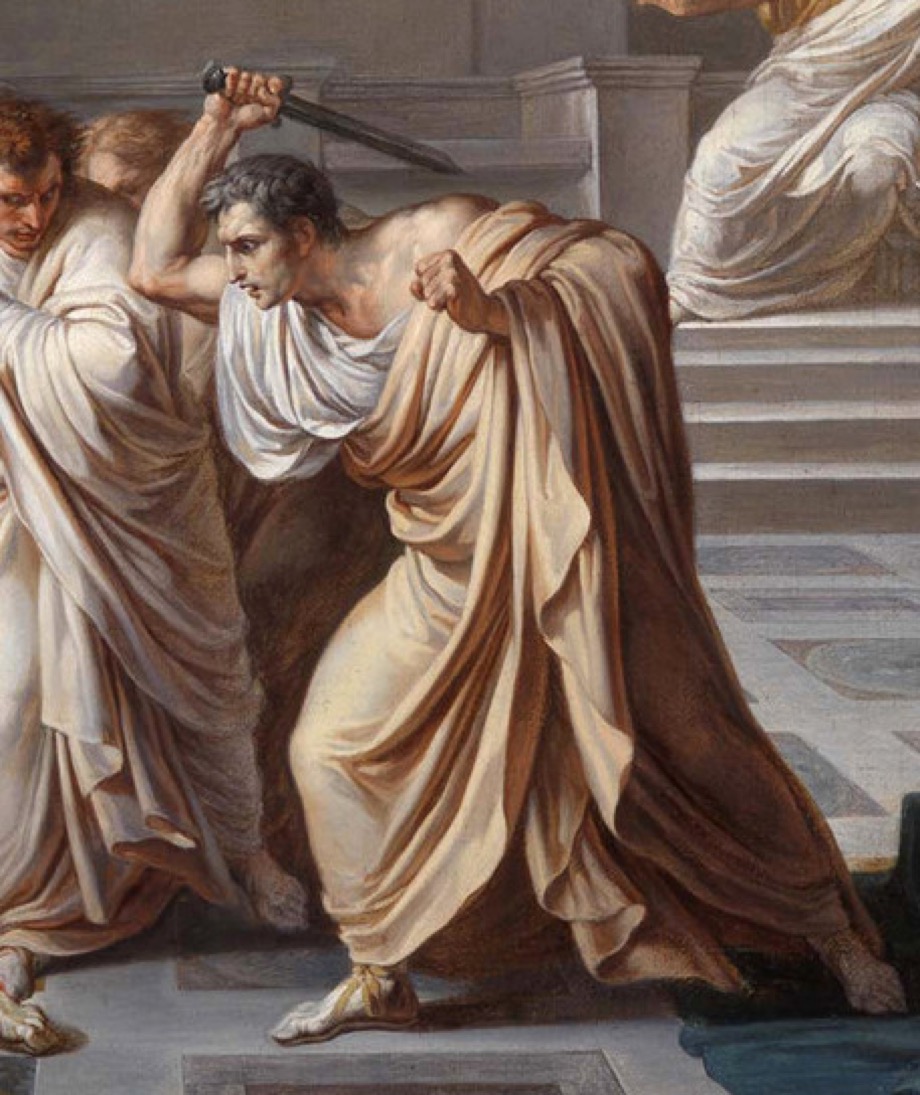
Portrait of Cassius Longinus
The Man Who Built the Plot
History remembers Marcus Brutus as the face of the Ides of March and Cassius Longinus as his shadow — the sharp-tongued instigator who talked a reluctant idealist into murder. The record runs the other way. It was Cassius who first conceived the conspiracy against Julius Caesar, Cassius who worked the Senate's back rooms recruiting men one at a time, and Cassius who understood, with the cold clarity of a man solving a problem rather than answering a call, that the plot could not survive without Brutus's name attached to it. He needed Brutus's reputation for incorruptibility to launder what would otherwise look like a settling of personal scores — his own, chiefly, after Caesar passed him over for a praetorship he believed he had earned. So he recruited his brother-in-law the way a planner recruits a load-bearing wall: not for sentiment, but because the structure would not stand without him.
That is the whole of INTJ in miniature: a private, long-range vision, assembled in silence, then executed through other people as instruments of a design only its architect fully sees. Cassius did not stumble into the assassination of Caesar. He engineered it, the way he later engineered an army out of the eastern provinces and a war chest out of nothing — methodically, unsentimentally, several moves ahead of everyone he was supposedly working alongside.
Cassius did not dream of killing a tyrant. He planned it — and then he built the organization required to survive having done so.
The Private Vision
The conspiracy against Caesar did not begin as a conversation. It began as a conclusion, arrived at alone, that Rome's institutions were being permanently reordered around one man and that only removing him could reset the board. Cassius reached that conclusion before he ever raised it with another senator, and he held it the way Ni dominants hold their convictions — as settled fact, not as a hypothesis to be tested in conversation. What followed was execution, not deliberation: he mapped who among the senate's discontented would actually act rather than merely complain, and he mapped the order in which they needed to be approached so that no single recruitment attempt could expose the whole.
The clearest evidence of that dominant Ni is what he saw that Brutus did not. Cassius argued, from the earliest planning, that Mark Antony had to die alongside Caesar — not out of bloodlust, but because he had already run the scenario forward and seen a Rome in which Caesar's most capable lieutenant survived to avenge him. That is a strategist's foresight, a picture of the whole board several moves out, arrived at privately and defended on its merits rather than on how it would look. Brutus overruled him. History proved the vision correct and the vote wrong.
The Operation, Run
Vision alone does not kill a dictator in an open Senate chamber and live to organize an army afterward — that takes an operator. Cassius's Te is visible in every logistical seam of the plot: who would stand where in the Theatre of Pompey, who would draw Antony away from the chamber, who could be trusted with a blade and who could only be trusted with a rumor. He built a working conspiracy out of sixty disparate senators with sixty different grievances, and he held it together by treating recruitment as a management problem rather than a moral crusade — the right person, for the right reason, told only what he needed to know.
That same organizational instinct carried him past the Ides. While Brutus wrestled publicly with the meaning of what they had done, Cassius left Rome and built, from a standing start, an army and a fleet out of the eastern provinces — extorting, taxing, and drilling with the same efficient detachment he had brought to recruiting assassins. He was, by any measure, the more competent general of the two men who met at Philippi, and the campaign's early successes were substantially his doing.
The Grievance Underneath
It would be tidy to say Cassius acted purely from strategic calculation and Brutus alone from principle, but the record does not let him off that easily. He had been passed over for a praetorship he felt was his by merit, and that private, unexamined sense of having been wronged was almost certainly the spark that set the whole machine in motion. That is Fi running quietly under the Te and Ni that dominate the visible record — a personal, largely unspoken conviction about what he was owed, felt rather than argued, that supplied the initial motive before the strategist took over and turned motive into plan.
But tertiary Fi is not the seat of the personality, and it shows: Cassius never dressed the grievance up as philosophy the way Brutus dressed tyrannicide up as Stoic duty. He simply metabolized the resentment into action and moved on to logistics. The feeling was real; it was also, notably, the last time in the historical record that Cassius let a private emotion set the terms of a decision rather than serving as raw material for one.
Death by Misreading the Field
The end at Philippi is almost a case study in inferior Se — the strategist undone, finally, not by a failure of planning but by a failure of the present moment. Cassius, a man who had spent his life reading situations from a distance and acting on the conclusion, found himself in the one arena where distance was not available: a chaotic battlefield, dust and noise and incomplete information, where what was needed was not foresight but the ability to read what was actually happening in front of him, right now.
He misjudged it. Seeing his own camp overrun and assuming, wrongly, that the entire battle was lost, Cassius ordered a freedman to kill him rather than face capture — dying by his own command before word could reach him that Brutus's wing of the army had in fact carried the field. It is a bitterly fitting exit for a dominant-Ni strategist: the one time the immediate, sensory present demanded to be read on its own terms rather than folded into a private model, the model failed him, and it cost him everything.
Why INTJ Over INFJ
Why not INFJ?
It is tempting to fold Cassius into the same moral category as his brother-in-law Marcus Brutus — both, after all, killed the same man for the same stated reason. But their reasoning ran in opposite directions. Brutus, an INFJ, needed the assassination to mean something: he insisted on sparing Antony and confining the killing to Caesar alone precisely so the act would read as principled tyrannicide rather than a purge, even when Cassius warned that this restraint was strategically reckless. Cassius wanted the operation secured, full stop — Antony dead, the threat eliminated, the moral framing a secondary concern. One man was building an argument about tyranny; the other was solving for survival. That is not a difference in courage. It is the difference between Fe-led conviction and Te-led pragmatism.
The two men needed each other precisely because they were not the same type. Brutus supplied the legitimacy no purely strategic plot could have generated on its own; Cassius supplied the planning no purely moral impulse could have executed. Their disagreement over Antony's fate was not a footnote to the conspiracy — it was the fault line between an INFJ's vision of what the act should mean and an INTJ's vision of what the act required to work, and history sided, brutally, with the INTJ's read of the situation.
Connected Figures
Further Reading
- Life of Brutus — PlutarchCovers Cassius extensively as co-conspirator and rival strategist
- Life of Caesar — PlutarchThe assassination itself and the debate over Antony's fate
- Brutus: The Noble Conspirator — Kathryn TempestThe fullest modern account of the two men's partnership and disagreements
- The Death of Caesar — Barry StraussReconstructs the planning of the plot and Cassius's central role in it
- SPQR — Mary BeardBroader context on the Republic's collapse and the conspirators' aims
