 Historical Figure MBTI
#685 · 5-22-26 · The Roman Republic
Servilia
The Unseen Strategist · Directed the Family Councils
c. 100 BCE — after 42 BCE
3 min read
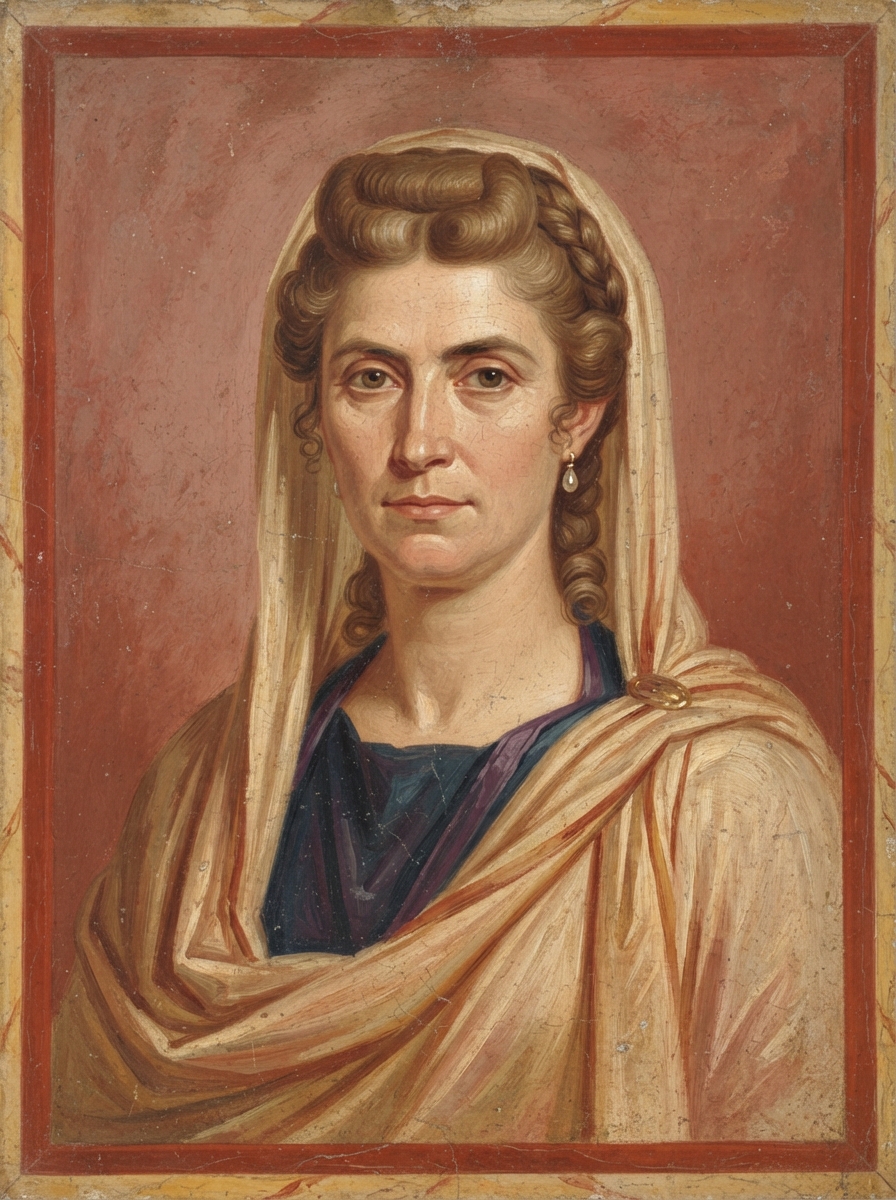
AI-assisted Portrait of Servilia
The Council Behind the Council
No Roman woman could hold a magistracy, command a legion, or address the Senate. Servilia commanded Rome's most consequential family without any of that — through private counsel, family councils, and a decades-long liaison with Julius Caesar so open that he reportedly bought her an extraordinarily costly pearl in the middle of the Catiline conspiracy debates, while her half-brother Cato watched from across the chamber. She was Marcus Brutus's mother, Cato the Younger's half-sister, and Caesar's lover, three loyalties that any lesser mind would have found impossible to hold together. Servilia held them, and used the tension between them.
Cicero's letters preserve the clearest evidence of how she operated: family councils, convened at her direction, where major decisions were debated by the men present but frequently settled by her. In the days after the Ides of March, with her own son among the assassins of her own lover, it was Servilia who took charge of the practical scramble, negotiating changes to Senate decrees on the conspirators' behalf while the men around her argued. She never needed the room to notice whose plan it had been.
Servilia was INTJ down to the method: a long-range, privately held read of where power was actually going, executed through quiet leverage rather than declared through public command.
Psychological Verdict
Servilia reads as INTJ rather than the more obvious ENTJ she might first resemble. Her dominant function was Ni: a strategic vision of her family's interests held privately and revised continuously, surfacing only when a calculated intervention was ready to deploy. Her auxiliary Te showed in the machinery of execution, chairing councils, organizing outcomes, negotiating decrees, always with the same clear-eyed competence regardless of which side of a conflict her family's interests currently required. What separates her from an ENTJ is precisely what her record never shows: she never sought or exercised power visibly. She had no taste for open command, no interest in being seen to decide. Her instrument was the closed room and the private word, not the public one, and everything she achieved she achieved through people who never had to be told twice.
Connected Figures
Further Reading
- Letters to Atticus — CiceroThe primary source on Servilia's political role and her family councils.
- Life of Brutus — PlutarchDetails her influence over her son and his circle.
- Life of Caesar — PlutarchRecords her long liaison with Caesar and its political weight.
- SPQR — Mary BeardContext on the constraints and informal power available to elite Roman women.
