 Historical Figure MBTI
#363 · 4-2-26 · The French Revolution
Charlotte Corday
The Angel of Assassination · Killer of Marat · Calm to the Scaffold
1768 — 1793
6 min read
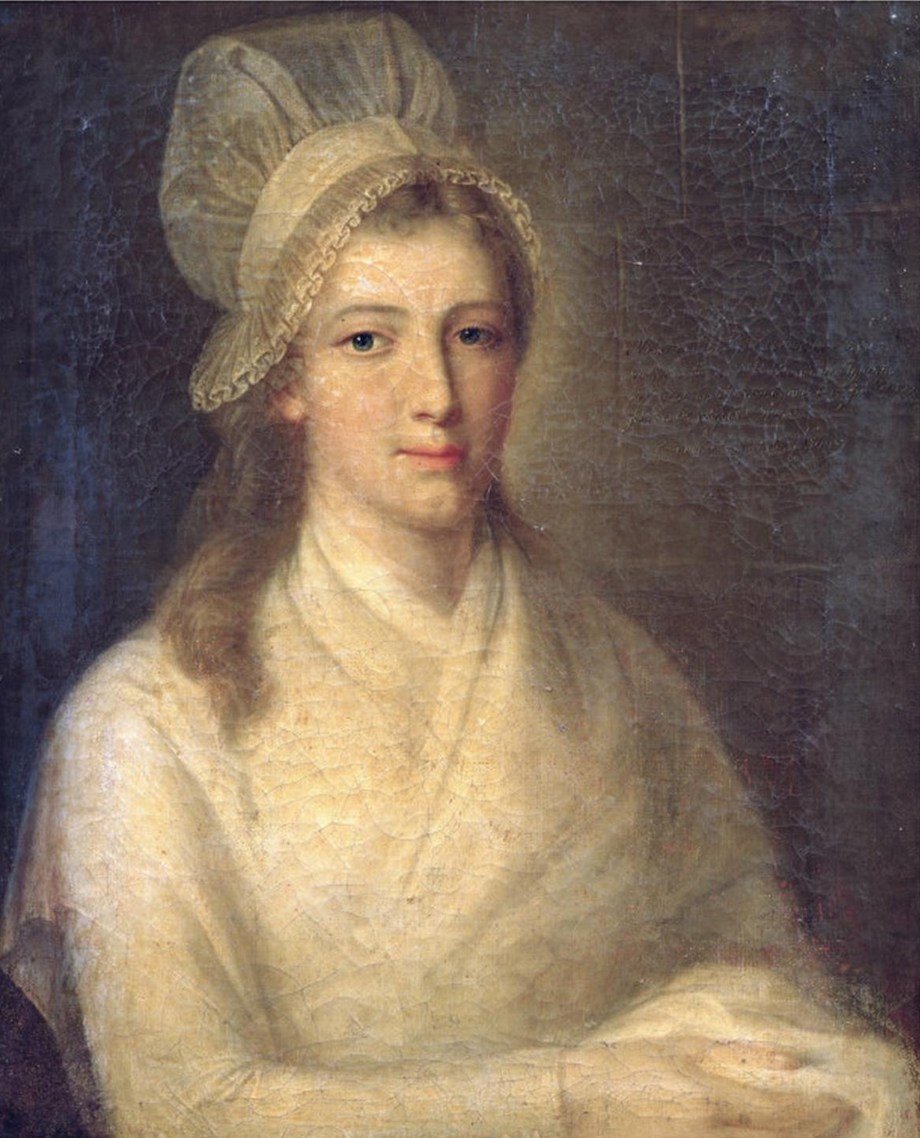
Portrait of Charlotte Corday
The Knife and the Calm Behind It
On 13 July 1793, Charlotte Corday talked her way into a sickroom on the Rue des Cordeliers, drew a kitchen knife she had bought that morning, and drove it once through the chest of Jean-Paul Maratas he sat in his medicinal bath. She did not flee. She did not strike twice. She waited to be seized, denied nothing, and four days later walked to the guillotine at twenty-four. The royalist press called her “the Angel of Assassination,” but she would have rejected the romance: she had not killed for an angel's reasons, but for a calculation she believed to be sound.
She was an educated Normandy noblewoman who read Plutarch and Rousseau and formed her politics slowly. A moderate republican, she admired the Girondins — the faction of Madame Roland — and had concluded, with fixed and undramatic certainty, that the Terror flowed from one poisoned source. Marat's newspaper demanded heads by the hundred thousand. Corday concluded that subtracting one man could save the Republic. That conclusion, and the methodical calm with which she carried it out, make her an ISTJ: duty discharged, not a vision pursued.
I killed one man to save a hundred thousand.
The Settled Conviction
Si — dominant
Dominant Si consolidates around what has been weighed and found true rather than leaping toward speculative futures. Corday did not arrive at her hatred of Marat in a fever. She read for years — Plutarch's grave portraits of Brutus and the Roman tyrannicides, the Enlightenment authors who taught her the Republic was worth defending — until her judgment hardened into something immovable. The Republic was being defiled; one man's newspaper was the engine of it. This was not a hypothesis she entertained. It was a fact she had settled.
The same Si shows in her preparation. She traveled to Paris by public coach; when she learned Marat's illness kept him housebound, she revised the plan and bought a kitchen knife because it was the tool that would do the work. She wrote an “Address to the French” explaining her reasoning in plain legal terms and carried it on her person. The deciding was finished long before the deed.
The Efficient Hand
Te — auxiliary
Auxiliary Te gets a defined task done without waste. Corday gained entry to Marat's rooms by a calculated lie — she promised to name Girondin traitors hiding in Caen, exactly the bait he could not refuse. Refused at the door the first time, she returned that evening and was admitted. She struck once, then did not run, because flight had never been part of the design. One woman, one journey, one knife, one stroke — the economy of a mind that sets an objective and executes it without excess.
Te governs her conduct after capture too. At trial she was lucid and unrattled, corrected the prosecution on points of fact, insisted she had acted alone, and declined to manufacture accomplices or excuses. When the verdict came she received it as the lawful consequence of what she had chosen — only the calm of someone who had already accounted for this outcome and saw no reason to dispute the sum.
The Private Absolute
Fi — tertiary
Fi is the private value held without reference to consensus — a personal sense of right that answers to no crowd. Corday acted entirely alone because the conviction was hers, formed in solitude and obeyed in solitude. She belonged to no conspiracy, took no orders. Her famous formulation — that she had killed one man to save a hundred thousand — is the language of a private conscience doing its own grim moral mathematics, not of a visionary swept up in a movement.
Because Fi is tertiary rather than dominant, it does not overflow into sentiment or self-dramatization. Corday felt the wrong of the Terror intensely, yet expressed it through a single resolved act and a few sober sentences of justification. At the scaffold she was composed, even serene. The feeling was real — it was the engine of everything — but it ran underground, governed by Si conviction above and discharged through Te action rather than spilled in tears or rhetoric. An absolute, but a quiet one.
The Blindness to Consequence
Ne — inferior
Inferior Ne is the undeveloped capacity to imagine alternative outcomes. Corday could see the concrete present with total clarity: Marat alive, his paper inciting murder. What she could not see was the future her blow would create. She believed removing him would slow the Terror. The opposite happened: Marat dead proved far more useful to the radicals than Marat alive. David painted his corpse in the bath as a secular pietà, and Robespierre found in the assassination exactly the proof of conspiracy he needed. She aimed to save a hundred thousand and handed her enemies a saint.
A mind richer in Ne would have war-gamed the aftermath and weighed whether the symbol might outlive the man. The flaw was not in her logic but in her imagination — the one function least available to her. She killed the man precisely and lost the future entirely.
Why ISTJ Over INFJ
Why not INFJ?
Corday is endlessly romanticized as a visionary INFJ martyr — the inspired idealist who saw a future others could not. But her act reads as ISTJ: a settled, concrete moral conviction executed with methodical, dutiful calm. She researched her target, traveled alone to Paris, bought the knife, planned her access, did the deed once, then accepted the lawful consequence without drama or mysticism. That is Si-anchored duty and Te execution — not the Ni-Fe visionary's sweeping, future-laden moral attunement.
The INFJ operates on dominant Ni feeding Fe: a vision of where things are tending, a moral charge that reaches toward the collective and its destiny. Such a person acts in the name of a prophecy. Corday did the reverse. Her conviction was not a vision of what might be but a judgment about what concretely was — a present fact, weighed and settled by dominant Si. The Angel of Assassination is a beautiful phrase, but it describes a figure who never existed. The woman who killed Marat was something colder: a dutiful mind that fixed on a principle and carried it out to the letter, and to the scaffold.
Connected Figures
Further Reading
- The Girondins — M. J. SydenhamThe definitive study of the faction Corday admired — essential context for understanding what she thought she was defending.
- The World of the French Revolution — J. M. ThompsonPlaces Corday's act within the broader Girondin–Montagnard conflict.
- Citizens: A Chronicle of the French Revolution — Simon SchamaSchama's narrative treatment of the assassination and its aftermath remains among the most vivid in English.
- Marat: The People's Friend — E. Belfort BaxA sympathetic Marat biography that illuminates why radicals made a saint of him after Corday's knife.
