 Historical Figure MBTI
#365 · 4-2-26 · The French Revolution
Madame Roland
Soul of the Girondins · The Mind Behind the Ministry · O Liberty, What Crimes
1754 — 1793
5 min read
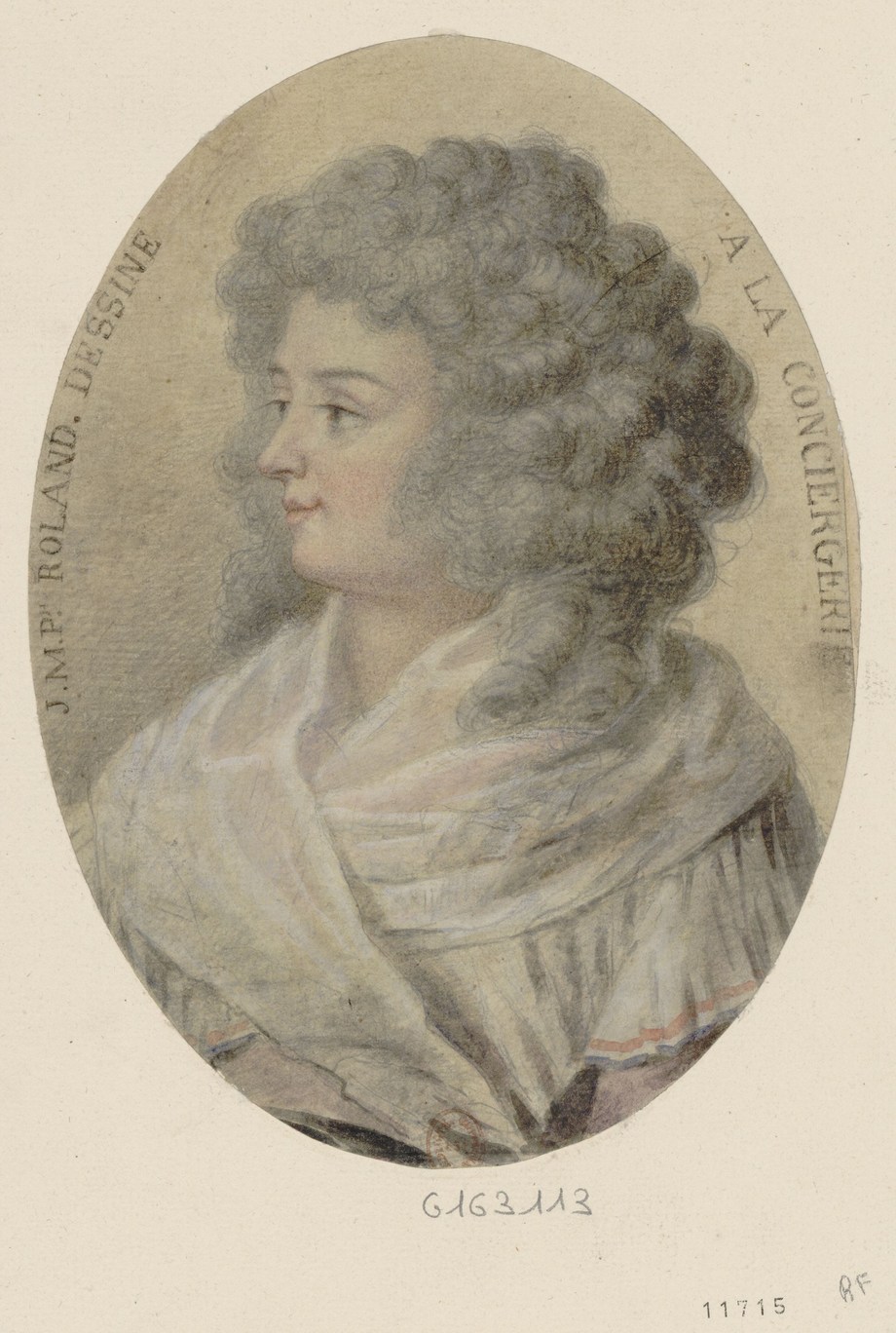
Portrait of Madame Roland
The Woman Who Governed From Behind the Curtain
On the eighth of November 1793, Marie-Jeanne Roland paused before a clay statue of Liberty near the scaffold and said—“O Liberty, what crimes are committed in thy name!” She was the intellect and soul of the Girondins, the moderate republican faction just devoured by the Revolution it had made. She held no office, never cast a vote—and yet for a season she governed entirely from behind the curtain.
That curtain was her salon and her husband's name. When Jean-Marie Roland became Minister of the Interior in 1792, his correspondence and circulars flowed from her hand. She was an INTJ—dominant Ni in the fixed vision of the virtuous Republic; auxiliary Te in the intelligence that ran a ministry through another man's signature; tertiary Fi in a Rousseauian moral core answerable only to itself; inferior Se in her fatal recoil from the brute politics of the street.
The INTJ denied the front of the stage and therefore mastering the back of it—ruling through the salon, the pen, and a borrowed name, holding her vision so steadily that she met the scaffold with the truest epitaph the Revolution ever received.
The Republic She Had Read Before She Lived It
Ni — dominant
Manon Phlipon had her vision long before there was a Revolution to attach it to. She carried Plutarch to Mass at eight; from Rousseau she took the conviction that republican virtue could be reborn in a modern nation. By the time the Estates-General met she already held, whole and finished, the Republic she wanted—and measured the actual Revolution against it.
Where Robespierre fused himself with the People, she kept her vision inward, a private possession defended against a Revolution that kept failing to live up to it. She never doubted the vision; she doubted the men. Prison suited her: arrested in 1793, she wrote herMémoires—her own monument from inside the cell that was waiting to kill her.
The Ministry Run From a Tea-Table
Te — auxiliary
When Jean-Marie Roland became Minister of the Interior in 1792, the ministry acquired two heads, one invisible. She drafted his correspondence and circulars, wrote without embarrassment that she did the work while he signed it. The most famous document was hers: the “Roland letter” to Louis XVI, warning the King to choose for the Revolution or be destroyed, got the minister dismissed, made him a hero, and hastened the monarchy's fall. She had the organizing intelligence of a first-rate minister and the absolute impossibility of ever being one.
Her salon was an operational headquarters where Brissot and the Girondin deputies aligned tactics; she steered the evening and translated its conclusions into the letters that gave the faction its public voice. The INTJ does not crave the podium; she craves the result.
The Incorruptible Inner Compass
Fi — tertiary
Beneath the cool strategist ran a Rousseauian moral core that measured every man against an inner standard of sincerity almost none met. She would not flatter, would not bend her judgment to convenience. Toward Marat she was scaldingly severe; her antipathy to Robespierre had the quality of betrayed Fi—she had once sheltered his incorruptibility as kindred to her own, and her revulsion was the disgust of one purist at another she has decided is false. It helped ensure the quarrel would end on the scaffold.
Yet the same Fi gave her an unbearable dignity at the end. In prison she refused to compromise or disavow her friends. “O Liberty, what crimes are committed in thy name!” is an Fi sentence—the cry of a soul that gave itself wholly to an ideal, watched it perverted by men it despised, and refused even at the blade to pretend the perversion was the thing itself.
Overrun by the Politics of the Street
Se — inferior
Inferior Se is the INTJ's blind side: the realm of immediate physical force that the vision-driven mind chronically underestimates. The Girondins governed by speech; the Mountain mastered the mobilized crowd. Madame Roland found that violent, physical politics not merely dangerous but beneath the dignity of the Republic she imagined— and that fastidious recoil was a real weakness. When the sections surrounded the Convention in late May 1793, the faction of the word had no answer. They were proscribed and scattered.
Tried in a few hours by a tribunal that had decided in advance, she was taken through the jeering crowd in the tumbril—the whole sensory horror she had spent her life keeping at a distance closing over her at once. She is said to have asked for pen and paper at the scaffold and to have been refused: the mind that ordered everything in language was denied language at the last.
Why INTJ Over ENTJ
Why not ENTJ?
The ENTJ wants the title, the chair, the visible authority. Madame Roland did the opposite: she put her husband's name on her own work, sat apart in her own salon, and was most fully herself alone with a pen. That is dominant Ni served by auxiliary Te—a strategist working through proxies and prose—not the front-and-center executive who must be seen to command.
An ENTJ in her position would have found some way to claim the stage. Madame Roland felt no such hunger. Her ambition was for the triumph of a vision, not for personal eminence—and she preferred to exercise power while remaining unseen. She governed from behind the curtain not only because her century forced her there but because it suited the grain of her mind.
Connected Figures
Further Reading
- Mémoires de Madame Roland — Marie-Jeanne RolandHer own account, written in prison and smuggled out before her execution — one of the sharpest first-person records of the Revolution.
- The French Revolution: A History — Thomas CarlyleThe great 19th-century narrative that treats Madame Roland as one of the Revolution's defining personalities.
- Women and the Limits of Citizenship in the French Revolution — Olwen HuftonPlaces Roland in the broader story of how revolutionary women were simultaneously empowered and excluded.
- The Girondins: A Sociological Study — M. J. SydenhamThe standard scholarly account of the faction she led from behind the curtain.
- Madame Roland: A Study in Revolution — Ida M. TarbellAn early biography (1896) that remains a useful portrait of Roland's character and political role.
