 Historical Figure MBTI
#366 · 4-2-26 · The French Revolution
Mirabeau
The First Great Orator · The Comte Who Joined the Third Estate · Secret Servant of the King
1749 — 1791
6 min read
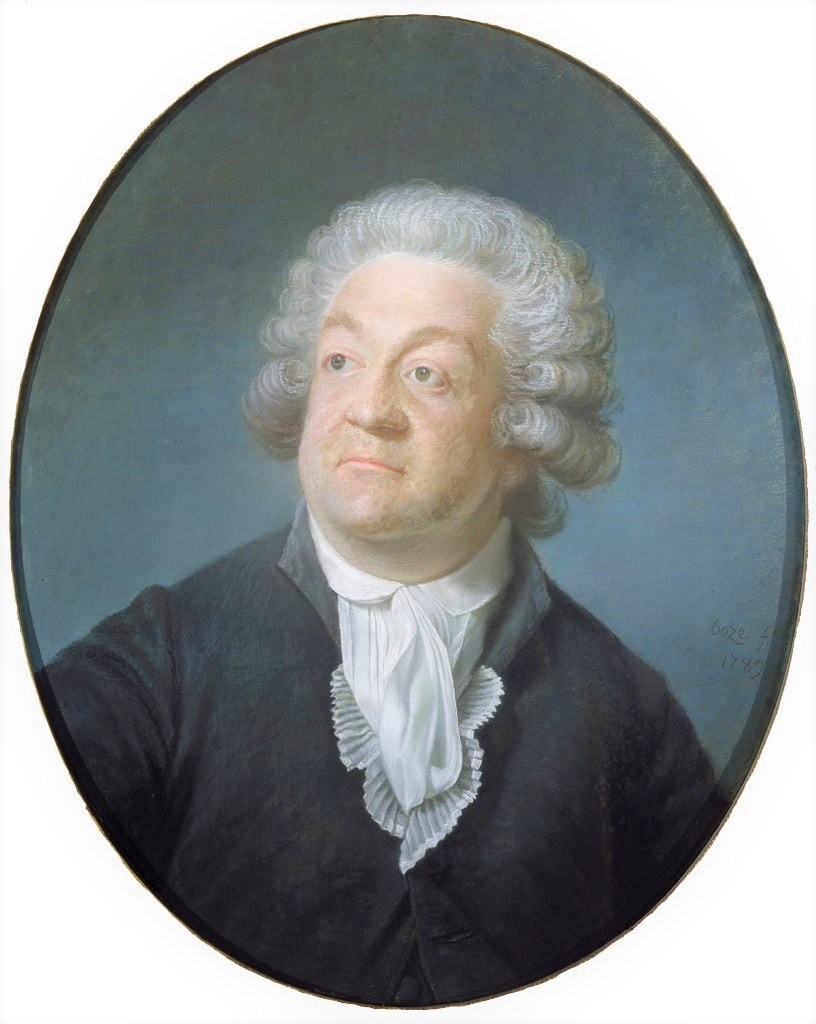
Portrait of Mirabeau
The Lion Who Wanted to Save the Throne
Honoré Gabriel Riqueti, Comte de Mirabeau, was the greatest orator the French Revolution ever produced—and, by any conventional reckoning, a disgrace. Imprisoned on his own father's orders, he had eloped with a married woman, run up debts no fortune could cover, and passed time in the dungeon of Vincennes writing erotica. When the Estates-General convened, he arrived not as a delegate of the nobility, which had refused to elect him, but as a representative of the Third Estate—a nobleman willing to betray his caste.
From the moment the National Assembly took form, Mirabeau dominated it. When the king's master of ceremonies came to disperse the deputies, Mirabeau answered: they were there by the will of the people, and would yield only to bayonets. Yet this incendiary tribune did not want to burn the monarchy down. He secretly took money from the court of Louis XVI and Marie-Antoinette, advising the king in coded memoranda even as he led the Revolution.
In April 1791 he died, and with him died the last bridge between the crown and the Revolution. The psychology is unmistakably that of the ENTP: dominant Ne improvising possibilities at speed; auxiliary Ti dissecting every argument; tertiary Fe playing the chamber like an instrument; and inferior Si surfacing as the ungovernable private life that trailed him to the grave.
“We are here by the will of the people, and we shall leave only by the force of bayonets.” It is the perfect ENTP utterance—unwritten, improvised in the instant, pitched at a watching crowd, and built to outlive the man who spoke it.
The Improviser in the Storm
Ne — dominant
Ne does not arrive at the podium with a finished speech; it reads the live situation and runs. Mirabeau's oratorical triumphs were almost never written in advance; he improvised answers that seemed to have been waiting in him all along. The reply to the king's herald was not a prepared declaration but a flash of intuition hurled at the exact instant it could change history.
The same restless intuition governed his politics. He saw the Revolution not as a program to be executed but as a field of possibilities to be steered. Where the doctrinaires followed a fixed principle off a cliff, Mirabeau treated principles as moves in a fluid game—which is why he could be tribune of the people in the morning and paid adviser to the throne in the afternoon and feel no contradiction. Dominant Ne is also the source of recklessness: intoxicated by what could be, indifferent to what merely is.
The Anatomist of Arguments
Ti — auxiliary
Ne gave Mirabeau his speed; Ti gave him his blade. He was a formidable analyst of constitutions and finance, capable of dissecting an opponent's position until its hidden contradiction lay exposed on the Assembly floor—deployed with cold precision beneath the heat of his delivery. Ti kept him a moderate when the tide ran toward extremity: he could see that a revolution which destroyed all executive authority would produce not liberty but chaos. The doctrinaires distrusted him precisely because his thinking refused to obey their slogans.
His secret memoranda to Louis XVI were not the ravings of a bribed flatterer; they were lucid strategic documents— diagnoses of the king's position, blueprints for constitutional survival. That he could hold the public tribune and the private chessboard in his head simultaneously is auxiliary Ti serving dominant Ne: the analyst quietly underwriting the improviser.
The Man Who Played the Chamber
Fe — tertiary
Fe in an ENTP is not tenderness; it is the instinct for the temperature of a room. Mirabeau could sense the precise moment a debate was tipping, modulate his voice from a growl to a roar, and carry a wavering Assembly bodily across to his side. The deputies were not merely persuaded; they were moved—and he knew, while it was happening, exactly which lever he was pulling.
His greatest moments were as much choreography as conviction. But tertiary Fe is an instrument, not a conscience: the same sensitivity that let him sway thousands let him manipulate them. Behind the public love affair with the people ran the cold private bargain with the court—beloved and untrustworthy at once, both facts produced by the same faculty.
The Life No Discipline Could Tame
Si — inferior
Si is the faculty of order, routine, and financial prudence—the weakest thing in Mirabeau's stack. Money ran through him like water. The man who could analyze the French treasury with surgical clarity could not keep his own accounts from collapsing—Ti brilliant in the abstract, Si helpless in the concrete. The imprisonments, the scandals, the elopement that landed him in Vincennes all flowed from a nature that could not regulate its own consumption.
In the spring of 1791, at the height of his powers, his body gave out. He was forty-two. The man who might have saved the monarchy was destroyed not by his enemies but by his own ungovernable nature—the one possibility his intuition had never managed to master.
Why ENTP Over INTP
Why not INTP?
The shared Ne–Ti machinery makes INTP the natural alternative. But the INTP builds systems inwardly and engages the world reluctantly; Mirabeau ran toward the crowd, lived for the tribune, and was constitutionally incapable of operating in private. His analysis existed to be performed, his every scheme consummated in a deal. The lever he pulled hardest was tertiary Fe—manipulation of a chamber's mood—and no INTP organizes a life around that.
The INTP retreats to the study to perfect a model; Mirabeau bolted to the floor of the Assembly to win a room. He thought best out loud, under pressure, with hundreds of eyes on him—exactly where an extraverted intuitive belongs.
Connected Figures
Further Reading
- Fatal Purity: Robespierre and the French Revolution — Ruth ScurrIlluminates the world Mirabeau tried to prevent — the Robespierrist purity that erased him from the Panthéon.
- Citizens: A Chronicle of the French Revolution — Simon SchamaThe richest single-volume narrative of the Revolution; essential for placing Mirabeau's career and death in full context.
- The Oxford History of the French Revolution — William DoyleStandard scholarly overview covering the constitutional debates in which Mirabeau played a central role.
- Liberty or Death: The French Revolution — Peter McPheeRecent synthesis that reassesses the moderate strand of revolutionary politics Mirabeau embodied.
