 Historical Figure MBTI
#998 · 7-23-26 · The Second World War
Claus von Stauffenberg
The Bomb at Wolf's Lair · July 20 Plotter · Conscience Turned Assassin
1907 — 1944
8 min read
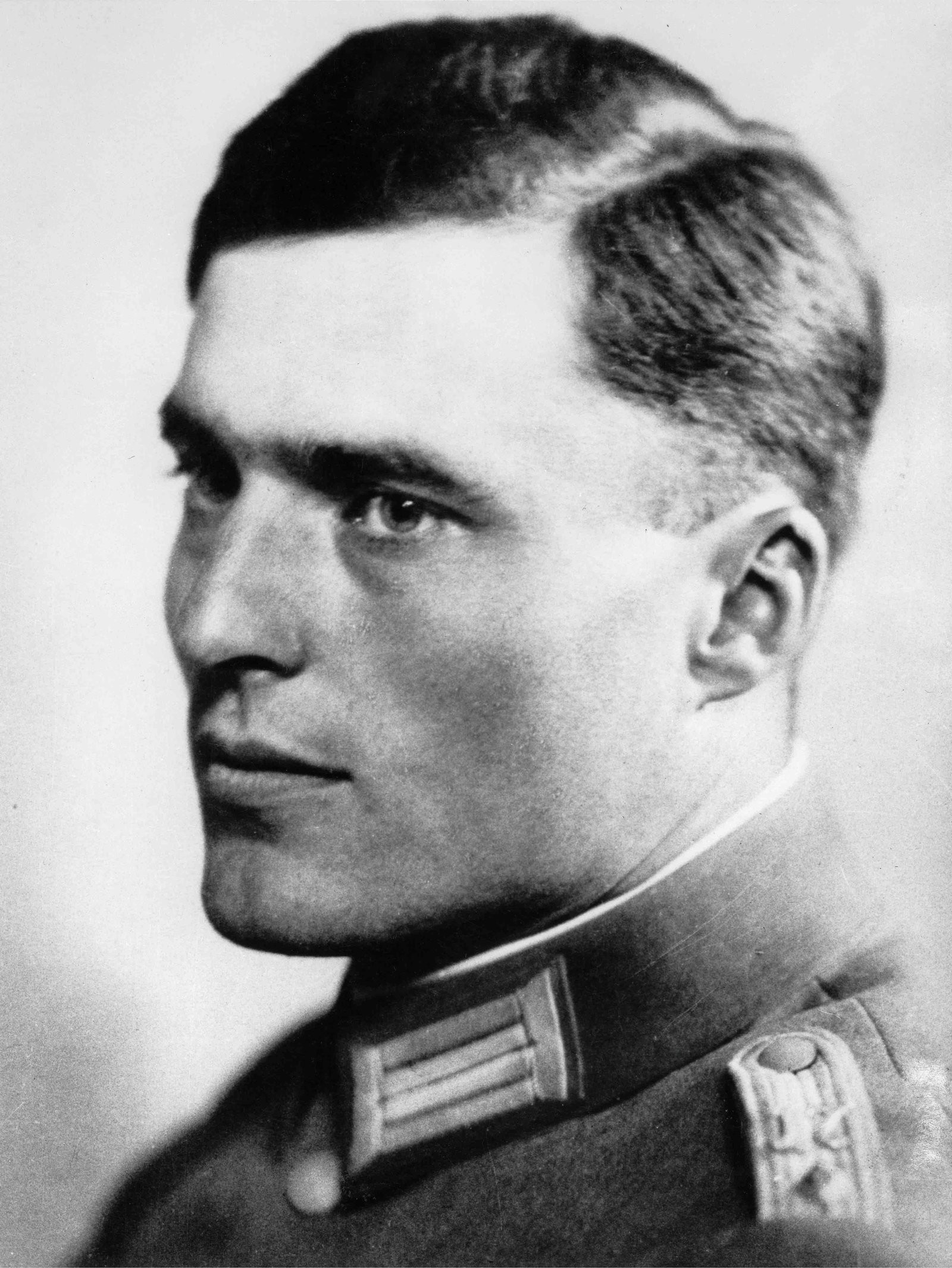
Portrait of Claus von Stauffenberg
The Long Interior Argument
He was, by every outward measure, exactly the man the German army had been built to produce. Born in 1907 into Swabian Catholic aristocracy, raised on Stefan George’s poetry and its private notion of a secret, better Germany, Claus von Stauffenberg entered the officer corps as an insider’s insider. Nothing in his early career reads as dissent; he was not immune to the regime’s appeal, and he did not object when objection would have been cheapest.
What changed him happened out of sight, and slowly. Serving in the East, he saw what occupation policy meant in practice — the murder of civilians, the deliberate ruin of a war he was helping to fight. In April 1943 an Allied air attack in Tunisia took his left eye, his right hand, and two fingers of the left, and he emerged from months of convalescence not broken but decided: the state he served was criminal, and had to be destroyed from inside by the men who had sworn to it.
On 20 July 1944 he carried a briefcase into a conference hut at the Wolf’s Lair, set the fuse, and left. The bomb detonated; Hitler survived. By midnight Stauffenberg stood in the Bendlerblock courtyard in front of a firing squad. What he did that day is usually told as an act. It is better understood as the surfacing of an argument he had been conducting privately with himself for years.
Stauffenberg reads as an INFJ: a dominant Introverted Intuition that assembled, in silence and over years, a single unbending picture of what Germany had become — and only then let it out into the world as action.
The Secret Germany — Ni as a Verdict Reached Alone
Introverted Intuition does not gather evidence the way an investigator does. It broods on impressions until they resolve into one shape, and then treats that shape as settled. Stauffenberg’s conversion has no single documented hinge — no scene where a loyal officer became a conspirator — only a long accumulation: Poland, the East, the Commissar Order, the reports that reached a staff officer’s desk and could not be un-read. Colleagues from 1941 recalled a man growing quieter and more caustic, arguing in generalities about where all of this was going, years before he named a plan.
The frame he settled into was not tactical but symbolic — the George circle’s idea of a hidden, truer Germany existing apart from the state wearing its name. That is an intuitive’s construction: an invisible order more real to him than the visible one. It let him hold two things most officers could not hold together, that his oath was binding and that the man he had sworn it to had forfeited the right to receive it. His last recorded words in the courtyard — an invocation of a sacred Germany — were not a slogan for a crowd. There was no crowd. It also explains why he went ahead once the plan’s practical value had gone: by mid-1944 killing Hitler would not save Germany from defeat, and he knew it, but he proceeded on Tresckow’s reasoning that the attempt was owed for what it would prove about the country — a man acting on a fixed inner picture of meaning rather than on an expected outcome.
Fe — The Conviction Turned Outward, Late
Auxiliary Extraverted Feeling is what carried a private verdict into a room full of other people. From the autumn of 1943 Stauffenberg became the conspiracy’s human connective tissue: he recruited, he reassured, he held together generals who despised each other, and he spoke to older, more cautious men in the register each of them needed — deference for Ludwig Beck, a plan on paper for Friedrich Olbricht, and for the field commanders the assurance that someone else would go first. The plot had existed for years without finding anyone who could make people move.
Fe also set the moral terms. His objection was never abstract political theory; it was about what was being done to people, and when he told co-conspirators that they must act because the world had to see that Germans had resisted, he was reasoning in the currency of shared judgment. But note the cost of an auxiliary rather than dominant Fe. He could read a room and win it, but he could not make himself defer to it. When the plot’s senior figures hesitated in the summer of 1944 he did not wait for consensus; he took on both roles — assassin at Rastenburg, coordinator in Berlin — because he trusted his own reading over theirs. That is Ni holding the wheel, with Fe as the instrument.
Ti — Valkyrie, Reverse-Engineered
The most elegant thing about the July plot is that its instrument was the regime’s own contingency plan. Operation Valkyrie existed to let the Replacement Army seize control of Germany in the event of internal collapse — a rebellion of foreign workers, the death of the head of state. Stauffenberg, as chief of staff to that army’s commander, rewrote the orders so that the machinery built to protect the government would, on the right signal, arrest it. Tertiary Introverted Thinking shows up as exactly this kind of internal-consistency trick: find the system’s own logic and turn it one degree.
Tertiary Ti is powerful and also brittle, and the plan carried its signature weakness: a chain of assumptions each of which had to hold — that the bomb would kill, that word would reach Berlin cleanly, that garrison commanders would obey a piece of paper over a familiar voice on the radio. It was internally coherent and externally fragile. When Hitler’s survival became known, the same officers who had begun executing Valkyrie arrested the men who had issued it.
Se — The Hour That Would Not Cooperate
Inferior Extraverted Sensing is the weak seam in every INFJ, and on 20 July 1944 the plot failed almost entirely along it. The execution demanded fine motor work against a clock, from a one-handed man with three remaining fingers: two charges to prime, and only one primed before an aide interrupted him — the second, left unarmed in his bag, would have made the blast unsurvivable. The conference had been moved from the concrete bunker to a wooden hut with open windows, and the briefcase he set against a table leg was quietly nudged to the far side of a heavy oak support by another officer. Each is a matter of physical circumstance, and each mattered more than everything he had thought about for two years.
His response to the ambiguity is equally telling. He had watched the hut go up from a distance and concluded, on his own eyes and his conviction that it must be so, that Hitler was dead — then flew to Berlin and spent the evening insisting on that certainty to men receiving contrary reports. Inferior Se under pressure does not read the incoming data; it substitutes the picture already held. The courage in the same seam should not be understated: he primed the fuse himself, with three fingers, and when it ended in the courtyard under truck headlights he met it without argument.
Why INFJ Over ENFJ
Why not ENFJ?
The ENFJ case is real and deserves stating plainly: from late 1943 Stauffenberg was the conspiracy’s operational hub, recruiting, delegating, and holding a fractious network of officers together by force of presence. But an ENFJ’s dominant Fe organizes people from the beginning; it is how such a person thinks, not a phase they enter. Stauffenberg spent the years in which an ENFJ would already have been recruiting saying almost nothing — his turn was interior, private, largely undocumented, and he joined an existing conspiracy rather than founding one. The conviction preceded the organizing by years and did not depend on it, which puts Fe in the auxiliary seat and a fixed inner vision in the dominant one.
The disagreement is not sloppiness; it turns on which months of a thirty-six-year life you weigh most heavily. Judge him by 1944 and ENFJ is defensible. Judge him by the years before it and you find a reserved, bookish staff officer working out alone what he was going to have to do, in terms borrowed from poetry rather than politics. The late Fe was the delivery mechanism; the thing delivered had been assembled in private.
Connected Figures
Further Reading
- The History of the German Resistance 1933–1945 — Peter HoffmannThe standard scholarly account of the whole resistance, and the fullest reconstruction of 20 July hour by hour.
- Stauffenberg: A Family History — Peter HoffmannTraces the Swabian aristocratic world and the Stefan George circle that shaped his idea of a secret Germany.
- Plotting Hitler's Death: The Story of the German Resistance — Joachim FestA readable narrative of the conspiracies, strongest on the moral dilemmas of officers bound by an oath.
- Valkyrie: The Story of the Plot to Kill Hitler, by Its Last Member — Philipp von BoeselagerA surviving conspirator's memoir — useful for the texture of the Eastern Front cell around Tresckow.
