 Historical Figure MBTI
#999 · 7-23-26 · The Second World War
Henning von Tresckow
The Architect of the Plot · Army Group Center · Better a Deed Than Nothing
1901 — 1944
6 min read
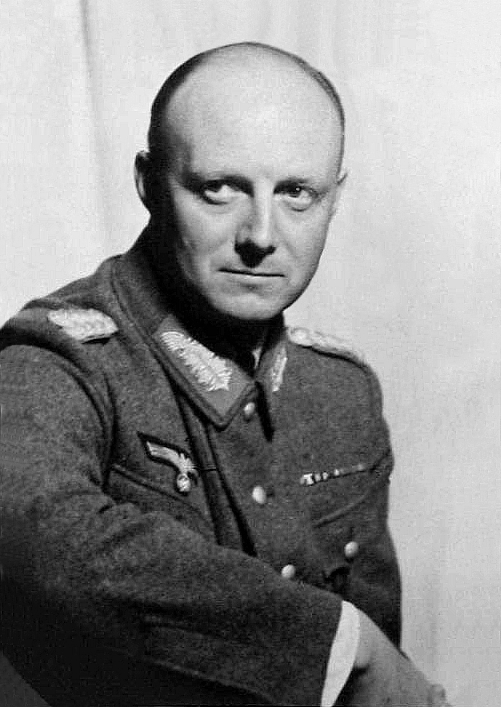
Portrait of Henning von Tresckow
The Staff Officer Who Planned a Murder as a Campaign
Henning von Tresckow did not stumble into the resistance in a moment of horror; he arrived at it the way a general arrives at a battle plan — through years of quiet, structural reasoning about where the war was going and what it would cost Germany's soul to let it go there. As a General Staff officer with Army Group Center on the Eastern Front, he watched the machinery of atrocity — the Commissar Order, the mass shootings behind the lines, the slow abandonment of any law of war — and drew a conclusion most of his fellow officers refused to draw: that the war could not be won honorably, and that the regime commanding it had to be destroyed from within, by the officer corps itself, before it destroyed everything the officer corps claimed to serve.
From that conclusion, reached early and held with total consistency, everything else followed. Tresckow spent years quietly building a network inside the Wehrmacht, recruiting men he judged capable of the act — among them a young colonel named Claus von Stauffenberg — and personally organized the March 1943 attempt to kill Hitler with a bomb disguised as a bottle of Cointreau, smuggled aboard the Führer's aircraft. It failed to detonate. He tried again, and again, until July 20, 1944 failed too, and his network began to fall.
Tresckow's INTJ mind treated the assassination of Hitler not as an act of rage but as the logical output of a long, cold argument — the argument of a dominant Ni that had settled, years in advance, on where German history was headed.
A Verdict Reached Years Before the Others
What separates Tresckow from the many German officers who privately loathed the regime but did nothing is not moral sensitivity — plenty of them had that — but the particular shape of his mind. Dominant Ni doesn't react to isolated atrocities; it fuses scattered data into a single, totalizing picture of where a trajectory ends, and then treats that picture as more real than the present moment. Tresckow reached his verdict — that Hitler had to die, and that the army's complicity made the army's officers personally responsible for stopping him — years before most of the conspiracy's later recruits had even begun to doubt the war.
That verdict, once formed, was not up for renegotiation by circumstance. Each setback — the failed 1943 bombing, the repeated collapse of plans, the dwindling number of men willing to act — did not send him back to first principles. It sent him looking for the next mechanism. This is Ni's signature under pressure: not flexibility, but relentless, single-track conviction that the underlying picture is correct even when every attempt to act on it fails.
Turning Conviction Into a Working Plot
A vision, however clear, kills no one. What made Tresckow dangerous to the regime was that his Ni insight was yoked to a formidable auxiliary Te — the capacity to convert an internal conclusion into logistics, personnel, and timetables. He recruited methodically, assessing which officers had the nerve and access to act and cultivating them over years rather than pitching them in a single conversation. He built the actual bomb plan for the March 1943 flight with an engineer's patience, down to the fuse mechanism smuggled past security in liquor bottles.
This is also the Tresckow who, after the bomb failed to go off, calmly retrieved the undetonated package before it could be discovered — a piece of operational discipline that a purely visionary or emotional temperament would have struggled to execute under that kind of terror. Te does not flinch at the gap between a good idea and its implementation; it treats that gap as a problem to be solved with resources, timing, and nerve, and Tresckow solved it repeatedly, across years, without ever being caught.
A Private Code No Failure Could Touch
Beneath the strategist's cold competence sat a tertiary Fi that gave the whole enterprise its moral floor. Tresckow's most famous line — that the moral worth of a man begins only at the point where he is ready to give his life for his convictions — is not the language of tactics. It is the language of an internal, non-negotiable value system, held privately and expressed rarely, that judged the plot's worth by its rightness rather than its odds of success.
That Fi surfaced most starkly at the end. When the July 20 plot collapsed and his arrest was certain, Tresckow chose to die by his own hand near the front line rather than be taken alive — not from panic, but from a calculated refusal to let torture extract the names of the men he had recruited, and a determination to protect his family by staging his death as a partisan ambush. It was a final act of private conviction, executed with the same discipline as everything else he had done.
Why INTJ Over ISTJ
Why not ISTJ?
An ISTJ reading would frame Tresckow as a dutiful officer pushed to his breaking point by an aberrant regime — duty to the institution eventually overridden by duty to a higher law. But that gets the direction of his reasoning backward. Tresckow didn't defend an existing standard against a corrupting deviation; he built, from his own long-range analysis, an entirely independent vision of what the German state and army ought to be, and then judged the actual Wehrmacht — its oaths, its chain of command, its obedience — as having failed that vision. That is Ni generating the standard, not Si preserving one.
Tresckow broke his officer's oath years before most of his peers would even entertain the thought, and he did so on the strength of a private, internally generated conclusion about where history was heading — not because an inherited code told him to. The break was total, sustained, and planned with an engineer's patience: the mark of Ni-Te, not Si-Fe.
Connected Figures
Further Reading
- The History of the German Resistance 1933–1945 — Peter HoffmannThe definitive scholarly account of the military conspiracy Tresckow led
- Countdown to Valkyrie — Nigel JonesA narrative history of the road to the July 20 plot
- The Plots Against Hitler — Danny OrbachTraces the network of officers, including Tresckow, across the war
- Valkyrie: The Story of the Plot to Kill Hitler — Philipp von BoeselagerA firsthand account from within Tresckow's Army Group Center circle
