 Historical Figure MBTI
#997 · 7-22-26 · The Second World War
Walter Bedell Smith
Eisenhower's Chief of Staff · The Iron Bulldog · Architect of the Machine
1895 — 1961
7 min read
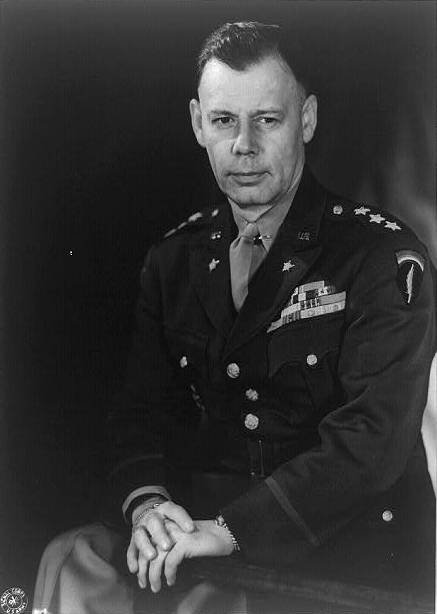
Portrait of Walter Bedell Smith
The Man Who Made the Machine Run
Walter Bedell Smith enlisted as a private in the Indiana National Guard in 1910, at sixteen, and spent the next three decades climbing the Army by outworking everyone in the room rather than by pedigree. No West Point ring, no cavalry glamour, no gift for the kind of public performance that made Patton a legend or Montgomery a headline. What he had was an unmatched appetite for detail, a temper that subordinates learned to fear, and a talent for making complicated machinery — armies, staffs, alliances — actually function. When Dwight Eisenhower needed a chief of staff who could turn strategic intention into functioning orders across a coalition of quarreling nationalities, he chose Smith, and never seriously considered anyone else.
Smith ran Supreme Headquarters Allied Expeditionary Force the way a foreman runs a shipyard: nothing moved without his knowledge, nothing got sloppy on his watch, and anyone who wasted Eisenhower's time answered to him first. He was the man other generals dreaded calling, because he would tell them, without softening, exactly what was wrong with their plan. That bluntness was not theater. It was the visible edge of a mind organized entirely around ISTJ procedure — a man who trusted what could be verified, built systems from precedent, and treated his personal loyalties as a fixed, private code rather than a public performance.
Smith was ISTJ to the bone — dominant introverted sensing, discipline built from precedent and detail, expressed through the blunt executive force of extraverted thinking.
Thirty Years of Precedent
Smith's twenty-eight years in the ranks before he ever wore a general's star were not a detour from his career — they were the foundation of how his mind worked. He had processed requisitions, filed reports, watched procedures succeed and fail across a generation of peacetime soldiering, and he carried every lesson forward as concrete, retrievable precedent. Introverted sensing does not improvise a new system for each crisis; it reaches for what has already been tested and refines it. That is exactly how Smith built SHAEF's staff machinery — not from some elegant theory of coalition command, but from the accumulated, unglamorous experience of what actually kept armies fed, informed, and moving.
It showed most clearly in the small, exacting rituals he imposed: the fixed briefing times, the standardized paperwork, the insistence that requests move through channels rather than around them. Subordinates who tried to shortcut the system by appealing directly to Eisenhower found Smith blocking the door — not out of jealousy, but because he had internalized, from hard experience, that undisciplined access wrecked the machine. At Reims in May 1945, when he sat across from German officers negotiating the terms of surrender, his conduct was scrupulously procedural: he insisted on exact language, verified every clause against the agreed terms, and refused to let the moment's historic weight loosen his attention to the document's precision.
The Iron Bulldog
Where introverted sensing supplied Smith's institutional memory, extraverted thinking supplied his edge. It is the function that wants results measured against a clear standard and has no patience for feelings that get in the way of the schedule. Eisenhower called him his "chief undertaker" for the way he handled dismissals and hard news; British officers who found his manner abrasive nonetheless conceded that Smith's staff work was the reason the Anglo-American alliance functioned as smoothly as it did. He did not manage relationships for their own sake — he managed outcomes, and treated relationships as instruments toward them.
That auxiliary Te is what let Smith absorb the friction Eisenhower could not afford to absorb himself. When Montgomery's demands threatened to fracture the coalition, or when a subordinate command dragged its feet on a directive, it was Smith who delivered the ultimatum, took the resentment, and let his commander stay above the fray. He was, by design, the bad news made flesh — the fixed point of accountability every large organization needs and few people are willing to become. It cost him: chronic ulcers, a temper that colleagues learned to route around, a reputation as the most feared man at SHAEF who was not actually in command of anything. He accepted that cost as the price of the job.
Loyalty as a Private Code
Beneath the bark, Smith's loyalty to Eisenhower was near-total, and it was not something he displayed for effect. Introverted feeling runs quiet and personal in an ISTJ — a fixed inner ledger of who has earned trust and what is owed to them — rather than an outward campaign for approval. Smith had attached himself to Eisenhower's cause since North Africa, and he defended his commander's interests with a ferocity that had nothing to do with career calculation. He absorbed blame that was not his, delivered unwelcome truths Eisenhower needed to hear but no one else would say, and asked for none of the credit that followed victory.
That same private code explains the parts of his record that public reputation missed: subordinates who met his standard, even once, found in him a fierce protector; genuine incompetence or dishonesty drew a coldness from which there was no appeal. It was never negotiable and rarely explained — Fi does not campaign for its verdicts, it simply holds them. Smith's later turns as Ambassador to Moscow and as CIA Director were, in their own way, extensions of the same instinct: institutions built and defended from inside, not for applause but because the job demanded it of the man who could actually do it.
Why ISTJ Over ESTJ
Why not ESTJ?
Smith's bluntness and command of logistics look, at a glance, like the outward-facing organizational drive of an ESTJ. But ESTJs lead from the front and want the visible authority that comes with it — the podium, the command, the public credit for the system they built. Smith wanted none of that. He worked almost entirely behind the scenes, drew his authority from Eisenhower's trust rather than his own rank, and built his standards from decades of internalized precedent rather than an outward campaign to impose order on the world. That is dominant introverted sensing wearing the mask of a commander, not a natural commander himself.
The distinction matters because it explains why Smith never sought — and by most accounts would have refused — a field command of his own. An ESTJ chief of staff would have chafed at permanent subordination and eventually maneuvered for troops. Smith stayed exactly where his function stack suited him: unglamorous, indispensable, and utterly loyal to the one man whose success he had made his private cause.
Connected Figures
Further Reading
- Beetle: The Life of General Walter Bedell Smith — D.K.R. CrosswellThe definitive biography, drawing on Smith's own papers and wartime correspondence.
- Eisenhower: Soldier and President — Stephen AmbrosePlaces Smith's staff work in the context of Eisenhower's command style and coalition diplomacy.
- The Supreme Command — Forrest PogueThe U.S. Army's official history of SHAEF, detailing Smith's day-to-day operational role.
