 Historical Figure MBTI
#995 · 7-22-26 · The Second World War
Omar Bradley
The Soldier's General · European Theater Commander · Quiet Competence
1893 — 1981
7 min read
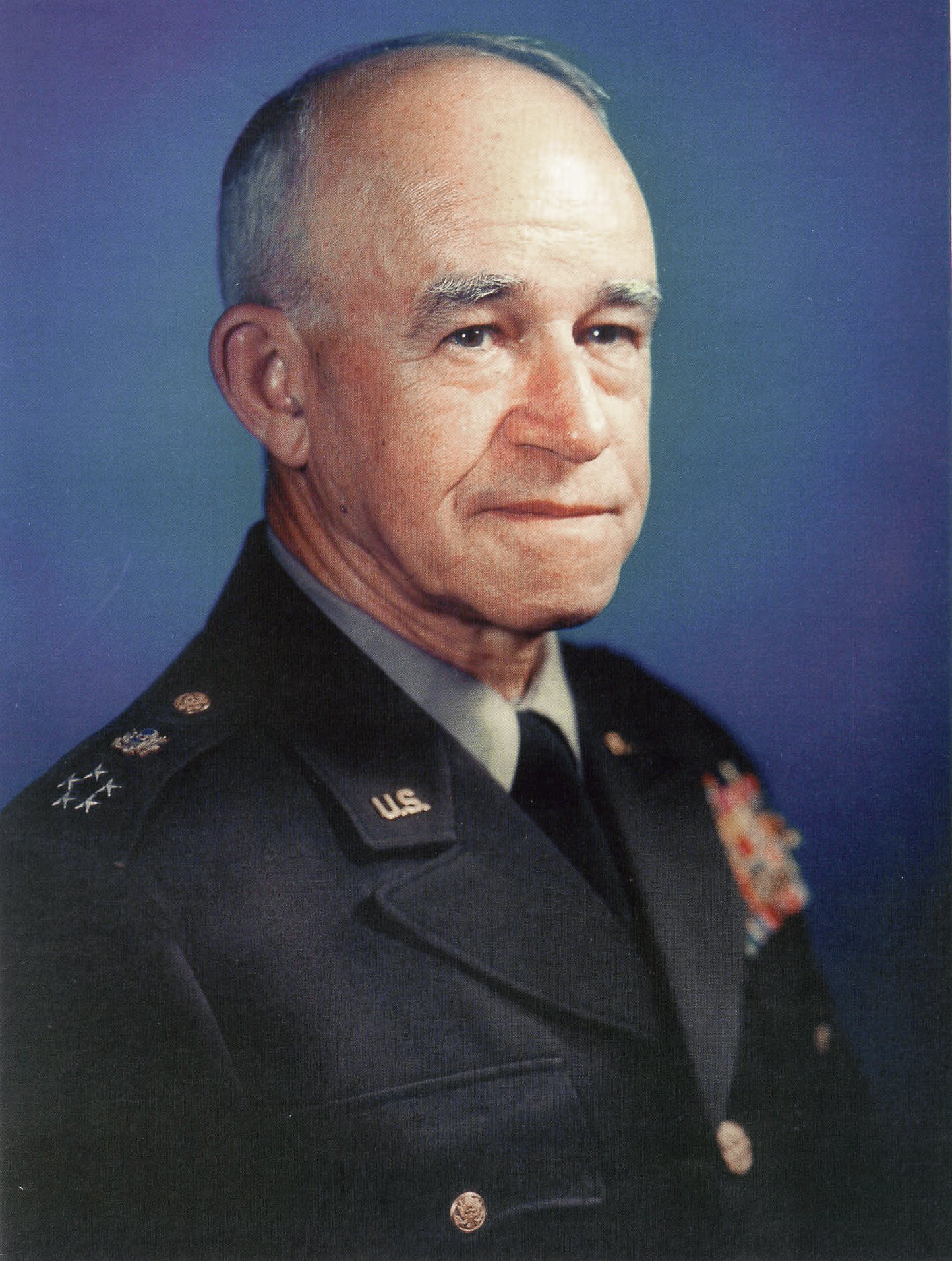
Portrait of Omar Bradley
The General Who Looked Like a Schoolteacher
Ernie Pyle gave him the name that stuck. Watching a mild, bespectacled Missourian in a plain field jacket eat the same rations as his riflemen and talk to them without performance, the war correspondent called Omar Bradley “the GI’s general,” and the phrase travelled home to a country that badly wanted its commanders to look like its citizens. The image was not manufactured. Bradley genuinely disliked ceremony, genuinely preferred the forward command post to the press tent, and genuinely believed that a general’s first obligation was not to waste the men entrusted to him.
It has caused him to be persistently undersold. The quiet man commanded the largest field force ever assembled under an American officer: by the spring of 1945 the 12th Army Group comprised four field armies and some 1.3 million men. He put First Army ashore at Omaha and Utah on 6 June 1944, designed and executed Operation Cobra — the carpet-bombing breakout at Saint-Lô that turned the Normandy stalemate into a rout — and absorbed the German blow in the Ardennes across a front he had knowingly left thin. None of that was showmanship. All of it was the work of a man who thought in systems and refused to be hurried out of them.
An ISTJ whose dominant Si made competence itself into a form of leadership — trust earned not by inspiring soldiers but by being, without fail, exactly where and what he had said he would be.
The Man Who Had Read the Ground
Bradley came out of West Point in the class of 1915 — the class the stars fell on, Eisenhower among them — and then spent a quarter century in the same unglamorous apprenticeship: infantry schools, the Command and General Staff School, instruction at Benning under George Marshall, who kept a private notebook of officers worth remembering and wrote Bradley’s name in it. He missed combat in the First World War entirely. What he accumulated instead was the unfashionable stock-in-trade of introverted sensing: how a division actually moves, what a battalion can be asked to do in a day, where units break.
It showed at Kasserine. Sent to North Africa in 1943 to report on II Corps after the catastrophe, Bradley did not theorise about American inexperience; he went and looked, unit by unit, and produced a granular inventory of what was wrong — training, staff work, the physical condition of the men. Patton took the corps and shook it; Bradley inherited it in April and fought it competently through the Tunisian endgame at Bizerte, then through Sicily. The sequence tells you exactly what kind of officer he was. He was not the one you sent to electrify a beaten command. He was the one you left in charge once it was working.
Normandy was the same faculty at scale. He and his staff had studied the bocage in photographs and reports and still underestimated it, and Bradley’s response was empirical rather than inspired: adopt the hedgerow-cutter improvised in the field, retrain, and then find a single point where overwhelming air weight could break the crust. Cobra worked because it was built out of things he had verified would work.
Building an Army That Would Outlast Him
Bradley’s auxiliary Te expressed itself as an appetite for institutional order rather than personal command. He reorganised II Corps’s staff procedures before he tried to win anything with it. He ran 12th Army Group as a machine of delegated authority — Courtney Hodges and William Simpson and, eventually, Patton, each given a sector and an objective and left to work — and he judged subordinates by whether their headquarters produced reliable information, not by whether they were interesting.
The most revealing Te decision of his war is also the most criticised. At Falaise in August 1944 he halted Patton’s XV Corps at Argentan rather than let it drive north into Montgomery’s advancing Canadians, and thousands of Germans escaped through the gap. Bradley’s reason was structural: an uncoordinated meeting of two allied armies advancing toward each other risked a fratricidal collision, and the inter-army boundary was a rule that existed for good reason. He preferred, as he later wrote, a solid shoulder to a broken neck. It was the wrong call operationally and an entirely characteristic one — a man who trusted the system over the opportunity.
The Ledger of the Lives Spent
Beneath the mildness sat a hard and private moral accounting. When Patton slapped two hospitalised soldiers in Sicily, Bradley — then Patton’s subordinate — read the report, had it filed, and quietly declined to bury it, a small act of institutional conscience against a superior he needed. A year later, when the roles reversed and Patton served under him in France, Bradley never gloated and never quite forgave; his memoirs are polite and cold in the way only a values-driven introvert manages.
His feeling for the troops was the same faculty pointed outward. He was among the few senior commanders who visibly hated casualty lists, who insisted that replacements be trained before being fed into line units, and who argued for the point system that sent the longest-serving men home first. It was not sentiment. It was a conviction, held internally and rarely articulated, that the men were owed something specific and that a general who spent them carelessly had defaulted on a debt.
The Quiet Sector on the Map
In December 1944 the Ardennes was held by four divisions across eighty miles: two green, two exhausted. The reasoning was sound by every precedent Bradley possessed — the terrain was bad, the Germans were beaten, and the weight belonged elsewhere. The one thing the reasoning could not do was imagine an enemy acting against his own interests out of desperation. That is the inferior Ne blind spot in its purest institutional form, and it cost the Americans nineteen thousand dead.
He recovered as an ISTJ recovers: not by improvising, but by restoring order. Reinforcements went in, Patton was turned north to Bastogne, and the line was rebuilt. The humiliation came when Eisenhower temporarily handed the northern half of Bradley’s own army group to Montgomery for the duration of the battle — a sensible command decision that Montgomery then publicised as a rescue. Bradley, normally unflappable, went white with anger and threatened to resign. The wound never fully closed.
Why ISTJ Over ISTP
Why not ISTP?
The reserve, the practicality, and the dislike of theatre all point that way, and Cobra — a sharp, improvised concentration of air power at one hinge — has the look of an ISTP’s tactical opportunism. But Bradley’s deepest investment was never in the immediate problem; it was in doctrine, training pipelines, staff procedure, and the institutional health of the American army. An ISTP solves what is in front of him and is largely indifferent to the structure that produced it. Bradley halted at Argentan precisely because the structure mattered more than the opening, which is close to the definition of the difference. And his postwar career — first chairman of the Joint Chiefs of Staff, architect of a peacetime service culture, the man who rebuilt the Veterans Administration — is a Te builder’s résumé, not a technician’s.
What makes him an unusually clean ISTJ is that his virtues and his failures come from the same source. The reliability that made Eisenhower hand him the American weight of the campaign is the same conservatism that let the Germans out of the Falaise pocket and left the Ardennes thin. He was not a great captain in the romantic sense and never pretended otherwise. He was something the coalition needed more: a commander whose word about what his armies could do was, without exception, true.
Connected Figures
Further Reading
- A Soldier's Story — Omar N. BradleyHis 1951 memoir — restrained on the surface, quietly score-settling with Montgomery underneath.
- Omar Bradley: General at War — Jim DeFeliceA modern reassessment that takes the Falaise and Ardennes criticisms seriously.
- The Guns at Last Light — Rick AtkinsonThe Liberation Trilogy's final volume; the best narrative of 12th Army Group in action.
- An Army at Dawn — Rick AtkinsonNorth Africa, including Kasserine and Bradley's arrival at II Corps.
