 Historical Figure MBTI
#996 · 7-22-26 · The Second World War
George Patton
Old Blood and Guts · Tank Commander · The Showman of the Third Army
1885 — 1945
10 min read
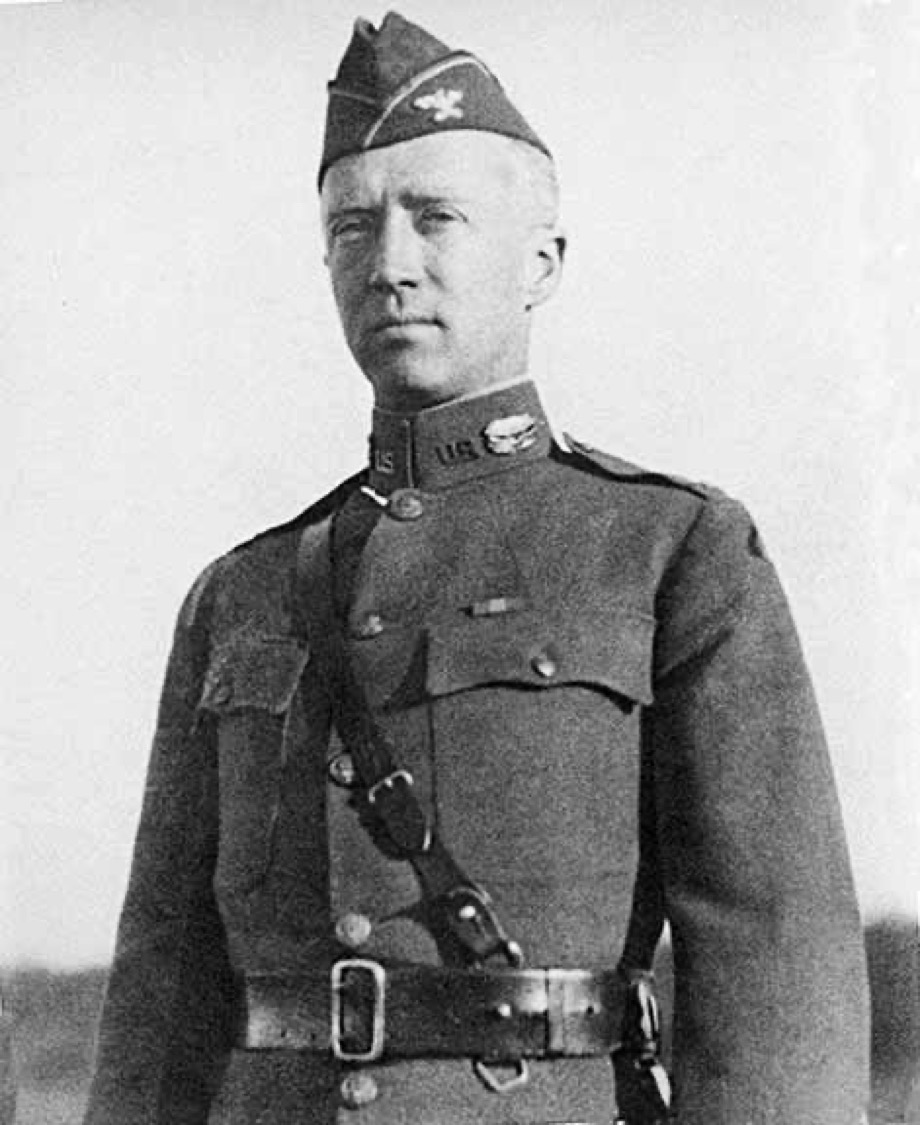
Portrait of George Patton
The Man Who Was Only Fully Alive at Speed
He carried ivory-gripped revolvers, polished his helmet to a mirror, and had a personal standing order that his command vehicle be visible from the front. Every one of those choices has been read as vanity, and vanity was certainly present, but it misses what the props were for. George Patton needed to be inside the event. A general who watched a battle through situation reports was, to him, not really commanding it — he was reading about it afterwards. So he drove forward, stood in the open, waded into stalled traffic to direct trucks himself, and got close enough to smell what his divisions were doing.
It produced the fastest sustained advance in American military history. Between the Cobra breakout at the end of July 1944 and the fuel exhaustion of early September, Third Army ran across France — Avranches, Le Mans, the Seine, Verdun — six hundred miles in a month, outrunning its own maps, its own supply columns, and every planning assumption above it. When the Germans struck the Ardennes in December, Patton was asked at Verdun how quickly he could disengage from an offensive facing east and attack north instead. He said forty-eight hours. The room laughed. He had already ordered three contingency plans drafted and the movement began within the promised window.
And this was the same man whose career had twice nearly ended over his own mouth: struck off the invasion order after slapping two shell-shocked soldiers in Sicilian field hospitals in August 1943, and nearly finished again the following spring for an unbuttoned speech at Knutsford. The two facts are one fact. What made him the most dangerous field commander the Americans possessed also made him incapable of behaving.
An ESTP whose dominant Se made a battlefield legible to him the way a page is legible to a reader — instantly, physically, and entirely in the present tense, which is precisely why the present tense was the only tense he could govern.
Reading the Ground With His Body
The sensory life came first and never stopped. He rode in the 1912 Olympic modern pentathlon at Stockholm, studied swordsmanship in France, and redesigned the US Army’s cavalry sabre — the Patton sword of 1913 — around an argument about the physics of the thrust. In 1916 he chased Pancho Villa across Mexico in three Dodge touring cars and shot it out with Villa’s bodyguard at a ranch, an escapade that produced the first motorised action in American military history and, not incidentally, a great deal of press. Machinery that moved fast enough to be felt was the thing he loved.
So the tank found him. In 1917 he built the American Expeditionary Force’s first tank school from nothing at Bourg, learned the vehicles by driving and repairing them, and at Saint-Mihiel and the Meuse-Argonne walked ahead of his own tanks under machine-gun fire until a bullet went through his thigh. Twenty-six years later nothing had changed except the scale. In Sicily, denied the glamorous drive on Messina, he improvised a series of amphibious hops along the north coast and got there first anyway. In France he was habitually at the head of a column rather than behind it.
What that proximity bought was speed of recognition. When Bradley’s Cobra bombardment cracked the line at Saint-Lô, Patton did not wait for the situation to clarify; he shoved armour through the Avranches corridor on a single road while the gap was still notional and accepted an exposed flank two hundred miles long as the price of momentum. It was reckless by every doctrinal standard and it worked, because he could see — not deduce, see — that the German front had stopped being a front and become a crowd.
The Private Theory Behind the Bluster
The showman was also, in private, one of the most seriously read soldiers of his generation. His library ran to hundreds of annotated volumes — Caesar, Xenophon, Napoleon’s correspondence, the cavalry theorists, Rommel’s own Infanterie greift an — and he read them not for edification but for extractable principle. He worked out for himself, against the prevailing doctrine of his own army, that armour was not an infantry-support arm but an independent instrument of penetration, and he was saying so in professional journals in the 1930s when the American tank corps had been legislated out of existence.
Auxiliary Ti is what makes the difference between a brawler and Patton. The dash across France was improvised in its particulars and rigorously consistent in its logic: never reinforce failure, always feed the flank that is moving, keep the enemy’s decision cycle behind your own, hold ground only long enough to leave it. He could explain the reasoning at length to anyone who asked and frequently to people who had not. His profanity-soaked speeches to the troops concealed an argument — that casualties are caused by hesitation, that the fastest army is the safest army — which he had genuinely thought through and genuinely believed.
Ti also accounts for his contempt of procedure. He did not disdain staff work out of laziness; he disdained it because a rule that had stopped tracking the situation was, to his mind, simply false, and he saw no reason to obey a false thing. That is a coherent position. It also makes a man nearly ungovernable inside a coalition army whose entire operating premise was that everyone obeys the boundary lines.
The Performance and Its Cost
Tertiary Fe is a loud, unreliable instrument, and Patton used it like a weapon he had not quite calibrated. He constructed “Old Blood and Guts” deliberately — practised the scowl in a mirror, cultivated the profanity, wore the pistols — because he had concluded that soldiers fight harder for a figure they can picture. It worked. Third Army’s morale in the winter of 1944 was a real strategic asset, and the men who complained loudest about him also boasted loudest about having served under him.
But an underdeveloped Fe reads a room by mood rather than by principle, and Patton’s failures were all failures of that instrument. In the Sicilian hospitals in August 1943 he encountered two men with no visible wounds, concluded on the spot that they were cowards infecting the wounded around them, slapped them, and screamed at the medical staff. He was not being cruel by policy; he was doing what he thought a commander must be seen to do, and his sense of what an audience needed was catastrophically wrong. Eisenhower forced apologies out of him — to the men, to the hospitals, to entire assembled divisions — and Patton performed each one, and the American press ended his chance of an army group.
He never learned. At Knutsford in April 1944 he told a small gathering that Britain and America — and, after a pause, Russia — would rule the postwar world, and the resulting furore came within a signature of sending him home. He wept in Eisenhower’s office. He was genuinely devastated by disapproval he had genuinely invited, which is Fe in the tertiary position exactly: enormously sensitive to the audience and almost incapable of predicting it.
Destiny as a Substitute for Foresight
Where an ESTP’s inferior intuition surfaces, it tends to arrive as conviction rather than analysis, and Patton’s took an unusually literal form: he believed he had lived before. He wrote poems about dying as a legionary and a Napoleonic cavalryman, told colleagues he recognised battlefields he had never visited, and spoke of having been recalled for a purpose he would recognise when it came. This was not a joke he was making. It was the mystical residue of a mind that had no ordinary channel for thinking about the future.
Operationally it left a real gap. He was a supreme corps and army commander and would have been a doubtful theatre commander, because he could not hold the whole board in mind — the shipping, the coalition politics, the postwar shape of Europe — and grew visibly bored when forced to. He raged at fuel priorities given to Montgomery without ever quite conceding that someone had to allocate them. He was a solver of the situation in front of him and a poor judge of situations that had not yet arrived.
The last year is Ni failing loudly. In occupied Bavaria he kept former Nazi administrators in office because they were the people who knew how the waterworks ran, then compared denazification to an American election squabble at a press conference and was relieved of Third Army. He began arguing that the Soviets should be fought immediately, which was intuition running unregulated in a mind with no apparatus for it. On 9 December 1945 his staff car collided with a truck near Mannheim; he broke his neck and died twelve days later, aged sixty, in a hospital bed — the one death he had never imagined for himself.
Why ESTP Over ESTJ
Why not ESTJ?
The case is superficially strong: a career soldier obsessed with discipline, uniform regulations, and the enforcement of standards down to whether a man wore his necktie in a combat zone. But those were Patton’s means of generating aggression, not expressions of a Te commitment to order — he imposed them capriciously, exempted himself constantly, and openly despised the doctrinal and administrative machinery that a genuine ESTJ builds careers inside. An ESTJ commander plans the operation, secures the flank, and honours the boundary line; Patton drove a corps down one road with an open flank because the opening was there now. His decisions were made in contact and justified afterwards by an internally consistent private logic (Se–Ti), not derived beforehand from procedure. Bradley, standing a few feet away through the same campaigns, is the ESTJ-adjacent control case — and the two men could not agree about a single battle.
The clinching evidence is Falaise. Patton, moving, wanted to close the pocket by driving north past his own army boundary and annihilate an entire German army group. Bradley stopped him at Argentan because the rule existed and a collision between converging allied armies was the risk the rule was written against. Both men were being entirely themselves. One saw an opportunity that would be gone in a day; the other saw a system that would have to survive the whole war. History has mostly sided with Patton on the merits of that particular afternoon, and mostly with Bradley on the question of who should be running an army group — which is as fair a summary of the ESTP at high command as anyone is likely to write.
Connected Figures
Further Reading
- Patton: A Genius for War — Carlo D'EsteThe definitive biography; unsparing on the temperament and serious about the generalship.
- The Patton Papers — Martin Blumenson (ed.)Diaries and letters in his own voice — the private theorist behind the public performance.
- The Guns at Last Light — Rick AtkinsonThird Army's dash across France and the turn to Bastogne, in operational detail.
- The Day of Battle — Rick AtkinsonSicily and Italy, including the fullest modern account of the slapping incidents.
