 Historical Figure MBTI
#1107 · 8-17-26 · The Han Dynasty
Empress Lü Zhi
The Empress Who Ruled from Behind the Throne
241 – 180 BCE
5 min read
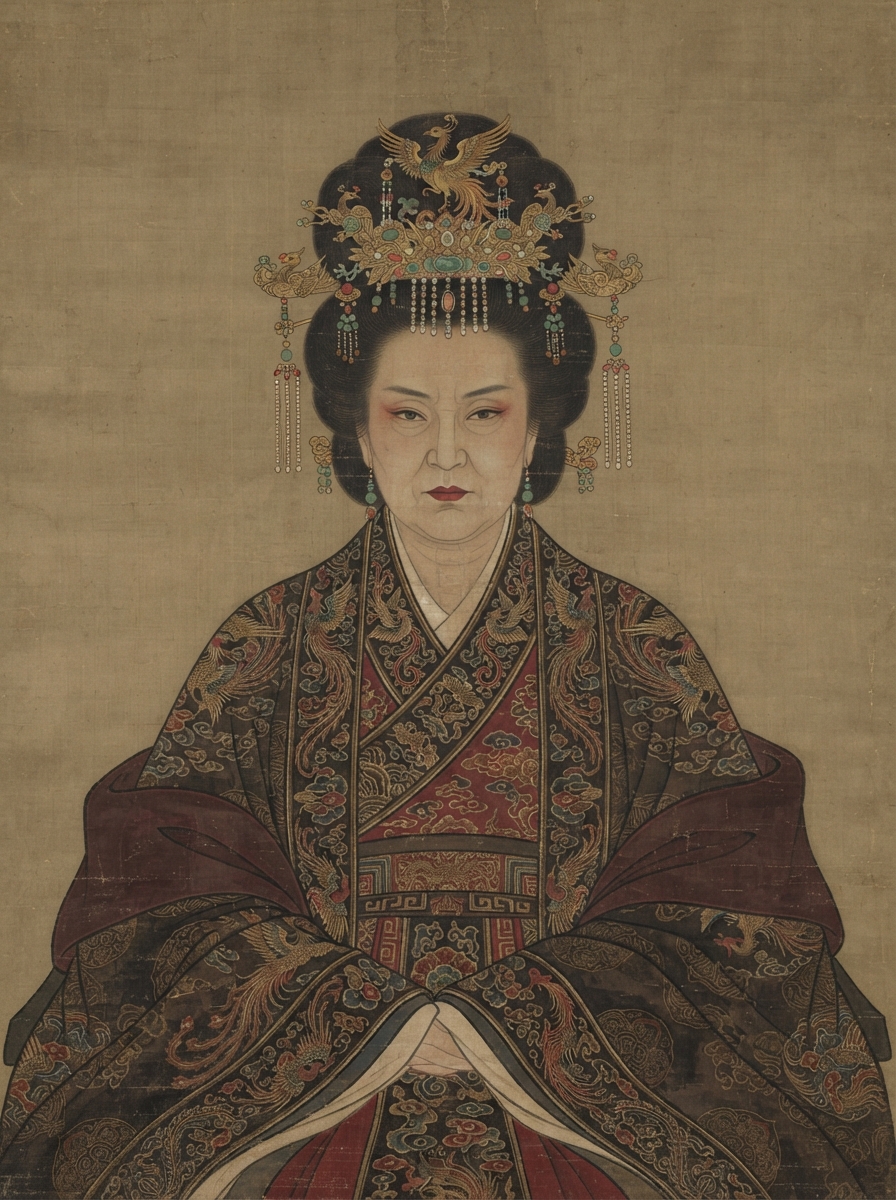
AI-assisted Portrait of Empress Lü Zhi
The Widow Who Governed an Empire
Lü Zhi married a middling official named Liu Bang before anyone — least of all him — could have guessed he would end the Qin dynasty and found the Han. She paid for that bet in advance: years of hardship on the frontier, a stretch as Xiang Yu’s hostage during the Chu-Han war, decades watching her husband take concubines and nearly disinherit her son in favor of a rival’s child. None of it broke her administrative nerve. When Liu Bang died in 195 BCE, Lü Zhi did not retreat into mourning — she took the machinery of a young empire and ran it, through a compliant son and then a string of infant emperors, for roughly fifteen years.
She is remembered, correctly, as one of the coldest political operators in Chinese history and, in the same breath, as the author of one of its most gruesome private atrocities. Both facts come from the same person. She was an ESTJ, a builder of institutions who governed by edict, appointment, and precedent — and whose dominant Extraverted Thinking, when it turned personal, curdled into something far darker than policy.
Lü Zhi was an ESTJ down to the marrow: dominant Extraverted Thinking that ran an empire by decree, staffing, and procedure — until the one wound it could not administer away turned into revenge.
The Regent Who Ruled by Decree
Extraverted Thinking wants control that is visible, executed, and enforced — not influence exercised at a whisper. Lü Zhi never governed as a power behind a curtain; she governed openly, issuing edicts in her own name as empress dowager, installing her Lü relatives across the ministries and the army garrisons, and running the machinery of the young Han state with a firmness that held the empire together through the deaths of one emperor and the enthronements of two more. This was command, not caretaking.
Her most consequential act of Te was the destruction of Han Xin, the general whose battlefield genius had done as much as anyone to win Liu Bang the throne and who consequently posed the single greatest threat to it. With Liu Bang away campaigning, Lü Zhi did not wait for permission — she had Han Xin lured to the palace on a fabricated charge of rebellion and executed on the spot, a decision of pure administrative calculation: a dangerous asset had become a liability, and she removed it.
Precedent as a Weapon
Introverted Sensing gave her Te its instrument: a memory for exactly how the machinery of the Han court worked, who held which post, and which precedent could be bent or invoked to legitimize a new arrangement. She did not improvise a regency out of thin air — she worked it through the existing structure of titles, appointments, and succession, installing Lü family members into posts that already existed rather than inventing new ones, so that her rule read as continuity rather than usurpation.
That same procedural patience is what let her survive the years before her power was secure. She endured captivity under Xiang Yu, years as a secondary wife eclipsed by a favored concubine, and the real threat that her son would be passed over as heir — all without a rupture, waiting until the machinery of succession itself put the throne in her hands.
The Human Swine
Inferior Feeling in an ESTJ does not surface as warmth withheld — it surfaces, under enough pressure, as feeling that has been suppressed so long it returns distorted and disproportionate. For years Lü Zhi watched Liu Bang favor Consort Qi and nearly maneuver Consort Qi’s son, Liu Ruyi, into the succession over her own. She metabolized the threat administratively while Liu Bang lived. The moment he was dead and the threat was gone, the buried personal wound did not resolve — it detonated.
She had Consort Qi’s limbs amputated, her eyes gouged out, her ears and throat destroyed, and the mutilated woman left in a latrine, which Lü Zhi herself, with chilling directness, named the “human swine.” It is the single most disturbing act in the entire Han founding, and it is legible only as inferior Fi: a Thinking-dominant ruler capable of total procedural self-control turning, once, toward a wound she never let herself process, with a cruelty calibrated to match exactly how long she had swallowed it.
Why ESTJ Over ISTJ
Why not ISTJ?
An ISTJ regent would administer someone else’s authority quietly and from the background, deferring outwardly to the forms of legitimate rule even while managing its substance. Lü Zhi did the opposite: she issued edicts under her own name, purged a general on her own initiative while the emperor was absent, and openly stacked the government with her own relatives rather than working through intermediaries. That is bold, first-person command, not quiet compliance with someone else’s institution.
The distinction is not subtle in her case. An Introverted Sensing dominant would have kept her hand hidden and her family’s advancement incremental. Lü Zhi ran the Han court the way an Extraverted Thinking dominant runs anything — visibly, forcefully, and in her own voice — which is exactly why her fall, when it came within weeks of her death, was as total and as public as her reign had been.
Connected Figures
Further Reading
- Shiji (Records of the Grand Historian), "Basic Annals of Empress Lü" — Sima QianThe primary source, remarkable for granting her a sovereign's own annal chapter.
- The Men Who Governed Han China — Michael LoeweProsopographical study of the early Han court and administration, including the Lü regency.
- China: A New History — John King Fairbank and Merle GoldmanPlaces Lü Zhi's regency within the broader consolidation of the early Han state.
