 Historical Figure MBTI
#664 · 5-15-26 · The Five Good Emperors
Faustina the Younger
Mater Castrorum
c. 130 — 175 CE
6 min read
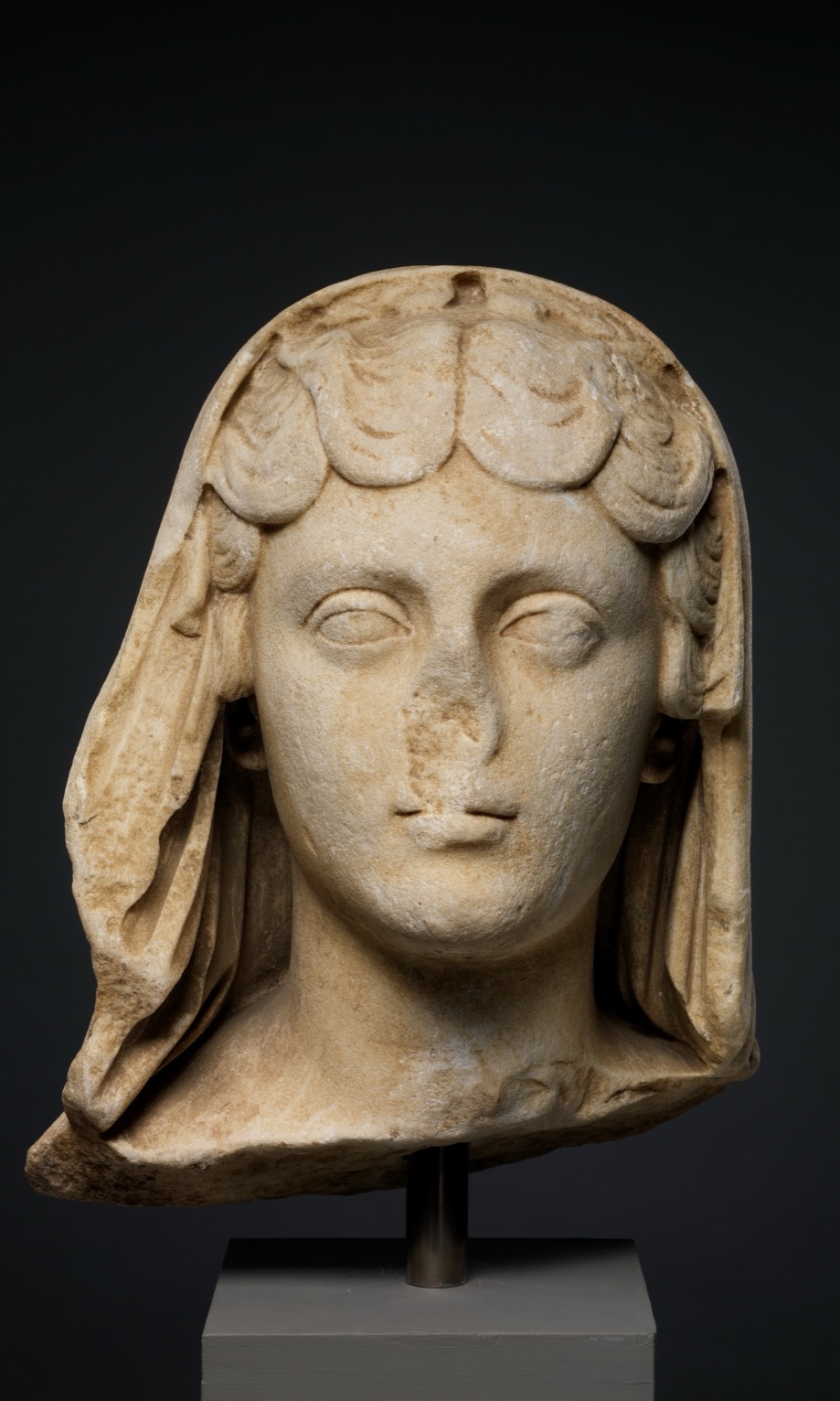
Portrait of Faustina the Younger
The Wife Who Went to the Frontier
Most Roman empresses are remembered, when they are remembered at all, as names attached to a husband's reign — cloistered figures glimpsed only through coinage and inscriptions. Faustina the Younger is different chiefly because she kept showing up in places an imperial wife was not required to be. Betrothed to Marcus Aurelius as a child under Hadrian's succession scheme, married to him around 145 CE, and mother to at least thirteen of his children over three decades, she spent much of that marriage on campaign rather than in the palaces of Rome — in the eastern provinces, and later among the legions on the Danube during the grinding Marcomannic Wars. The Senate's response was to grant her the title Mater Castrorum, "Mother of the Camp," an honor about what she represented to the soldiers simply by enduring their conditions alongside them.
That instinct — to make loyalty visible, to bind a fragile institution together through presence rather than policy — is the throughline of Faustina's public life, and it points unmistakably toward ESFJ. She was not a schemer reshaping the empire from the shadows, nor a philosopher-consort trading ideas with Marcus. She was the connective tissue of a dynasty, a woman whose currency was solidarity — and whose posthumous reputation for scheming says more about how uncomfortable ancient historians were with a woman wielding social capital than about anything she reliably did.
Faustina's ESFJ Fe didn't argue for the dynasty — it stood beside it, in the mud of the Danube camps, until the army believed in it too.
Mother of the Camp
Dominant extraverted feeling reads people as a network of obligations and acts to keep that network strong. Faustina's clearest expression of it is her most literal: she left the comforts of Rome to live among soldiers in a war zone, repeatedly, for years — not incidental to Marcus's campaigns but a calculated act of solidarity the Senate itself recognized as valuable enough to formalize with a title. An army grumbles less about a philosophically-minded, unpopular emperor when his family visibly shares its hardship rather than watching from a distance.
The same instinct outlived her. After her death near 175 CE — in a village in Cappadocia, or on the Danube frontier itself, sources disagree — Marcus had her deified and established a charity, the puellae Faustinianae, supporting poor and orphaned girls, modeled on a foundation her own father, Antoninus Pius, had created in his wife's name. It is a strikingly Fe-shaped legacy: not a monument to abstract virtue, but an ongoing, concrete provision for specific vulnerable people, administered in her name long after she could benefit from the goodwill it bought her. It is also the same trait the hostile Historia Augusta, written a century later, weaponized against her — accusing her of adultery and of goading Avidius Cassius into rebellion. Most modern historians treat this as posthumous character assassination: a woman whose power ran through relationships and reputation made an easy target for a genre that specialized in retroactive scandal.
Thirteen Children and One Role, Kept for Thirty Years
If Fe explains what Faustina did with her presence, auxiliary introverted sensing explains how she sustained it. An imperial marriage running roughly three decades, through repeated pregnancies, infant deaths, and relocations to war zones, is not held together by improvisation but by steady, almost stubborn fidelity to an established role — wife, mother, dynastic anchor — performed the same way for as long as it was needed. Faustina bore at least thirteen children; only a handful survived, including Commodus, the sole surviving son, and several daughters married into the political elite to extend the family's reach.
That is Si's quiet discipline: not innovation but continuity, treating the accumulated precedent of the role — what an Antonine empress does, what obligations she honors — as the standard to uphold. Her father Antoninus Pius had modeled the same domestic steadiness; Faustina carried that inherited pattern through a far harder chapter of the dynasty's history, on campaign roads rather than in the Palatine gardens it was designed for.
The Reading That Became a Rumor
Tertiary extraverted intuition shows up in Faustina less as a documented skill than as a shadow cast by her enemies. A woman attentive enough to court and camp alike to know which soldiers needed reassurance and which alliances a daughter's marriage should cement was also a woman whose social perceptiveness could be recast, after death, as calculation. The Historia Augusta's claim that she pushed Cassius toward rebellion, fearing for her position, only works as a story because it borrows the shape of a real trait: Faustina reading the political room. The accusation itself is thin and late; the perceptiveness it distorts is plausible.
Why ESFJ Over ENFJ
Why not ENFJ?
ENFJ would cast Faustina as a visionary, drawing people toward some larger cause or ideal she believed in. Nothing in the record supports that framing. The Mater Castrorum title, the presence on campaign, the orphan charity founded in her name — these are all concrete, particular acts of loyalty to specific people: her husband, the legions, at-risk girls modeled on her own father's precedent. There is no evidence of Faustina articulating a cause, a reform, or a vision for the empire's future. Her currency was relational solidarity in the present tense, not idealism aimed at some horizon — the difference between ESFJ's grounded Si and ENFJ's abstracted Ni.
The comparison sharpens what made Faustina effective. She did not need a philosophy to be politically valuable to Marcus's reign — she needed to be present, loyal, and visibly enduring hardship alongside the men who kept the frontier intact. That narrower, more concrete gift is exactly what the Senate honored with a soldier's title.
Connected Figures
Further Reading
- Life of Marcus Aurelius / Life of Avidius Cassius — Historia Augusta, trans. David MagieThe chief ancient source for the adultery and conspiracy accusations — also the most unreliable, written over a century after Faustina's death.
- Meditations, Book 1.17 — Marcus Aurelius, trans. Gregory HaysMarcus's own brief, plainly affectionate tribute to his wife, a useful counterweight to the hostile tradition.
- Faustina I and II: Imperial Women of the Golden Age — Barbara LevickThe standard modern study, working carefully around the unreliable ancient sources.
- Imperial Women of Rome: Power, Gender, Context — Mary T. BoatwrightSituates Faustina's public role and the Mater Castrorum title within the broader pattern of Roman imperial women's power.
