 Historical Figure MBTI
#739 · 6-2-26 · The Portuguese Indian Ocean
Gaspar da Gama
Interpreter · Captive · Royal Informant
c. 1450 — c. 1510
3 min read
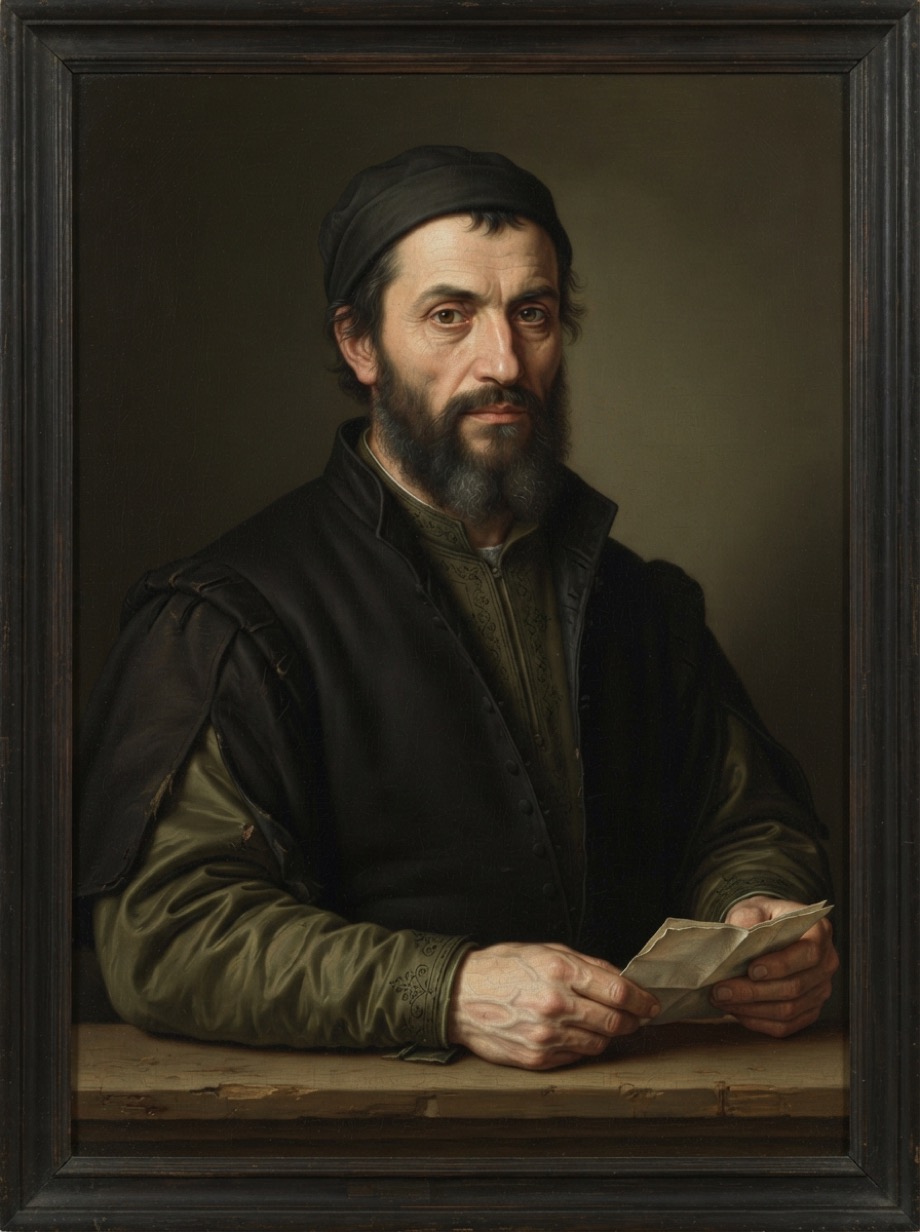
AI-assisted Portrait of Gaspar da Gama
A Man Assembled from Whoever Held Him
The record on Gaspar da Gama is thin, secondhand, and entirely Portuguese — which is itself the first fact worth sitting with. He is reported to have been born a Jew around 1450, though even that is contested: Poznań, in Poland, by one account; Alexandria or Granada by others. What is not contested is the pattern of a life spent moving east — through Jerusalem, through Alexandria, into India — and arriving, by whatever route, in the service of a ruler in Goa, possibly as a military or naval officer, married and settled there. He had, by the time Europeans found him, already remade himself once.
In 1498, on Vasco da Gama's return leg near Anjediva, he came aboard a Portuguese ship — to trade, to spy, to see what these strange arrivals wanted, the sources do not agree on his purpose. The Portuguese decided he was a spy. Gama had him flogged and tortured until he talked, then had him forcibly baptised under the name of his captor, with Gama himself standing as godfather. From that violence came the rest of his career: interpreter and informant to the Portuguese crown, indispensable to men who had just proven what they would do to him if he withheld anything.
Gaspar da Gama survived the Indian Ocean's most dangerous decade by reading, with ENTP quickness, exactly what each new master wanted — and supplying it before he was asked twice.
What follows his baptism is not a story of loyalty but of use. He sailed with Cabral in 1500 — present, by Pero Vaz de Caminha's letter, at the Brazilian landfall — then advised the second India armada, sailed again with Vasco da Gama in 1502, and served Albuquerque as translator and informant. Amerigo Vespucci met him in Lisbon and thought him worth writing about. He was still active into the 1510s; nobody recorded when or where he died. Whatever conviction drove him is unrecoverable — what survives is a documented facility for making himself necessary to whoever held the leash.
Psychological Verdict
Gaspar reads as ENTP not because the record offers interior evidence — it offers almost none — but because the outer shape of his life is a case study in improvisational intelligence applied to survival. He shows no fixed loyalty, no stable identity, no single language or allegiance held for long: a Jew who became a Christian, a subject of an Indian ruler who became a servant of the Portuguese crown, a man who wore each new role as loosely and readily as a coat because the alternative was worse. That is not weakness of character so much as a particular kind of quickness — a talent for reading a new situation, sensing what the person in power wanted to hear, and supplying it plausibly and fast. Every fixed point in his biography — the surname, the faith, the nationality — was imposed on him by someone with power over his body. What he supplied himself was the agility to make each imposition survivable, even valuable. It should not be mistaken for admiration of his captors: he was tortured into the identity he then wore successfully for a decade. Both things are true at once, and the entry does not resolve them into a cleaner story than the sources allow.
Connected Figures
Further Reading
- Jewish Travellers — Elkan Nathan Adler (ed.)Anthology of medieval and early modern Jewish travel accounts, including material bearing on figures like Gaspar.
- The Voyage of Pedro Álvares Cabral to Brazil and India — William Brooks Greenlee (ed.)Hakluyt Society edition of the primary accounts of the 1500 voyage on which Gaspar sailed.
- The Career and Legend of Vasco da Gama — Sanjay SubrahmanyamThe standard modern biography of Gama, with attention to his captives and interpreters.
- Carta a El-Rei D. Manuel — Pero Vaz de CaminhaThe 1500 letter reporting the Brazilian landfall at which Gaspar was reportedly present.
- Conquerors: How Portugal Forged the First Global Empire — Roger CrowleyNarrative history of the Portuguese Indian Ocean empire and the men, captured and free, who built it.
