 Historical Figure MBTI
#1007 · 7-25-26 · The Second World War
Henry Stimson
The Elder Statesman · Secretary of War · Keeper of the Bomb's Secret
1867 — 1950
5 min read
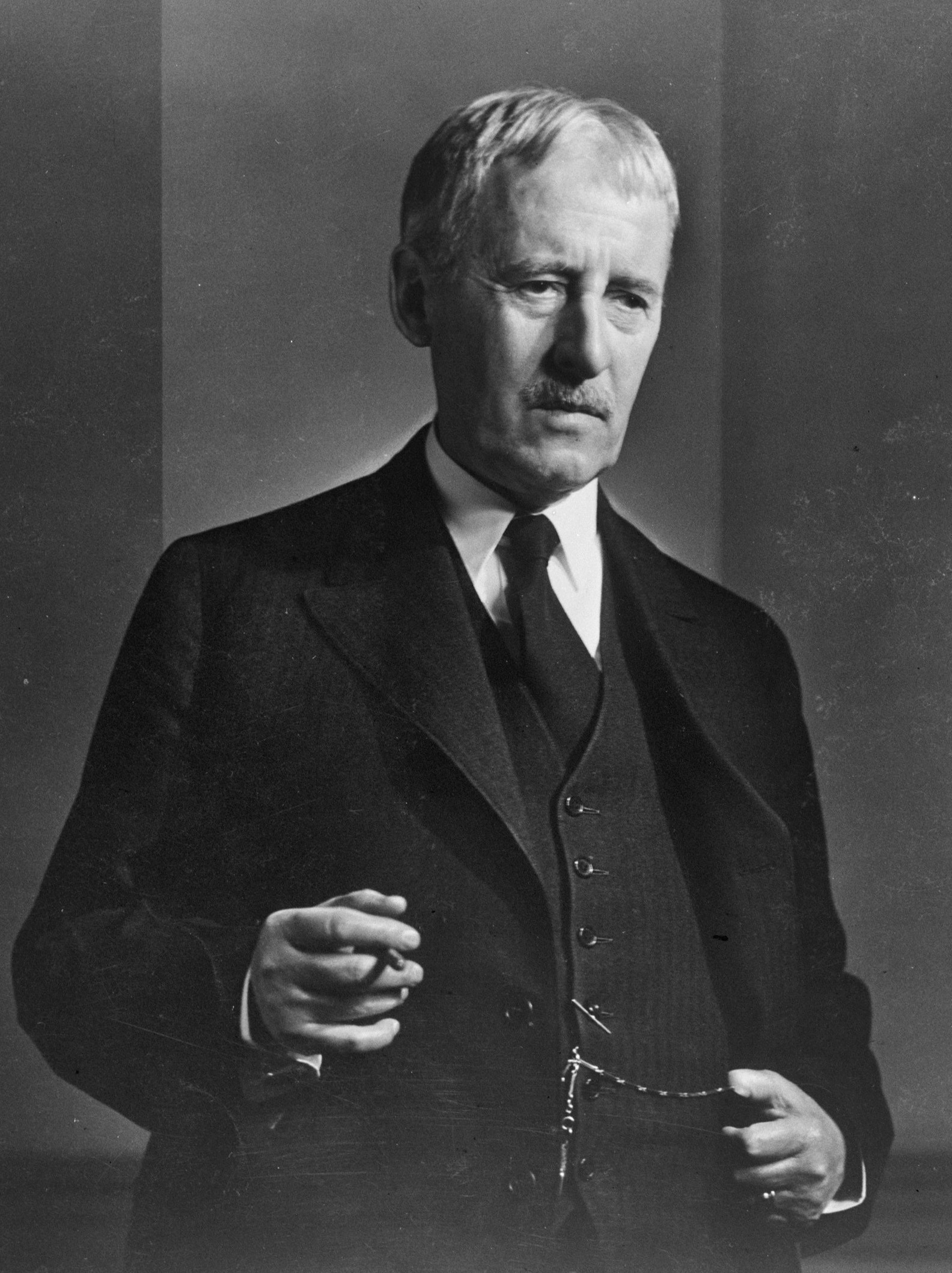
Portrait of Henry Stimson
The Man Four Presidents Trusted With the Files
Henry Stimson was seventy-three years old when he took charge of the Manhattan Project's secrecy, and he had already been a Cabinet officer twice before most of the men building the bomb were born. He served as Secretary of War under William Howard Taft in 1911, as Secretary of State under Herbert Hoover in 1929, and then, called back at seventy-one by Franklin Roosevelt in 1940, as Secretary of War again — this time through the whole of the Second World War and past Roosevelt's death into Harry Truman's presidency. No other figure in this archive's twentieth-century cluster spans so much institutional time.
That longevity was not incidental to what he did with the atomic bomb. Stimson did not invent it, did not build it, and did not fly it. What he did was guard it — its budget lines buried, its scientists compartmented, its existence kept from a sitting vice president until the hour he became president. When Truman inherited the White House in April 1945 with no knowledge that the weapon existed, it was Stimson who sat him down and explained, in the sober, procedural voice of a man who had spent four decades explaining things to presidents, exactly what the country now possessed.
Stimson's ISTJ temperament turned the Manhattan Project's secrecy into a discipline of habit rather than paranoia — dominant Si treating precedent, procedure, and the record as sacred trusts to be kept.
The Keeper of Precedent
Stimson's dominant Si showed itself less in any single decision than in the sheer weight of accumulated procedure he carried into every room. He had run the War Department once before, under Taft; he knew what the office was for, what its files looked like, what secrets it had kept in other wars. When Roosevelt needed someone to run the wartime department with total discretion, he reached for the one man who had already proven he could hold a government secret for decades without leaking a word of it — Stimson's own diary, kept meticulously since his days as a young federal prosecutor, is one of the richest institutional records of the era precisely because he treated record-keeping itself as a duty.
That same instinct governed how he ran the Manhattan Project's security. He did not improvise new compartmentalization schemes; he applied the logic of need-to-know that a career in Washington had already taught him, extending it to a scale no one had needed before. His famous 1947 Harper's essay defending the bomb's use reads less like a philosophical argument than like a deposition — a careful accounting of what was known, when, and by whom, written by a man who trusted the documented record over any appeal to abstract principle.
The Practical Calculus of Targets
Stimson's auxiliary Te surfaces most starkly in the target committee's deliberations over which Japanese cities the bomb would fall on. When Kyoto appeared on the list — militarily plausible, undamaged, a clean demonstration site — Stimson personally struck it, reportedly overriding General Groves. His reasoning was not sentimental in the abstract; it was a hard-nosed calculation about the postwar order. Kyoto was Japan's ancient cultural and religious capital, and destroying it, he judged, would poison relations with Japan for a generation and hand the Soviets a propaganda gift. It was efficiency reasoning applied to statecraft rather than to spreadsheets.
The same Te discipline ran through how he organized the department itself — delegating operational command to Marshall and technical command to Groves, while reserving for himself only the decisions that required a Cabinet officer's authority and a lifetime's judgment about what history would ask of the record afterward.
A Private Conscience on Kyoto
Underneath the procedural calm sat a tertiary Fi that occasionally broke through as quiet, stubborn moral conviction — never performed for an audience, rarely explained at length, but immovable once formed. The Kyoto decision was as much a matter of personal conscience as strategic calculation: Stimson had honeymooned there decades earlier, and colleagues recalled him speaking of the city's temples and gardens with a proprietary tenderness that had nothing to do with policy. He held that position against pressure from the military planners who wanted it back on the list, and it stayed off.
That same interior conviction shaped his postwar defense of the bomb's use — not as an eager apologist, but as a man privately certain he had made the least terrible choice available, and willing to put his name to that judgment in print rather than let the decision sit unaccounted for.
Why ISTJ Over ESTJ
Why not ESTJ?
An ESTJ Stimson would have run the War Department from the front — visible, commanding, making the case for the bomb in public forums as he went. The real Stimson did nearly the opposite: he worked almost entirely behind closed doors, briefing presidents privately, striking Kyoto from a list without a press statement, and only explaining himself years later, in writing, after the fact. His influence was advisory and procedural rather than assertive — the mark of introverted judgment steering from the inside, not extraverted command steering from the front.
Stimson's ISTJ profile is written into the shape of his career itself: a man who kept coming back to the same institutional post across four administrations because he was trusted to apply precedent faithfully, guard what needed guarding, and render judgment only when the record required it of him.
Connected Figures
Further Reading
- On Active Service in Peace and War — Henry Stimson & McGeorge BundyStimson's own account of his four-decade government career
- The Making of the Atomic Bomb — Richard RhodesDefinitive history of the Manhattan Project and its politics
- The Decision to Use the Atomic Bomb — Henry L. Stimson, Harper's Magazine, 1947Stimson's contemporaneous public defense of the decision
- Day One: Before Hiroshima and After — Peter WydenNarrative account of the bomb's development and use
