 Historical Figure MBTI
#1002 · 7-24-26 · The Second World War
J. Robert Oppenheimer
Father of the Atomic Bomb · Los Alamos Director · I Am Become Death
1904 — 1967
11 min read
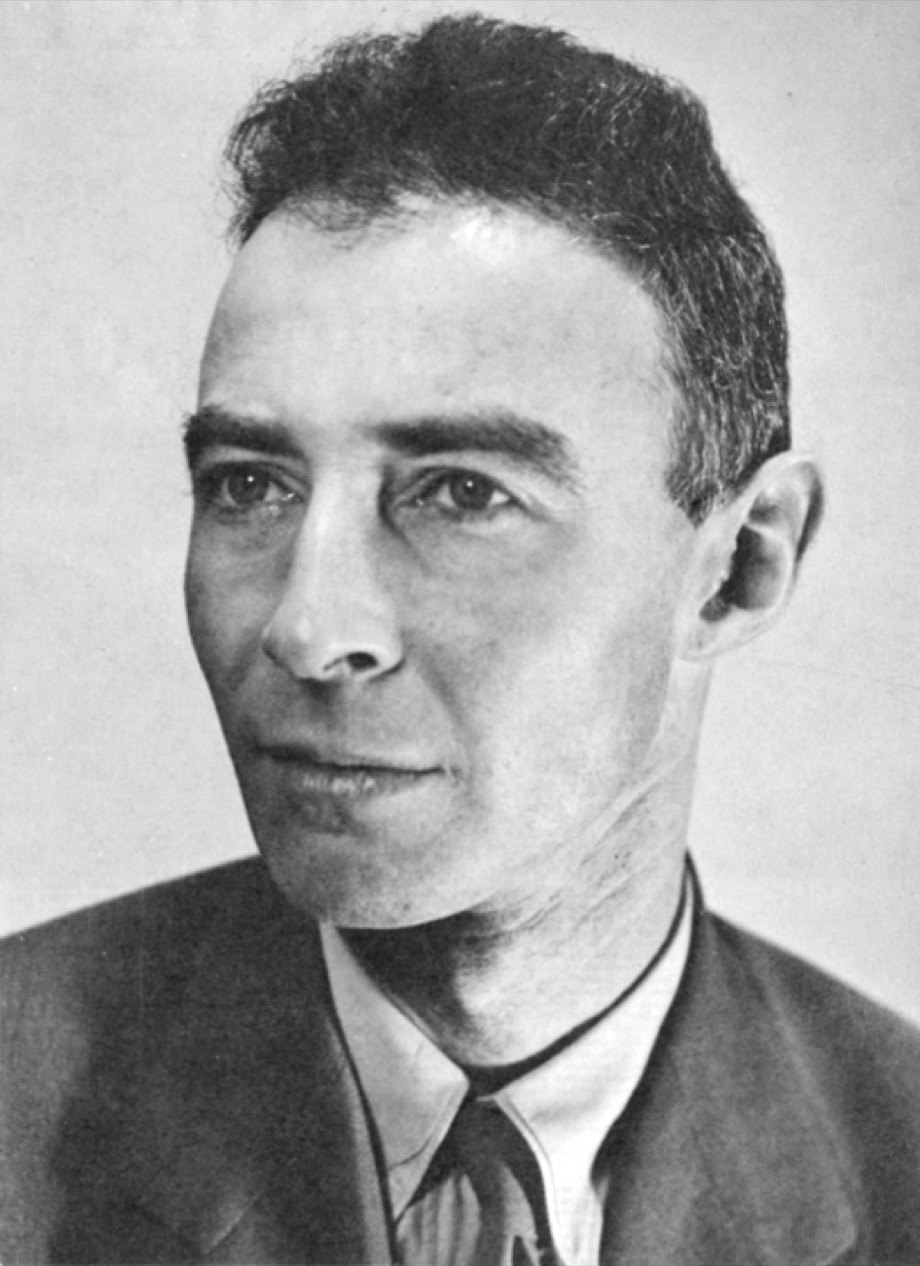
Portrait of J. Robert Oppenheimer
The Man Who Held the Whole Thing in His Head
He was not the best physicist at Los Alamos. That is the first fact anyone assembling the Manhattan Project’s cast has to absorb, and it is the fact that makes Oppenheimer interesting rather than merely famous. Hans Bethe was a deeper calculator. Enrico Fermi had the surer physical instinct. John von Neumann out-thought everyone in the room on the mathematics of implosion, and Niels Bohr carried more authority than all of them combined. Oppenheimer’s own research — the 1939 paper on continued gravitational contraction that effectively predicted black holes — was brilliant and neglected, and he never won a Nobel Prize. What he had instead was rarer and, for eighteen months on a mesa in New Mexico, decisive: he could hold the entire enterprise in his mind at once, the physics and the metallurgy and the ordnance and the shot list and the marriages coming apart in the housing blocks, and see where all of it was going before anyone else did.
Nothing in his record before 1942 suggested he could do it. He was a chain-smoking theoretician with a reputation for cruelty in seminars, no administrative experience of any kind, a tangle of left-wing associations that made the security services twitch, and a personality so thin-skinned that as a student at Cambridge he had left a poisoned apple on his tutor’s desk. Leslie Groves picked him anyway, over the objections of nearly everyone, on an instinct he never fully justified: that this man wanted the job in a way the others did not, and would see the shape of it. Groves was right. Within two years the theoretician had become the most effective scientific administrator of the war.
And then, on the morning of July 16, 1945, the light came up over the Jornada del Muerto and the second half of his life began — a life spent almost entirely in the aftermath of the first. He is the rare INFJ whose internal vision was fully realised in the world, and who then spent twenty-two years discovering what that cost. His anguish was not private. He performed it, published it, testified to it, let it become his public identity, and was destroyed by the government that had commissioned it.
An INFJ whose dominant Ni saw the whole shape of the atomic age before the first device was assembled — and whose Fe insisted, loudly and publicly, on carrying the meaning of it in front of the world.
Seeing the Mesa Before It Existed
The single most consequential thing Oppenheimer did was structural, and he did it before a brick was laid. In 1942 the bomb effort was scattered across universities and industrial sites, compartmentalised by design, each group knowing only its own fragment. Oppenheimer argued for the opposite: one central laboratory, isolated, where the physicists, metallurgists, chemists, and ordnance engineers would live together and talk freely across every discipline. He then chose the site himself — a boys’ school on the Pajarito Plateau he had ridden past on horseback as a sick teenager convalescing in New Mexico. This is Ni in its purest administrative form: a single convergent image of how the thing must be done, arrived at whole, then argued for against a security apparatus that found it appalling.
He was also almost always ahead of the evidence. When the gun-assembly design for a plutonium weapon collapsed in mid-1944 — Fermi’s reactors were breeding an isotope that would predetonate any gun-type device — Los Alamos faced the kind of failure that normally ends a program. Oppenheimer reorganised the entire laboratory around implosion in a matter of weeks, an approach most of his own senior staff considered a long shot. He had already seen that the alternative was no plutonium bomb at all, and that the war would not wait for a better idea. The Trinity device fired eleven months later.
Ni also explains what he was like to be around, which contemporaries described in almost identical language: he would arrive at a technical discussion having apparently already been to its conclusion, summarise a colleague’s half-formed argument better than the colleague could, and then extend it. Bethe said Oppenheimer knew what every group in the laboratory was doing at every moment, and could see the connections none of the group leaders could see from inside their own problem. It is a faculty that reads as omniscience from the outside and feels, from the inside, like watching one road out of many quietly become the only road.
Conscience, Broadcast
Los Alamos ran on Fe long before it ran on plutonium. The scientists Oppenheimer recruited were mostly refugees, prima donnas, and pacifists; he held them together not through authority — he had almost none over civilians who could leave whenever they liked — but by making each of them feel the work was theirs. He fought Groves to keep the weekly colloquium open to the whole technical staff, over the general’s furious security objections, because he understood that compartmentalisation would kill morale faster than it would protect a secret. He learned every family’s troubles. He wrote the letters. Robert Wilson said afterwards that Oppenheimer’s gift was to make a physicist believe he was the most important person on the mesa.
Then came the aftermath, and here is where the case for INFJ becomes hard to argue against. Oppenheimer did not grieve privately. He grieved at the world. The Bhagavad Gita line he said had come to him at Trinity — Now I am become Death, the destroyer of worlds — was not confided to a diary; it was delivered to a television camera two decades later, in a famous and unbearable pause, by a man who knew exactly what the sentence would do to whoever heard it. In November 1945, addressing the Los Alamos scientists, he told them the physicists had known sin. In October he told Harry Truman he felt he had blood on his hands, and Truman — an unambiguous decider — was so repelled that he called him a cry-baby scientist and said he never wanted the man in his office again.
That exchange is the whole psychological argument in miniature. Truman heard whining; Oppenheimer was doing something else, and something quite deliberate. He was placing the moral weight of the weapon into the shared room, insisting that the decision be felt collectively rather than filed administratively. The postwar campaign followed the same logic: as chairman of the Atomic Energy Commission’s General Advisory Committee, he led the 1949 recommendation against a crash program for the hydrogen bomb, and the report’s language was not technical caution but explicit moral argument — a weapon of genocide, in its own words. Feeling turned outward, made public, made binding on others. That is Fe, and it made him enemies who never forgave it.
The Cruelty of the Quick Mind
Tertiary Ti in an INFJ shows up as a sharp, slightly show-off analytical edge — precision deployed as personality — and Oppenheimer had it from adolescence. He read Sanskrit for pleasure, learned Dutch in six weeks to lecture in Leiden, and built the American school of theoretical physics at Berkeley essentially by being the fastest and most fashionable mind in the room. His students imitated his walk, his cigarettes, and his way of ending a sentence.
The same faculty made him famously unkind. In seminars he interrupted, finished others’ arguments dismissively, and demolished weak reasoning with a relish that colleagues remembered decades later with a wince. This is the Ti of a Feeling type: not a stable, patient internal system but a weapon reached for, effective and imprecisely aimed. It cost him. The physicist Edward Teller, humiliated more than once and passed over at Los Alamos for the theoretical division leadership he wanted, would testify against him in 1954 in the single most damaging statement of the hearing.
Ti also accounts for his most self-destructive habit: the belief that he could out-reason an interrogation. In 1943 he approached security at Los Alamos with a garbled half-account of an approach made to him through his friend Haakon Chevalier, then invented an elaborate cover story to protect him, then admitted under pressure that the story was a fabrication — calling himself, in the transcript, an idiot. Eleven years later that improvised lie became the spine of the case against him. He had constructed something clever in the moment and failed entirely to see what it would look like to men who did not think in his register.
The Body That Could Not Keep Up
Inferior Se in an INFJ is the physical world experienced as either an intrusion or a cure, and Oppenheimer lived both extremes. He was chronically unwell, sleepless, and thin to the point of alarm — 115 pounds by the end of the Los Alamos years on a six-foot frame, sustained on cigarettes, martinis, and black coffee. The tuberculosis that would eventually kill him began there, in the throat that had already given the world its most famous sentence about the bomb. He treated his own body as a resource to be spent on the vision.
Against that, the desert. New Mexico was the one sensory fact he genuinely loved: the rides out from the Perro Caliente ranch he leased in the Pecos, the hard light, the distances. He once wrote that his two great loves were physics and desert country, and that it was a pity they could not be combined. Los Alamos combined them — a man siting the atomic age in the landscape that had been his only reliable relief.
And at the moment the two collided, Se failed him exactly as the inferior function does. Standing in the control bunker at Trinity, watching the fireball he had spent three years producing, he did not reach for a physical description. He reached for a two-thousand-year-old Sanskrit verse. Fermi, at the same test, dropped scraps of paper and measured the blast wave. Oppenheimer measured the meaning.
Why INFJ Over INTJ
Why not INTJ?
The INTJ case is real and deserves saying plainly: Oppenheimer ran a 6,000-person laboratory to a deadline, reorganised it around implosion in weeks, and exercised an intellectual command over his scientists that looks unmistakably like extraverted Thinking. But look at what the command was made of. He had no formal authority over civilians, issued few orders, and held the mesa together by persuasion, attention, and the manufacture of shared purpose — Fe methods, not Te ones. And the aftermath settles it. A Te decider audits the outcome, allocates responsibility, and moves; Truman, who actually did that, found Oppenheimer’s conduct incomprehensible. Oppenheimer instead told a president he had blood on his hands, told a lecture hall the physicists had known sin, and let the guilt become the public face he wore for twenty years. Regret that must be witnessed to be complete is not INTJ regret.
The 1954 hearing is the final piece of evidence, and the cruellest. Faced with a security board assembled to destroy him, Oppenheimer did not mount the cold, structured defence an INTJ would have built — he had lawyers advising exactly that. He was discursive, candid to the point of self-harm, visibly anguished, and repeatedly volunteered material that damaged him. He admitted the Chevalier lie again. He conceded doubts about his own judgement. He let the board see the interior conflict rather than concealing it, apparently still believing that being understood was a form of safety. It was not. His clearance was revoked by a vote of two to one, and the man who had held the whole thing in his head was finished as a public servant at forty-nine — undone by the same instinct that had made him indispensable, the conviction that the truest thing to do with an inner state is show it to the room.
Connected Figures
Further Reading
- American Prometheus: The Triumph and Tragedy of J. Robert Oppenheimer — Kai Bird & Martin J. SherwinThe Pulitzer-winning biography, twenty-five years in the making; the standard account of both the mesa and the hearing.
- The Making of the Atomic Bomb — Richard RhodesThe definitive narrative history of the whole enterprise, from Leo Szilard's London street corner to Nagasaki.
- In the Matter of J. Robert Oppenheimer: Transcript of Hearing Before Personnel Security Board — United States Atomic Energy CommissionThe 1954 hearing in full — the primary document, and the most revealing thing he ever said about himself.
- Robert Oppenheimer: A Life Inside the Center — Ray MonkA philosopher's biography, unusually strong on the physics itself and on the Berkeley years.
- Brotherhood of the Bomb — Gregg HerkenTraces the entangled careers of Oppenheimer, Ernest Lawrence, and Edward Teller through to the security case.
