 Historical Figure MBTI
#614 · 5-7-26 · The Reformation
Ignatius of Loyola
Soldier Turned Saint · Founder of the Jesuits · Spearhead of the Counter-Reformation
1491 — 1556
8 min read
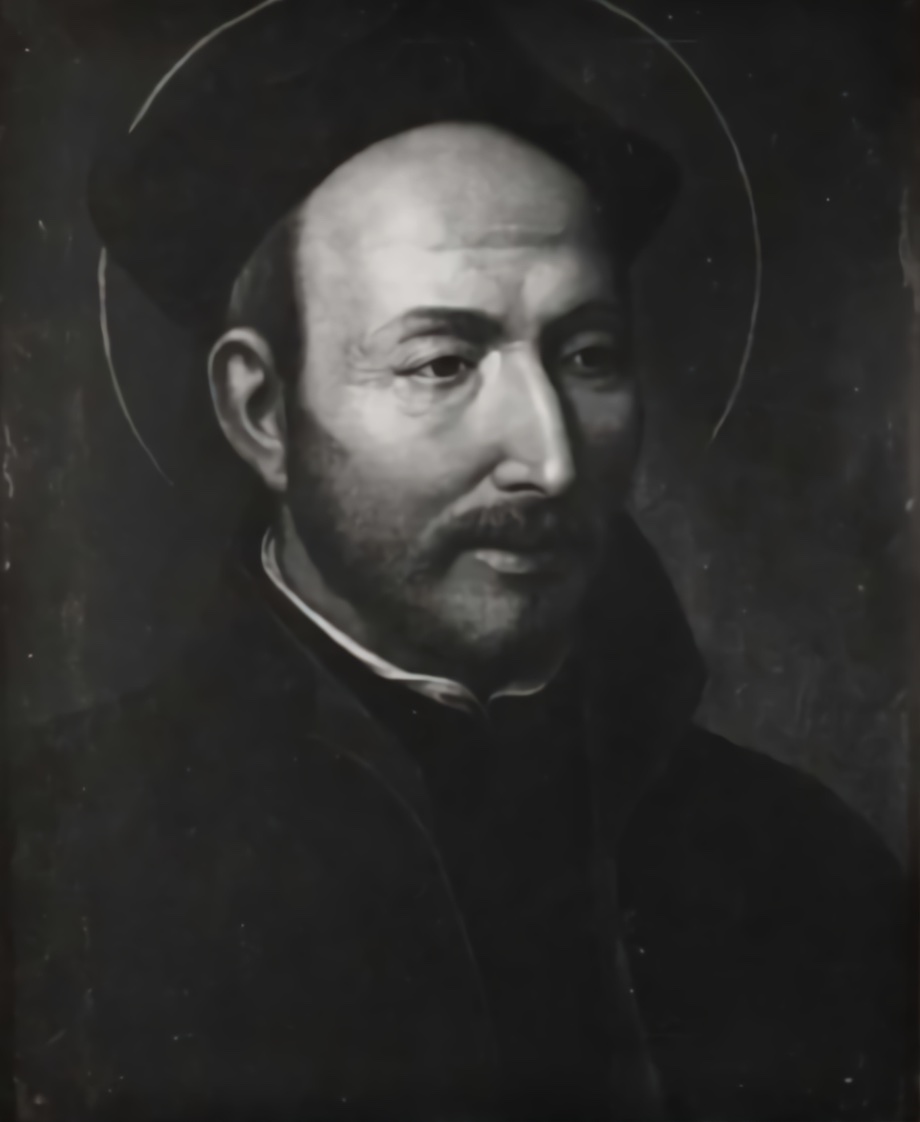
Portrait of Ignatius of Loyola
The Strategist of the Soul
A cannonball made the saint. In May 1521, at the siege of Pamplona, a French shot shattered the leg of a vain, ambitious Basque nobleman named Íñigo López de Loyola — a courtier and soldier who loved fine clothes and dueling, and who had insisted the outmatched garrison fight on chiefly out of pride. During a long convalescence the leg was broken again and reset because he could not bear a lump that would spoil the line of his hose. Bedridden for months with nothing to read but a life of Christ and a book of the saints, he noticed something with a strange, clinical detachment: daydreams of worldly glory left him dry, while daydreams of imitating Francis and Dominic left him at peace. He did not merely feel this. He studied it, catalogued it, turned it into a rule. That instinct — to convert an inner experience into a reproducible method — is the whole of the man.
He hung up his sword before the Virgin at Montserrat and spent the better part of a year at nearby Manresa in prayer and severe penance, emerging with towering mystical illuminations and a small, dry, revolutionary book: the Spiritual Exercises — not a work of devotion to be read but a four-week regimen of structured meditations engineered to demolish a soul and rebuild it around a single choice. Two decades later, having studied theology as a grey-bearded man among schoolboys in Paris and gathered a band of brilliant companions, he founded in 1540 the Society of Jesus: a new kind of order, drilled like an army, deployed like one, and vowed in special obedience to the pope. He is the INTJ as founder — the man who turned a mystic's vision into a machine.
Loyola is the INTJ in a cassock: a singular, converting vision (Ni) that he refused to leave as private rapture and instead engineered into a system — the Exercises to remake the soul, the Society to remake the Church — and then imposed on the world with the cold organizational rigor (Te) of the soldier he had been.
The Vision Made Method
Ni — dominant
Dominant Ni is the faculty of the singular converging insight — the sense that beneath the noise of experience there is one pattern, one end. Most mystics who receive such a vision report it as ineffable. Loyola received his at Manresa — on the bank of the Cardoner he had an illumination so total he later said he learned more in that single moment than in all the rest of his life — and his first instinct was to write it down as a procedure. The Spiritual Exercises are Ni turned into an instrument: a step-by-step itinerary through purgation, the life of Christ, and the Passion, whose crown jewel is the discernment of spirits — a method for reading, beneath the surface of one's own consolations and desolations, the actual will of God for a concrete decision. He had seen the shape of the interior life whole, and he built a scaffold on which anyone could climb to the same summit.
The same Ni built the Society of Jesus. Loyola did not set out to reform the monastic tradition; he saw, as a single conception, an order the old forms could not accommodate — unenclosed, without a fixed choir or habit, mobile, ready to be flung anywhere in the world at a day's notice. He grasped that the Church's crisis was not to be answered from behind cloister walls but by men sent out. That leap — from the fixed medieval monastery to a deployable global corps — is a Ni reconception of what a religious order even is, and it is precisely why he is not the preserver of an inherited pattern but the inventor of a new one.
An Army for God
Te — auxiliary
A vision that stays in one man's head changes nothing; auxiliary Te is the machinery that carried Loyola's insight into the world. He never stopped being a soldier. He organized his order on military lines and did not shrink from the metaphor: the Jesuits answered to a Superior General — himself, elected for life — in a clear chain of command, and the famous fourth vow bound them in special obedience to the pope with respect to missions. Wherever he chose to send them, without argument or delay, they would go. His prose on obedience is chilling in its completeness: a Jesuit should let himself be carried as if he were a corpse — perinde ac cadaver. This is not the humility of the cloister but the discipline of a general who understood that an instrument with a will of its own cannot be aimed.
To hold this sprawling body together across continents, he wrote the vast Constitutions and governed from Rome through nearly seven thousand surviving letters, issuing instructions to men in Portugal, India, Brazil, and Japan. And he chose the field with a strategist's eye: grasping that the age would be won not by preaching alone but by capturing the formation of minds, he turned the Society toward education, founding colleges across Europe so fast that within a generation the Jesuits were the schoolmasters of Catholic Christendom. Where a lesser reformer poured his energy into exhortation, Loyola built institutions that would still be manufacturing loyal, learned Catholics long after he was dead. That is the Te horizon: not the fervor of the moment but the machine that outlives its maker.
The Private Fire Under the Discipline
Fi — tertiary
For all the military coldness of the structure, the engine underneath it was intensely, privately felt. Tertiary Fi gives the INTJ a deep interior conviction that rarely shows on the surface but supplies the fuel for everything above it — and Loyola's inner life was a furnace. His spiritual diary records days of weeping so uncontrollable during Mass that he feared for his eyesight, and a private mystical experience of the Trinity so intense he could barely speak of it. The man who wrote that a Jesuit should be as a corpse in his superior's hands was himself, in private, awash in tears and consolations he guarded closely. The severity was never coldness for its own sake; it was a hard shell built deliberately over a molten core.
That devotion guarded the interior with a motto that is pure Fi in its refusal to serve any lesser end: Ad maiorem Dei gloriam — for the greater glory of God. Every act, however small — teaching a boy Latin grammar, balancing an account, walking to a distant mission — was referred to that single, absolute value. Loyola's vast machine was not built for the Church as an institution or for his own name but in service of a conviction he held with total, silent intensity. The discernment of spirits itself is Fi disciplined into method — a technique for reading, in the fine grain of one's own feelings, the movement of God's will.
The Vanity He Burned Away
Se — inferior
The clearest window onto inferior Se is the young Íñigo before the cannonball. The soldier of Pamplona was a creature of appearances and appetites — a dandy who prized fine dress and physical courage, fought duels over slights, and demanded that a hopeless siege be defended so that his valor might be seen. Inferior Se in the grip of the unintegrated self is exactly this: sensation and vanity pursued for the image they project. That he had his mended leg re-broken rather than tolerate an unsightly bulge beneath his hose is inferior Se in its purest, most absurd form — a man willing to undergo surgery without anesthetic for the sake of a silhouette.
His conversion is best read as a war against that function. At Manresa he turned on the body with a convert's fury: he let his hair and nails grow, fasted to the edge of death, and scourged himself, deliberately becoming the opposite of the gallant he had been. But the mature Loyola did not stay in that extremity — and here the strategist reasserted himself over the penitent. Having ruined his health with early austerities, he came to distrust them, and the order he built is notably free of the harsh mortifications common to older rules. The Jesuit was to be sober, healthy, and available for work, his physical energies conserved and directed outward toward the mission rather than spent on the flesh. Loyola never fully befriended the sensory world, but he learned to govern it — harnessing the soldier's hardened body to carry the strategist's design across the world.
Why INTJ Over ISTJ
Why not ISTJ?
The ISTJ case looks strong at a glance: the discipline, the obedience, the hierarchy, the written constitutions all read as Si–Te conscientiousness. But the ISTJ preserves and perfects an inherited order; his loyalty is to precedent and the proven way. Loyola did the opposite — he broke with the monastic tradition, inventing an unenclosed, mobile, un-habited order the older forms had no category for, conceived whole from a single visionary insight at Manresa. That is Ni-driven design, not Si-driven continuity: the discipline was the means, but the thing being disciplined into existence had never existed before.
The distinction is the difference between a steward and a founder. An ISTJ handed the crisis of the sixteenth-century Church would have reached for the tested instruments — reformed observance, renewed rules, decayed institutions restored to their proper function. Loyola reached instead for a thing no one had built, because he had first seen, in a flash of intuition, the shape of the order the age required, and only then bent his soldier's rigor to making it real. Si remembers what worked. Ni sees what must be, and Te builds it — and that sequence, not mere conscientiousness, is the signature of the man.
Connected Figures
Further Reading
- The First Jesuits — John W. O'MalleyThe definitive modern account of the Society's founding generation — indispensable on what the early Jesuits actually did and how the order was conceived.
- The Spiritual Exercises and Autobiography — Ignatius of LoyolaHis own works: the dry, revolutionary manual for remaking the soul, and the frank memoir (dictated in the third person) of the soldier's conversion.
- The Reformation: A History — Diarmaid MacCullochThe best single-volume history of the whole upheaval — essential for placing Loyola against Luther and Calvin in the drama of the sixteenth-century Church.
