 Historical Figure MBTI
#842 · 6-17-26 · The American Civil War
Jedediah Hotchkiss
Topographical Engineer · Mapmaker of the Valley
1828 — 1899
3 min read
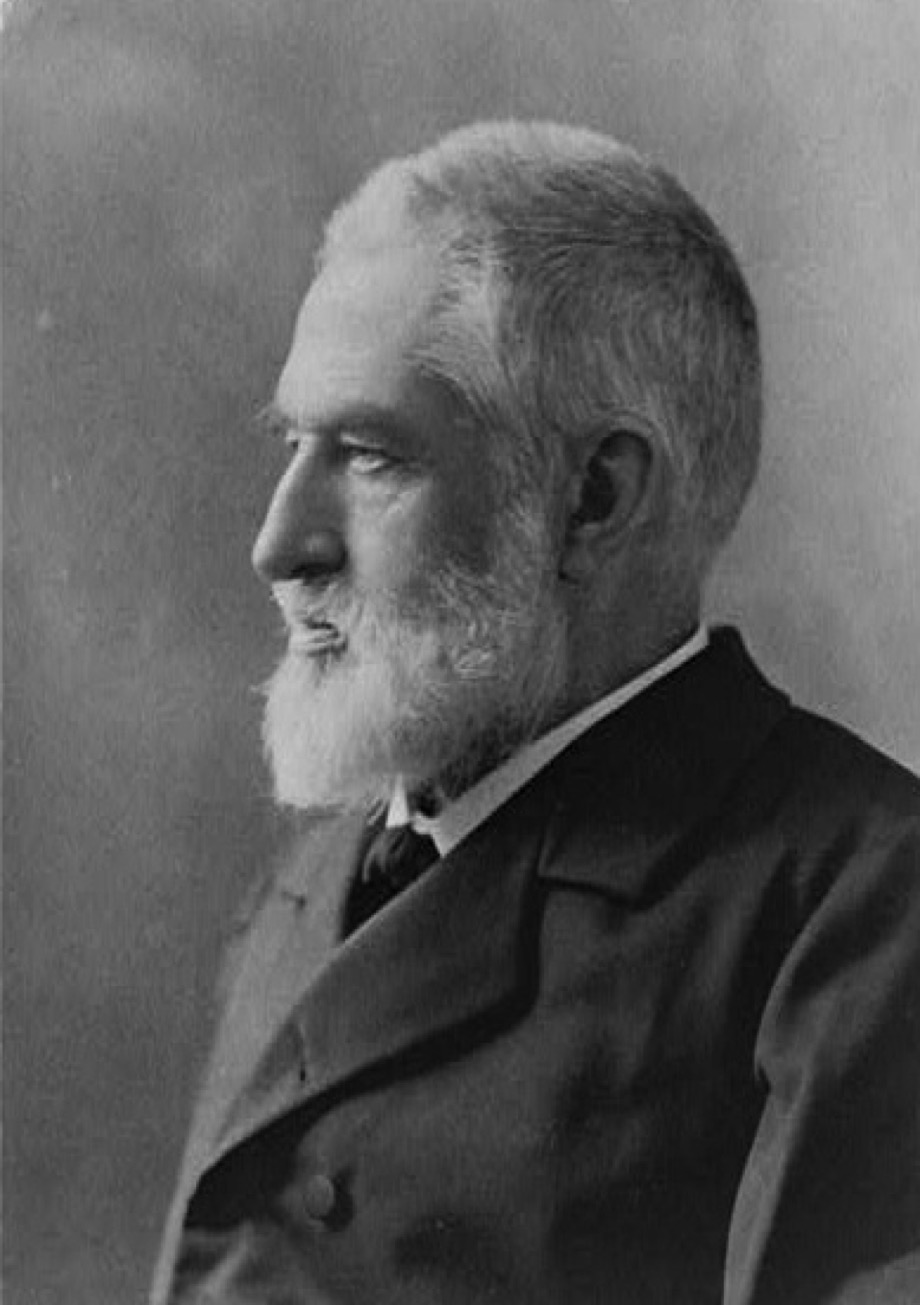
Photograph of Jedediah Hotchkiss, c. 1860s
Make Me a Map of the Valley
Jedediah Hotchkiss was not a soldier. He was a schoolteacher from upstate New York who had wandered south in his twenties, fallen in love with the folded terrain of the Shenandoah Valley, and taught himself surveying and cartography with the same patient, self-directed discipline he brought to everything else. When Virginia seceded he offered the Confederacy the one skill it did not know it desperately needed: an intimate, exhaustive knowledge of ground. In March 1862, Stonewall Jackson summoned him and gave an order that has outlived every battle report from that campaign — "make me a map of the Valley, from Harper's Ferry to Lexington." Hotchkiss did exactly that, and then kept doing it for three more years.
What he produced were not sketches. They were working documents of astonishing granularity — every road, ford, fence line, mill, and farmhouse rendered with a surveyor's precision — and they let Jackson move his infantry through country the Union command barely understood, arriving where he was not expected and leaving before he could be caught. The ISTJ temperament rarely gets credit for winning battles; here it is difficult to argue otherwise.
Hotchkiss did not fight the Valley Campaign. He simply knew the ground so completely that Jackson could — and that, for an ISTJ, was the entire point.
He was, by every account, a man built for exactly one kind of greatness: unglamorous, procedural, and quietly decisive. He kept mapping through Second Manassas, through the terrain studies that shaped Confederate movements around Gettysburg, and through Jubal Early's ruinous 1864 Valley Campaign, by which point the war he was charting had turned hopeless. He never sought command, never angled for promotion beyond his engineering rank, and never wavered from the belief that a good map, rendered honestly and completely, was worth more to an army than a brilliant improvisation. After Appomattox he became a prosperous mining engineer in the very valley he had mapped, and spent his last decades organizing his wartime papers into what remains one of the richest surviving archives of Confederate operations — a final act of the same instinct that made him useful in the first place: preserve the record, get the details right, let the facts outlast the argument.
What makes Hotchkiss such a clean case study is how little his personality changed between the surveying table and the battlefield. He was riding through contested country under threat of capture, sketching under fire when he had to, yet the work itself never became improvisational — every sheet still carried the same obsessive completeness he would have brought to a peacetime county map. That consistency was the whole value proposition: Jackson did not need a mapmaker who could guess. He needed one who would not guess, who would ride the extra mile to verify a ford's depth or a road's actual bearing rather than approximate it, and who trusted that thoroughness, not brilliance, was what turned a marching army into an unpredictable one.
Connected Figures
Further Reading
- Make Me a Map of the Valley: The Civil War Journal of Stonewall Jackson's Topographer — Archie P. McDonald (ed.)Hotchkiss's own wartime diary, the primary window into his method and mind.
- Conquering the Valley: Stonewall Jackson at Port Republic — Robert K. KrickClose narrative of the 1862 campaign that made Hotchkiss's maps indispensable.
- Stonewall Jackson: The Man, the Soldier, the Legend — James I. Robertson Jr.The standard Jackson biography, with extensive attention to the Hotchkiss partnership.
