 Historical Figure MBTI
#750 · 6-5-26 · The Portuguese Indian Ocean
João III of Portugal
King of Portugal · The Pious
1502 — 1557
5 min read
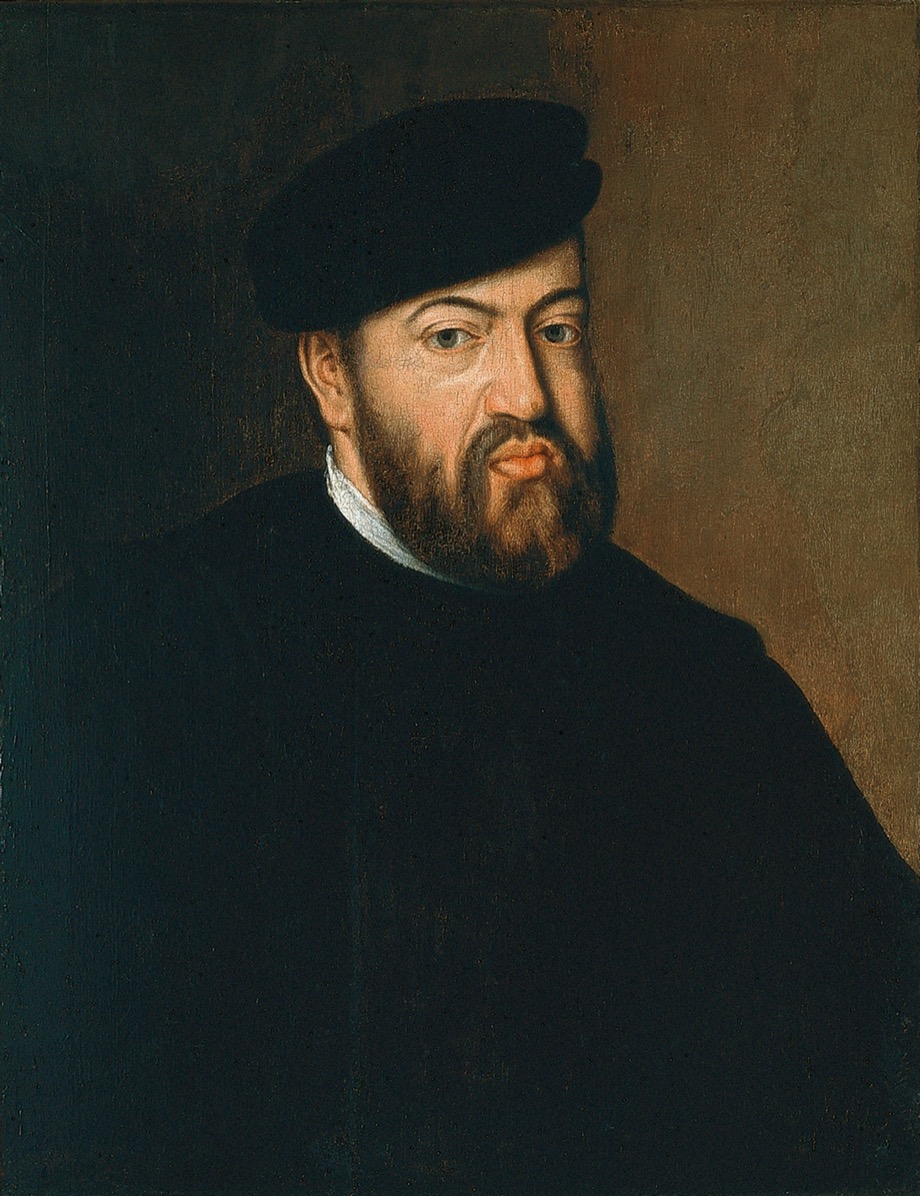
Portrait of João III of Portugal
The Ledger King
João III inherited, at nineteen, the most glamorous empire in Europe — pepper fleets, fortresses strung from Sofala to Malacca, a crown his father Manuel I had hung with gold and prophecy. He inherited its books too, and they told a different story: garrisons costing more than they returned, a Casa da Índia whose accounts rarely balanced, a treasury propped up by revenue that arrived, when it arrived, months late and half-lost to weather and war. He ruled for thirty-six years, and he ruled the way his father never had — not by pageant but by audit, holding what could be justified, cutting what could not.
He is ISTJ: dominant Si that trusts the tested record over the beautiful gesture, auxiliary Te that turns that trust into administration, and underneath both a private, unbending Fi that, in its one great public act, opened Portugal to the Inquisition and outlasted every ship he ever sent east. Where Manuel ruled by spectacle — embassies with elephants, talk of a new Jerusalem — João ruled by column and total, and it made him the least glamorous king of an extremely glamorous century.
João III was Si before he was anything else — a king who trusted the ledger over the legend, and cut whatever the ledger could no longer justify.
What the Ledger Would Not Justify
The clearest proof is what he gave up. Through the 1540s, over the furious objections of a nobility that measured honor in fortresses held, João abandoned or downgraded a string of costly North African garrisons — Safi, Azemmour, Alcácer-Ceguer, Arzila — because holding them had stopped making sense against what they returned. It was not a timid decision. It was the decision of a king whose first instinct, faced with any commitment, was to ask what it had actually produced, and to trust that answer over the honor of the flag above it.
The same instinct ran through the Casa da Índia, the crown's clearinghouse for the Indian Ocean trade, whose accounts he tightened year after year rather than let pepper profits paper over waste. He preferred the proven route to the exciting one; under him the empire in Asia consolidated rather than expanded, trading Afonso de Albuquerque's momentum for careful management of an inheritance already large enough.
Read charitably, this is not caution but loyalty — loyalty to what had already been tested and found to work. Manuel had bet the treasury on prophecy. João spent his reign quietly paying the bet down.
Building the System, Then Rebuilding It
His clearest Te achievement is Brazilian. In the 1530s he divided the colony's coast into hereditary captaincies — donatarias granted to nobles and merchants who would settle and defend them at their own cost, in exchange for sweeping local authority. It was administration by delegation, elegant on paper.
By decade's end it was visibly failing: most captaincies were undercapitalized or collapsed under resistance, and only Pernambuco and São Vicente took real root. João's response is the best evidence for where his auxiliary function sits. He did not defend a system out of pride in having built it — in 1549 he scrapped it and installed a royal governor-general, Tomé de Sousa, at a new capital, Salvador, centralizing what delegation had failed to secure. Building a structure, measuring that it doesn't work, and rebuilding it from the ground up is Te in its purest administrative form.
The same pattern shaped his reform of the University of Coimbra and his overhaul of Indian Ocean governance: institutions built, tested against results, and adjusted — rule measured by outcome, not by loyalty to whoever was executing it.
The Pious, Without Irony
His epithet was not flattery. João pursued the Portuguese Inquisition for over a decade against the resistance of successive popes, heavily lobbied by representatives of Portugal's New Christian community, and did not stop until he had it — established in 1536, its first auto-da-fé burning in Lisbon in 1540. Nothing about the campaign was administratively necessary; it cost him goodwill in Rome he could not easily spare. It is the one place in his reign where an internal, unarguable certainty overrode the calculations his Si and Te usually ran.
The target was his father's making: the Jews Manuel I had forcibly converted in 1497 rather than lose them and their capital to expulsion. João built the machinery to interrogate the sincerity of conversions Manuel had never let be voluntary — two reigns composing one injury. The same private faith sent Francis Xavier east to Goa in 1541 with royal backing; Xavier himself later asked that the Inquisition be extended there, which was done in 1560, three years after João's death.
Why ISTJ Over ISFJ
Why not ISFJ?
An ISFJ king rules through the household — through personal bond and maintained relationship. João's reign is the opposite: councils, written instruction, and audited accounts, with towns full of Portuguese subjects abandoned on a cost calculation an Fe-auxiliary king would have felt bound to resist. The distinction is Te versus Fe in the second seat, and João's decisions consistently favor the ledger over the relationship.
The warmth in him was real — it just never became a method of rule. It lived offstage, in a marriage and in nine children he outlived one by one, while the empire he had spent thirty-six years balancing kept running on schedule regardless.
Connected Figures
Further Reading
- A History of Portugal and the Portuguese Empire, Vol. 1 — A. R. DisneyThe standard modern account of João's reign and its retrenchment.
- Foundations of the Portuguese Empire, 1415–1580 — Bailey W. Diffie & George D. WiniusCovers the Casa da Índia and the shift from Manueline expansion to Joanine consolidation.
- The Persecution of the Jews and Muslims of Portugal — François SoyerTraces the line from Manuel's 1497 forced conversions to João's 1536 Inquisition.
- A Concise History of Brazil — Boris FaustoOn the captaincy system and its 1549 replacement by royal government under Tomé de Sousa.
- The Portuguese Empire in Asia, 1500–1700 — Sanjay SubrahmanyamOn the consolidation, rather than expansion, of Portuguese India under João.
