 Historical Figure MBTI
#751 · 6-5-26 · The Portuguese Indian Ocean
Luís de Camões
Poet · Author of Os Lusíadas
c. 1524 — 1580
8 min read
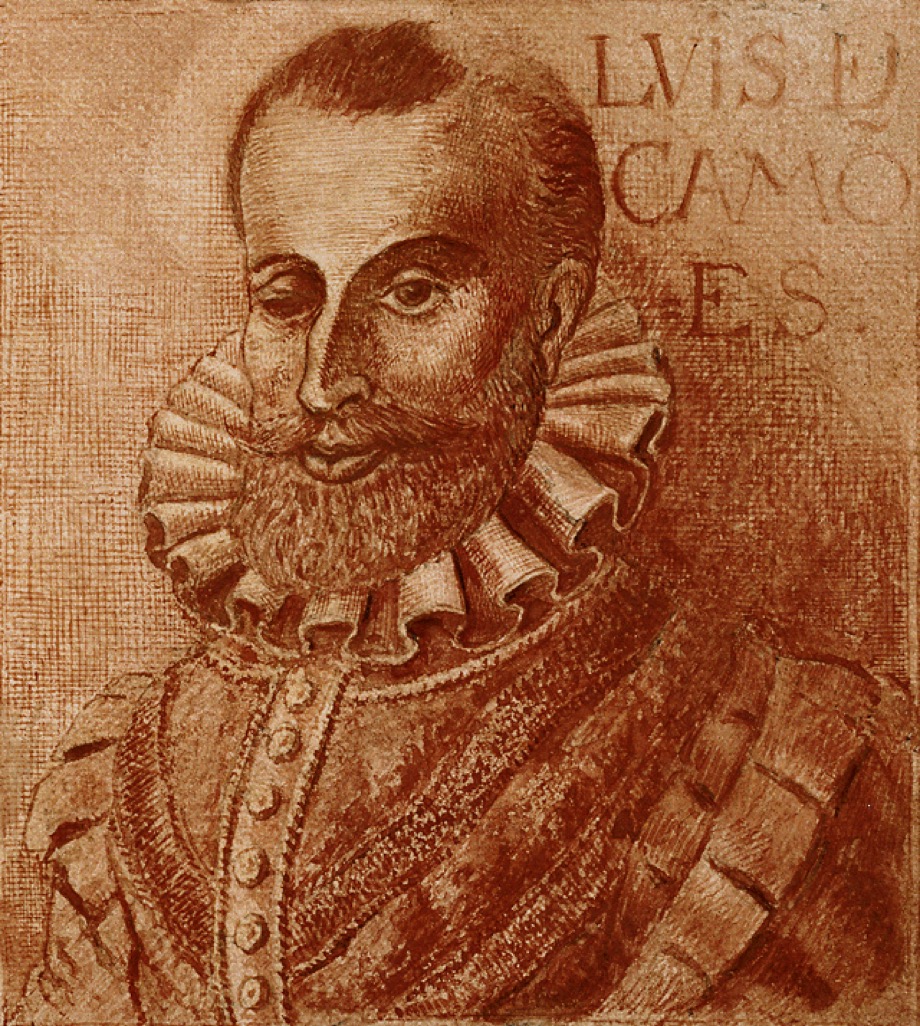
Portrait of Luís de Camões
The Empire’s Poet, Writing from Its Wreckage
He came home from the East in 1570 with one eye, no money, no position, and a manuscript. Two years later Portugal had its national epic and Luís de Camões had a royal pension so small and so irregularly paid that he is said to have relied on a servant begging in the streets. That gap — between the monument and the man who could not manage a life — is the whole psychological story.
The facts read like a picaresque nobody would believe. A minor nobleman’s son steeped in Virgil, exiled from court; an eye lost at Ceuta around 1549; prison in 1552 for wounding a royal equerry, Gonçalo Borges, in a Lisbon street brawl; release in 1553 on condition that he ship out for India. Then seventeen years abroad — Goa, the Red Sea, Macau, an accusation of misappropriation, a recall, a shipwreck at the mouth of the Mekong. He praised Portuguese navigation in verse while the Portuguese empire was doing all of this to him.
And the poem is stranger than its reputation. Os Lusíadas contains the most devastating anti-imperial speech in the epic tradition, and Camões gave it to an old man on a beach and then declined to answer him. He is a clear INFP: dominant Fi holding one unbudgeable private standard, Ne supplying the invention, Si reverent toward inherited material, and an inferior Te that failed him at everything practical.
An INFP does not write the epic his country wants; he writes the one he actually feels, and Fi will not let him leave out the part that hurts.
Fi — The Old Man on the Beach
In Canto IV, as the fleet prepares to leave the Restelo shore, an unnamed old man pushes through the crowd and denounces the voyage — vainglory and greed, he calls it, cursing the man who first raised a sail and telling the sailors that the enemy is at the gates in Morocco while they chase gold to the ends of the earth. Nothing in the poem refutes him. The Old Man of Restelo has stood on that beach unanswered for four hundred and fifty years.
That is Fi refusing to suppress the objection even when patronage and every practical instinct say suppress it. Camões admired the achievement genuinely — no one writes ten cantos of Portuguese navigation in ottava rima out of contempt — but admiration did not entitle the poem to lie. He interrupts himself elsewhere to lament Duarte Pacheco Pereira by name and to ask what a country does to the men who serve it, and he ends the epic on a bitter address to a young king about a nation grown deaf to poetry.
The same rigidity ran through the life, less usefully: exile over a love affair above his station, prison for a knife fight, Indian years spent quarrelling and satirising colonial officials. And the lyric poetry — the sonnets, the redondilhas that turn Psalm 137’s rivers of Babylon into an exile’s lament for a Zion defined as his own lost interior life — belongs to a man whose attention returns compulsively to one fixed, unshareable grief. He kept writing what he felt rather than what would please.
Ne — The Cape That Was a Man
Camões’s greatest single invention is Adamastor. Rounding the Cape of Good Hope, da Gama’s fleet meets a storm-cloud that resolves into a monstrous figure — a Titan who loved the sea-nymph Thetis, was tricked into embracing a mountain instead, and was transmuted into the promontory itself. His flesh is rock; his grief is geological. From that rock he curses every ship that dares pass.
No source gave him that. It is Ne in full flight: a headland on a sailing chart becomes a spurned lover, and the spurned lover becomes the accusation the sea makes against Europe. The same associative freedom governs the architecture — Venus and Bacchus contending over a Catholic fleet, the Isle of Love where nymphs reward the sailors in an allegory the Inquisition never knew what to do with, and in Canto X the Machine of the World, the Ptolemaic cosmos handed to da Gama as a crystal globe he can turn in his fingers. None of it is decorative: Adamastor exists so the Cape can say what the narrator will not, and the globe exists so the empire can be seen from a height at which it is very small. Ne generates the images; Fi decides what they mean.
Si — Everything Kept, Nothing Discarded
Os Lusíadas is derivative in the way only a great poem can be. Its bones are the Aeneid, its similes Homeric, its stanza Ariosto’s, its factual spine the Portuguese chronicle record of the Indian voyages, versified with a chronicler’s fidelity to names and dates. Tertiary Si treats inherited material as owed reverence and careful reuse, not as raw matter. Camões did not want to escape Virgil; he wanted to stand where Virgil stood and put Portugal there.
The other reservoir is his own experience. The Malabar heat, the violence of Goa, the mechanics of a ship coming apart — the poem’s sea is written by a man badly frightened on one. The famous story, that when his ship broke up at the mouth of the Mekong he swam ashore holding the manuscript above the water and losing everything else including a Chinese woman named Dinamene, is half defensible: the poem alludes to the wreck in Canto X, but Dinamene is later embroidery on a name from the sonnets, and belongs to legend.
Te — Trustee for the Dead and Absent
The one administrative post Camões ever held was provedor dos defuntos e ausentes at Macau — trustee for the estates of Portuguese who died or vanished in the East, a job consisting almost entirely of bookkeeping other people’s money. He was accused of misappropriating it, recalled under arrest, and jailed again for debt on his return. Whether he stole or merely kept unusable accounts is unrecoverable; either verdict indicts the same faculty. And it is a pattern, not an incident: he could not hold a position, could not build a patronage network in a world that ran on nothing else, could not convert seventeen years inside the empire into one durable appointment.
When Os Lusíadas appeared in 1572 it earned him a small pension from Sebastião, paid so erratically that the greatest poet in the language died in poverty eight years later without an identifiable grave. And yet Te is inferior, not absent, and under pressure it surfaced as the one thing he could execute: the poem itself — ten cantos, over eleven hundred stanzas of strict ottava rima, coherent across two decades and three continents. He could not run an estate ledger; he could run a poem the size of a cathedral. The competence went where the value was.
Why INFP Over ENFP
The ENFP case is real: the Ne in Os Lusíadas is deafening, and on the text alone the read is defensible.
Why not ENFP?
ENFP leads with Ne turned outward: enthusiasm spent on people, momentum, the room. Camões’s life is the inverse — solitary, quarrelsome, unable to work a court, seventeen years abroad that produced no network and no advancement. An ENFP in the Estado da Índia comes home with connections; Camões came home with a manuscript. And the lyric poetry, where a writer is least guarded, circles one fixed private grief rather than fanning outward. The invention serves the feeling; it does not lead it.
Test it against the Old Man of Restelo. An ENFP might well have written the speech — it is a brilliant idea — but would have been far likelier to answer it. Camões plants it and walks away, because it is not a position to be balanced but something he believes and cannot un-believe. That is dominant Fi: judgment formed in private, immovable once formed, and permitted to disfigure the monument it was building.
Connected Figures
Further Reading
- Os Lusíadas (1572), trans. Landeg White as The Lusíads (1997) — Luís de CamõesThe best modern English version — unrhymed, fast, and unembarrassed by the poem's darker cantos.
- The Lusiads, trans. William C. Atkinson (1952) — Luís de CamõesA readable prose rendering with a still-useful introduction on the poem's sources and structure.
- Selected Sonnets, trans. William Baer (2005) — Luís de CamõesThe lyric Camões in parallel text — where the interiority the epic only half-shows is unmistakable.
- Camões, Prince of Poets (2010) — Clive WillisThe soberest English biography, careful about which of the famous episodes the documents actually support.
- Moorings: Portuguese Expansion and the Writing of Africa (2009) — Josiah BlackmoreEssential on Adamastor and on the ambivalence buried inside Portugal's imperial texts.
- La Lyrique de Camões (1970) — Roger BismutThe standard study of the Rimas and the problems of the lyric canon.
