 Historical Figure MBTI
5 min read
#229 · 3-21-26 · The Age of Alexander
Leonidas of Epirus
Tutor of Alexander the Great
c. 390 – 330 BCE
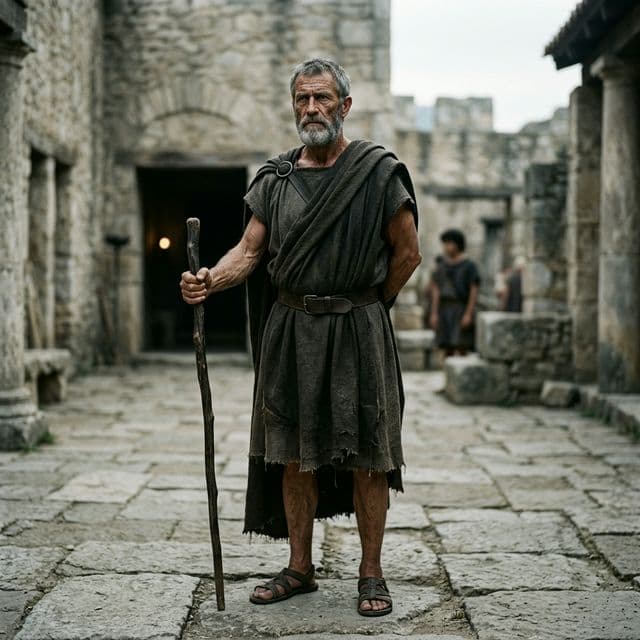
AI-assisted portrait of Leonidas of Epirus
The Architecture of Discipline
Leonidas of Epirus did not just teach a child; he forged an iron soul. As the early tutor of Alexander, his life was defined by a profound, unwavering commitment to the structural and physical discipline of his charge (Si-Te). While the more famous Aristotle would later provide the philosophical and visionary expansion (Ni), Leonidas’s genius was profoundly rooted in the tangible, reliable reality of austerity and physical endurance. He was the anchor of the young prince’s childhood, the one who valued the sparse, the controlled, and the traditional over the infinite horizons of the imagination.
He was the master of the hard lesson and the administrative truth. From his search through the prince's trunks for luxuries to his famous rationing of frankincense at the altar, Leonidas’s cognitive mode was focused on the internal comparison of the present reality to the established standards of Macedonian and Epirote excellence. For Leonidas, greatness was something to be won through the denial of the self.
Historical Context
Leonidas of Epirus was a relative of Olympias and served as the primary tutor, governor, and foster-father of Alexander the Great during his early childhood. Known for his stern morality and Spartan-like austerity, he famously forbade any luxury in the young prince's life, even searching his boxes for fine bedding or clothes sent by his mother. He trained Alexander in physical endurance and frugality, once rebuking him for wasting frankincense at a sacrifice with the words: "When you have conquered the spice-bearing countries, you can be as generous as you like." Years later, after capturing Gaza, Alexander sent him 500 talents of frankincense and 100 of myrrh, with a note telling him he could now be generous to the gods without being stingy. His influence provided the martial and disciplined foundation upon which Alexander's later genius was built.
The Psychological Verdict
Leonidas of Epirus is a definitive ISTJ. He was a leader defined by his relentless focus on established order and internal loyalty to tradition (Si), supported by a pragmatic, logical approach to training and discipline (Te) and an unwavering, if stern, internal set of standards (Fi).
Si — Dominant
His primary mode was the preservation of established reality. Leonidas’s identity was tied to the old-school virtues of the Greek and Macedonian mountain courts. His decisions were characterized by a focus on the reliable, the repeatable, and the traditional. He distrusted the "softness" of the palace, famously forcing Alexander to live with the barest of necessities. For Leonidas, the world was a set of known boundaries that required a disciplined, defensive command to maintain. He was the guardian of the literal and metaphorical gates of the prince’s character.
Te — Auxiliary
Supporting his sense of discipline was an objective, effective application of logic. Leonidas was a master of the curriculum of austerity. His actions were decisive, calculated, and entirely oriented toward the efficient management of the prince’s development. He ran the household with the same precision he used to command his own life. He didn't seek glory (Fe); he sought the structural finality of a disciplined and capable soul. He was the ultimate coordinator of the young king’s physis.
Fi — Tertiary
Beneath his strategic exterior lay a deeply private and unwavering internal loyalty. His tertiary Fi manifests in his absolute, if increasingly harsh, commitment to his duty to Philip and Olympias. This internal standard of honor was quiet and unobserved, but it provided the bedrock for his years of service. His resilience was fueled by an internal conviction that remained invisible to the world, providing the anchor for his authority over the most powerful child in history.
Ne — Inferior
What stayed in the background was a relative discomfort with the unpredictable and the visionary. Leonidas flourished in the known geography of traditional education. His inferior Ne manifested in his intense anxiety and eventual skepticism toward Alexander’s early signs of flamboyant ambition. He was the voice of "restraint," unable to fully trust the infinite, often chaotic possibilities that the young prince’s emerging spirit had unleashed.
The Man Who Made the Conqueror
Leonidas was the kinsman of Olympias — her uncle or cousin depending on the source — and served as Alexander’s primary tutor before Aristotle was brought in around 343 BCE. His method was Spartan: cold camps, restricted food, physical endurance above comfort. Philip reportedly approved. Alexander later recalled that Leonidas used to search his luggage before marches to make sure he hadn’t hidden any luxuries his mother had packed. When Alexander burned incense by the handful at a shrine years later, he sent a message to Leonidas telling him he could now afford to be generous to the gods, since he had conquered the land where the incense came from. The story is small, but it reveals everything about the dynamic: a decade of deprivation, remembered with affection and one-upmanship. Leonidas gave Alexander the body and the will that Aristotle later filled with ideas. The philosophers get the credit; the discipline gets forgotten.
Connected Figures
Further Reading
- The Age of Alexander — PlutarchPreserves the frankincense anecdote — Leonidas's rebuke and Alexander's later, pointed reply from Gaza.
- Alexander the Great — Robin Lane FoxDiscusses Leonidas's Spartan-style regimen and its lasting imprint on Alexander's physical discipline.
- Who's Who in the Age of Alexander the Great: Prosopography of Alexander's Empire — Waldemar HeckelThe standard reference entry situating Leonidas among Olympias's kin and Alexander's early household.
