 Historical Figure MBTI
#330 · 3-29-26 · The Enlightenment
Françoise-Louise de Warens
Rousseau's 'Maman' · Baroness, Convert, Schemer · The Free Spirit Who Made Him
1699 — 1762
6 min read
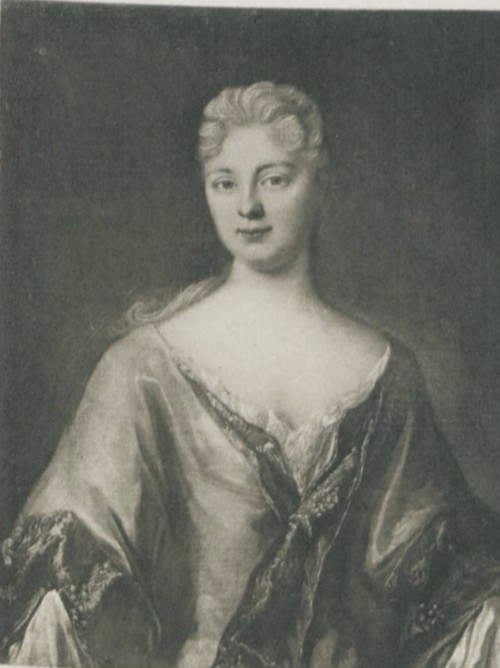
Portrait of Françoise-Louise de Warens
The Woman Who Took In the Runaway
On a spring morning in 1728 a footsore boy of sixteen presented himself at the door of a handsome woman in Annecy. He had run away from Geneva expecting a pious dragon of a convert who would lecture him toward Rome. What he found, as he tells it in the Confessions, was a woman not yet thirty, fair and laughing, who looked at the ragged runaway and took him in. The boy was Jean-Jacques Rousseau. He would call her “Maman” and the next dozen years would give him the only happiness he ever managed to keep.
She had been born Françoise-Louise de la Tour in Vevey in 1699, married grandly, and then walked out. She converted to Catholicism and reinvented herself as a pensioned agent of the Church, setting up house at Chambéry as an open salon of strays, schemes, and second chances—funded by money she did not have and was forever trying to conjure. What held this restless life together was the ENFP temperament: warmth that could not be rationed, curiosity that lit on every new idea, generosity that gave away what she could not afford, and a genius for beginnings undone by total incapacity for ends.
Madame de Warens was the ENFP at its most generous and most ruinous—a dominant Ne forever chasing the next idea and the next person, married to an Fi that made its own warm, unconventional morality and answered to no one's rules but its own. She ran at life with both arms open, and life, in the end, ran clean through her fingers.
The Hundred Schemes
Ne — dominant
Dominant extraverted intuition cannot look at the world without seeing, in everything, a possibility. In Madame de Warens it ran without a brake. She compounded her own remedies, dabbled in something close to alchemy, argued theology with priests who came to dinner, and took up and dropped a dozen enthusiasms a year. Rousseau recorded it all with exasperated tenderness—the laboratory smells, the half-finished experiments, the new acquaintance always welcome at her table because a new face meant a new possibility.
In business, Ne found its most disastrous expression. She launched venture after venture— manufacturing, mining, a quasi-alchemical enterprise certain to transmute her debts into a fortune—and before each one bore fruit she was already lit by the next. She did not want money so much as the bright unrealized possibility money stood for. The most enduring of her projects turned out to be a person: the ragged boy at the door whom she decided, on the instant, to take up and remake—the one venture of hers that paid, not in money, but in a possibility carried far enough to become real.
A Morality of Her Own Making
Fi — auxiliary
Auxiliary introverted feeling supplied the warm, unshakable inner compass by which she lived—a private morality serenely indifferent to convention. She was, by the standards of pious Savoy, a scandal: a runaway wife who kept several lovers in an easy, affectionate household and saw nothing to be ashamed of. Her steward Claude Anet was her lover and her right hand; Rousseau became her lover too, with Anet still in the house, and she arranged the whole gentle ménage without drama or guilt. Auxiliary Fi does not consult the rulebook; it consults the heart, and her heart found nothing wrong in loving generously.
This lawlessness came wrapped in real kindness. She was generous literally to her own ruin—not from calculation but because her Fi could not bear to see want it had the power to relieve. Where Rousseau's dominant Fi was a brooding tribunal that turned every breach of conscience into a wound, hers sat in the auxiliary seat behind a sunny Ne and ran outward, easy and giving. She made her own morality and slept soundly inside it—which is exactly what nourished the wounded boy who could never quite feel at home anywhere else.
A Hundred Ventures, None Finished
Te — tertiary
Tertiary extraverted thinking gives the ENFP just enough executive ambition to start things and nowhere near enough discipline to finish them. She did not merely dream of ventures; she launched them, signed the contracts, sank the capital—a manager of a dozen half-built castles in the air. She borrowed against tomorrow's certain windfall to fund today's, and when the windfall failed she borrowed against a surer one. Rousseau tried to impose order on the accounts and could no more stop her than dam a river with his hands.
Te in the third seat serves the higher functions rather than governing them, and hers was conscripted into the service of an Ne that wanted everything and an Fi that could refuse no one. She started a hundred things. She finished, in the end, almost nothing—except the education of a boy, which was the one project she never thought to call a venture.
The Account She Never Kept
Si — inferior
Inferior introverted sensing is the ENFP's blind spot, and in Madame de Warens it gaped wide. Si is the steadying ballast of consequence—the ledger kept, the lesson of past failure retained. She sailed without it. Each fresh venture met her untaught by the wreckage of the ones before. She gave away what she should have saved and risked what she could not afford to lose, and the long attrition was invisible to her until it was complete.
The end was bleak: the pension thinned, the schemes consumed the last of her resources, the household scattered. By 1762 she was poor, ailing, and largely forgotten—a woman who had given so much away that nothing was left for herself. Rousseau, who had found a paradise in her care, never forgave the world for letting her sink, and never quite forgave himself either. The free spirit who could imagine anything had failed at the one thing Si exists to do: remember that the account, however long deferred, always comes due.
Why ENFP Over INFP
Why not INFP?
The INFP case rests on the obvious affinity: she shared her protégé's warm, self-authored morality and his indifference to convention. But the introverted type withdraws, broods, and guards a private inner life against society—and Madame de Warens did the opposite at every turn. She was outward, sociable, endlessly engaged: a hostess, a schemer, a collector of new people and projects who fed on contact with the world rather than retreating from it. Her dominant function looked out, not in. That is extraverted intuition leading, with feeling in support—ENFP, not INFP.
The proof is the contrast with the man she raised. Rousseau made a religion of his sincerity, withdrew into a brooding inner life, and ended in paranoia. His mind ran inward. Madame de Warens ran at life—at the next idea, the next stranger, the next scheme—energized by the crowd at her table rather than drained by it. The INFP guards a single inner flame against the world; the ENFP throws sparks into it. Put the two of them side by side and the introvert-extravert axis settles the question on sight.
Connected Figures
Further Reading
- Confessions — Jean-Jacques Rousseau (trans. Angela Scholar)The primary source for Madame de Warens — Books I – VI give the fullest portrait of her household and character.
- Jean-Jacques Rousseau: A New Critical Biography — Leo DamroschRichly contextualizes the Les Charmettes years and de Warens's role in forming the philosopher.
- The Social Contract and Other Later Political Writings — Jean-Jacques Rousseau (ed. Victor Gourevitch)Allows readers to trace how the intellectual formation she gave him bore fruit in his political thought.
- Rousseau: A Very Short Introduction — Robert WoklerCompact overview of Rousseau's life and ideas, with useful pages on his early years under de Warens's care.
