 Historical Figure MBTI
#327 · 3-28-26 · The Enlightenment
Giacomo Casanova
Adventurer · Seducer · Memoirist · Escape Artist of the Leads
1725 — 1798
8 min read
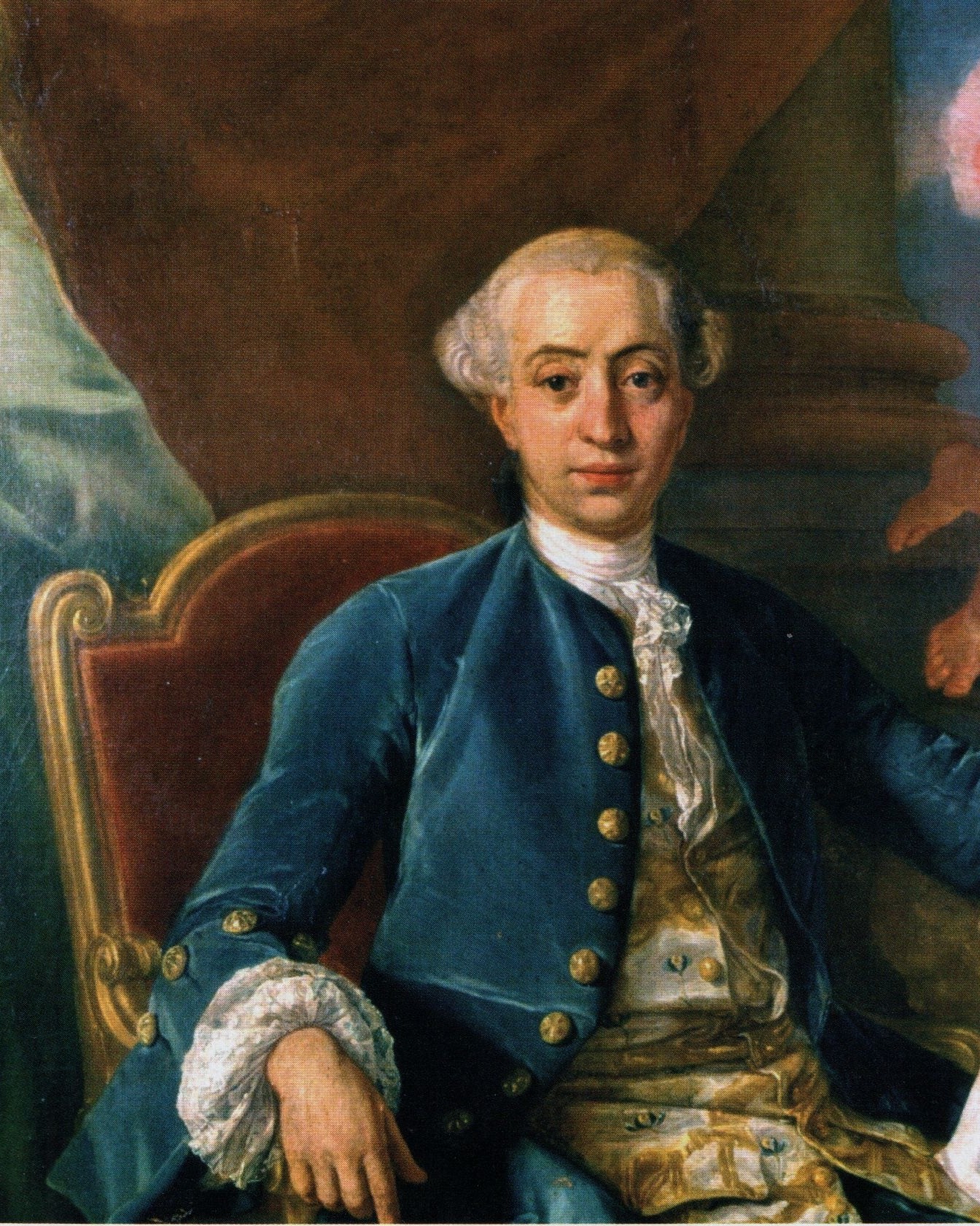
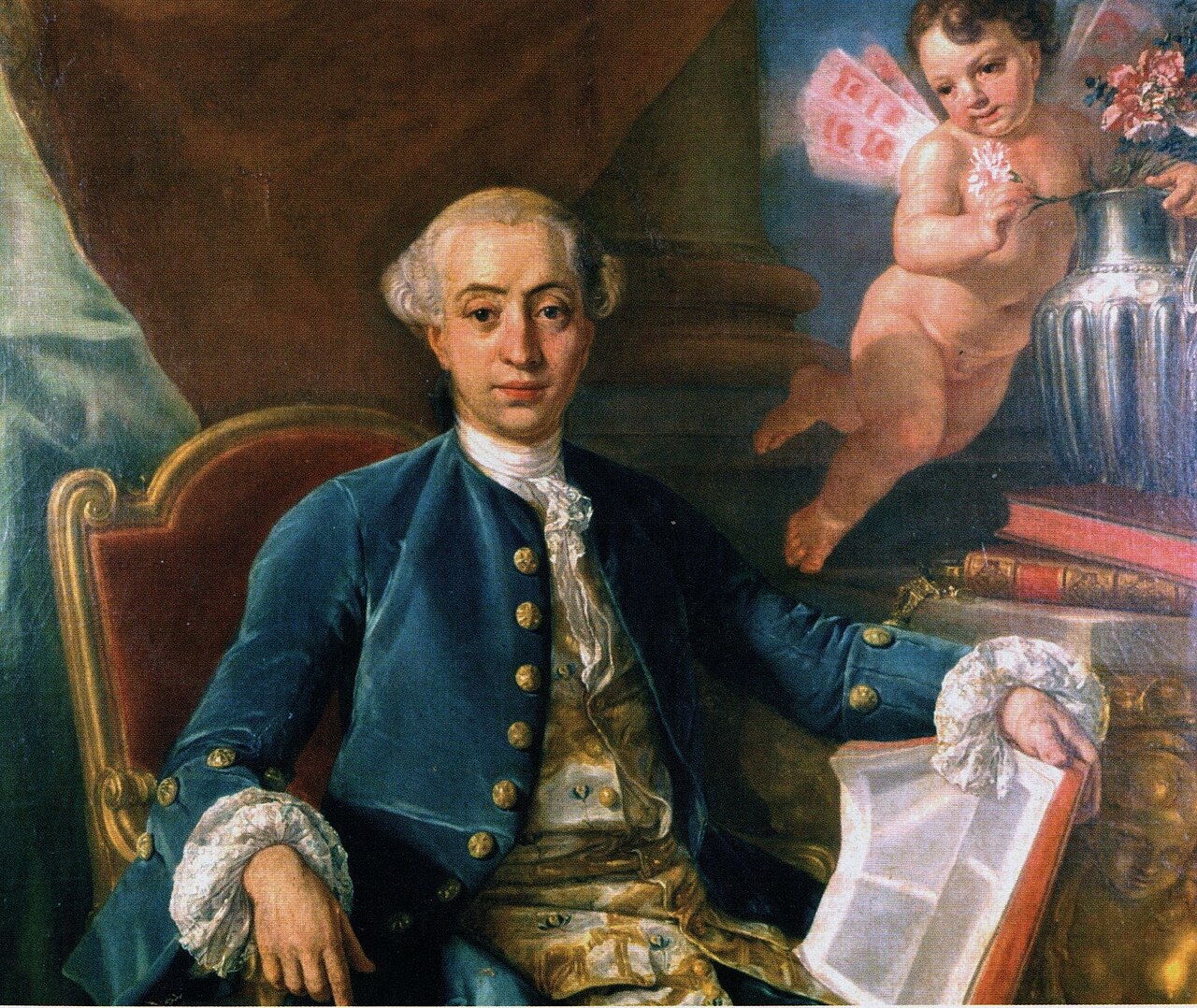
Portrait of Giacomo Casanova
The Man Who Lived by His Wits
On the night of November 1, 1756, a Venetian prisoner crawled out through a hole he had spent weeks gouging in the lead-sheathed roof of the Doge's Palace, edged along the slick tiles, lowered himself through an attic window with a knotted rope and an iron spike, bluffed a sleeping guard, and walked out the great door past the porters as though he owned the place. The escape from the Leads—the dreaded I Piombi—was the perfect emblem of the man: a problem solved in the body, in the moment, with nerve and improvised tools and an unbreakable read of exactly when to move.
Casanova was born in Venice in 1725, trained briefly for the priesthood, and then proceeded to be, by turns and often at once, a soldier, a gambler, a “cabbalist” who fleeced credulous aristocrats with alchemy, a spy, and—genuinely—a mathematician who helped devise the French state lottery. He visited Voltaire at Ferney and came away thinking him vain; pitched Catherine the Great his lottery scheme in St. Petersburg; called on Rousseau and Frederick; was received by popes and kings and thrown out of half the cities he charmed. The ESTP profile explains him entirely: dominant Se that seized the living present; auxiliary Ti that ran cold tactical calculus underneath the charm; tertiary Fe that supplied the dazzle; and inferior Ni that left him blind to the long horizon, building nothing that lasted until the moments themselves became the one great work he left behind. He was not a romantic. He was an operator—and the operator wrote himself immortal.
A dominant Se that seized every room fused to an auxiliary Ti that coolly calculated the odds, the angle, and the escape—the ESTP at full tilt.
The Man Wholly Awake to the Room
Se — dominant
Dominant Se grips the present and reads a live situation with a speed that looks, to slower temperaments, like luck. Casanova was this faculty given a life—alive to every shift of mood in a room, capable of recalibrating a plan mid-sentence. The Histoire de ma vie is a record of a man supernaturally present: noticing everything, seizing everything, never wasting the moment in front of him.
The escape from the Leads is dominant Se as pure performance. There was no master plan— there was a man reading the materials at hand night after night: an iron bar sharpened on stone, a rope of bedsheets, the angle of a roof, the position of a sleeping guard, the bluff that would walk him past the porters. Every step was a present-tense decision under pressure. The same faculty served him at the gaming table and in every seduction—he read desire and hesitation in a glance and moved exactly when the moment was ripe.
The same appetite that made him formidable made him reckless. Se hungers for intensity and pays little heed to the bill. He burned through fortunes as fast as he won them, expelled from one city after another when the appetite outran his welcome. The boldness that broke him out of an inescapable prison and the recklessness that kept him perpetually fleeing were the same faculty.
The Cold Calculus Under the Charm
Ti — auxiliary
If dominant Se put Casanova into the room, auxiliary Ti told him the angle. Ti asks not whether a thing is admired but whether it works—the odds, the leverage, which move follows from which. His seductions were not warm impulses; they were campaigns planned in stages, each obstacle studied and each approach chosen for effect.
The con-man's career is Ti made into a profession. He fleeced the Marquise d'Urfé for years with an apparatus of cabbalistic numerology—engineering exactly what the credulous aristocrat wanted to believe and sustaining the evidence piece by piece. At the gaming table he understood odds and edges as a discipline. And the mathematical mind was no pose: he genuinely helped devise the French state lottery, grasping the probability and pricing well enough to produce a fortune for the crown and a commission for himself.
Where dominant Se gave him the appetite for risk, auxiliary Ti gave him the cool head that made the risk pay. He did not simply throw himself at life. He calculated the throw.
The Charm That Opened Every Door
Fe — tertiary
Tertiary Fe is social intelligence in the service of the dominant appetite—an instinct for what flatters, what puts a stranger at ease, how to make oneself wanted. In Casanova it was formidable: a brilliant talker, an easy and generous companion, quick to make a stranger feel like the most interesting person at the table. The charm got him received at courts where he had no rank and let a penniless adventurer move as an equal among princes. It was real, and it was also a tool.
His seductions worked because he genuinely attended to the women he pursued—he listened, he flattered intelligently, he made them feel seen—and the attention was not wholly cynical even when it was strategic. But the Fe sat below the Ti, which means the warmth was finally in the service of the operator. He cared about pleasing people and he cared about winning, and when the two diverged, winning tended to take it.
The tertiary position also explains where the charm failed him. He read individuals with great skill but had no comparable sense of the larger weather—the slow accumulation of reputation, the way scandal compounded. He could win a dinner and lose a city. Tertiary Fe dazzles in the moment without governing the long arc of how one is seen. The charm was a master key to any single room. It was no map of the world the rooms were in.
Blind to the Long Horizon
Ni — inferior
Inferior Ni is a weak relationship to the long horizon—the future as a shape one is building toward. Casanova could read the next hour with genius and could not read the next decade at all. He built nothing that lasted. He lurched from scheme to scheme—priest, soldier, gambler, alchemist, spy, financier, librarian—each seized with present brilliance and abandoned before it could compound into anything. Fortunes ran through his hands as fast as they arrived.
The seductions tell the same story. For all the campaigns, he accumulated no lasting union, no settled life. The one apparent exception proves the rule: his great love, Henriette, whom he met in 1749 and whose parting he called the deepest grief of his life. He never built anything with her; he simply carried the memory for fifty years, a wound he could feel but never resolve. The inferior function does not let a man plan toward a future; it lets him ache, in hindsight, for the one that got away.
The end of his life is inferior Ni delivering its bill. Expelled from everywhere, his charm spent and his schemes exhausted, he ended as the melancholy librarian of Count Waldstein's remote castle at Dux in Bohemia—mocked by servants, far from every capital he had conquered, nothing ahead and nothing built behind but the rubble of seized moments. There, with no future left to seize, he turned to the past and wrote the Histoire de ma vie—a monument built, with bitter irony, by the one function he had always lacked.
Why ESTP Over ESFP
Why not ESFP?
The ESFP is the tempting reading—Casanova chased beauty and delight across a continent, and the ESFP also leads with Se and lives for the warmth of the present. But the ESFP runs auxiliary Fi: a private compass of personal value, attachment as an end in itself. The through-line of Casanova's life is not Fi-warmth; it is the tactical operator—the gambler, the alchemy-grifter, the escape-planner, the lottery-schemer who read every situation for advantage. His seductions were campaigns; his life was a series of plays for position and survival. That Se-Ti operator, not the Se-Fi pleasure-and-feeling of the ESFP, is what he was.
The test is what sits underneath the charm. Watch him work the Marquise d'Urfé, read the cards, plan the escape, pitch Catherine the Great his lottery, and you are watching a strategist calculating the move. His memoirs show genuine tenderness—the grief over Henriette is unfeigned—but tertiary Fe supplies that warmth below an auxiliary Ti that runs the actual decisions. The pleasure was sincere. The operator was in charge.
Connected Figures
Further Reading
- History of My Life — Giacomo Casanova, tr. Willard R. TraskThe unabridged twelve-volume memoir — the primary source for everything Casanova, and one of the great autobiographies of the 18th century.
- Casanova: Actor, Lover, Priest, Spy — Ian KellyThe best modern biography; reads the memoirs critically against archival evidence to separate fact from performance.
- The Venetian Years — J. Rives ChildsA careful archival study of Casanova's early career and the Venice that shaped him.
- Casanova's Women: The Great Seducer and the Women He Loved — Judith SummersFocuses on the women's perspectives and what the historical record reveals about his actual relationships.
