 Historical Figure MBTI
#1217 · 9-6-26 · The Mughal Empire
Man Singh I
Mughal Commander · Prince of Amber
1550–1614
6 min read
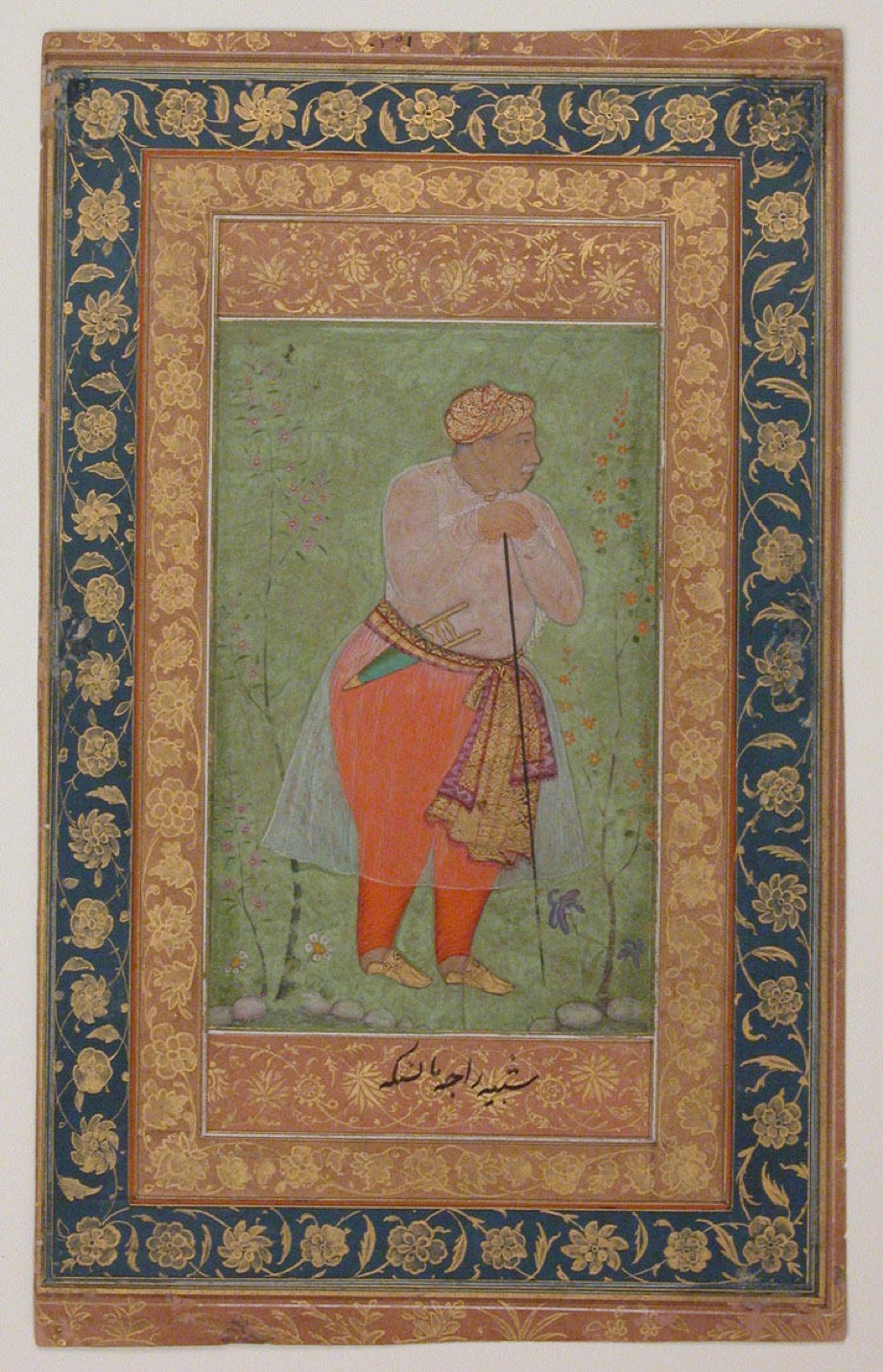
Portrait of Man Singh I — circa 1590
A prince who made service powerful
Man Singh of Amber could command an imperial army without ceasing to be a Rajput prince. That combination was the substance of his career, not a contradiction waiting for a modern historian to resolve. The alliance his grandfather Bharmal made with Akbar opened a route into the Mughal court; Man Singh turned that opening into decades of military authority, provincial responsibility, and influence near the dynasty itself. Service enlarged his house’s reach while binding it to another sovereign’s fortunes.
At Haldighati in 1576 he led Akbar’s forces against Maharana Pratap. The encounter has often made the two men into opposite moral categories, one preserving identity and the other surrendering it. Their political choices differed sharply, but the contrast obscures the reality of Man Singh’s position. Imperial rank could support regional power, kinship could support court office, and a Hindu commander could wage the emperor’s wars without his religious life being exhausted by that allegiance.
The tentative ESTJ interpretation follows his recurrent participation in organized action and the use of established relationships to make it effective. Military occupation alone proves no cognitive preference. The argument must remain modest because much of the surviving record shows him at work, in circumstances where work was designed to display competence and loyalty.
The tentative ESTJ reading emphasizes dominant Extraverted Thinking: Man Singh repeatedly converted rank, resources, and alliances into work that an imperial system could use.
Command is a collective result
Man Singh’s appointment against Mewar illustrates the kind of authority he exercised. He did not arrive as a lone champion seeking a personal duel. An imperial force gathered at Mandalgarh before advancing, and its commanders and contingents had to be brought into a workable formation. Abu’l-Fazl’s account praises the emperor’s fortune, but beneath that praise it records the coordination without which royal intentions could not become a campaign.
Haldighati also exposes the limits of results. Man Singh’s army won the field, yet Pratap escaped. The outcome therefore met an immediate military objective while leaving the larger political problem unresolved. This distinction matters for an Extraverted Thinking interpretation: a person oriented toward accomplishment still operates inside incomplete information and competing demands. Competence does not mean every campaign becomes the total success that a court historian’s language promises.
Beveridge’s notes to the Akbarnama point to other accounts in which Akbar was displeased that the victory was not fully exploited and in which Man Singh’s conduct toward the surrounding country contributed to imperial dissatisfaction. Those details should not be turned into an unqualified story of benevolent restraint. They do remind us that a commander’s decisions could be assessed differently by the court and by the people nearest the campaign. Holding office involved negotiating obligations, not simply following a single instruction to its most violent conclusion.
The house inside the hierarchy
The Kachhwaha relationship with Akbar was already established when Man Singh’s independent prominence developed. His grandfather Bharmal’s daughter married the emperor in 1562, and his father Bhagwant Das also entered the widening circle of imperial service. The family’s rise did not erase its earlier identity. It gave that identity a new institutional setting, where local lineage and imperial favor could reinforce each other.
Auxiliary Introverted Sensing is a possible way to read this durable use of inherited relationships. Man Singh did not have to invent legitimacy from nothing. He worked through a house whose members could serve, marry, inherit, and command across connected political arenas. The tentative interpretation stresses his ability to keep that established framework useful. It does not presume that family loyalty is unique to one type, or that everyone born into a dynasty experiences inheritance in the same way.
His later provincial career widened the family’s geographical reach. Responsibility in the eastern provinces placed him far from Amber, in regions whose political conditions could not be managed solely through the habits of his home court. The combination of a durable base and distant responsibilities is more revealing than the stereotype of a conservative officer content to remain where tradition put him. Inherited position supplied resources for movement rather than a reason to avoid it.
These were relationships with duties attached. A rank was a claim on resources and an expectation of service, not simply an honor worn at court. The family’s growing prominence depended on the repeated performance of those duties. That makes the practical use of inherited position more informative than the title by itself.
A system offers more than one future
Man Singh’s role in the imperial succession brings a different kind of evidence into view. As Akbar approached death in 1605, Man Singh and Mirza Aziz Koka supported the possibility of Khusrau’s accession against the claim of his father Salim. They failed to secure sufficient support. Salim became Jahangir, and Man Singh continued in imperial office. A court career that appears uniformly loyal from a distance contained choices about which member of the ruling family should command loyalty.
The episode makes it difficult to reduce Man Singh to an obedient instrument. He could act within the hierarchy while seeking to influence its future. The connection with Khusrau had a concrete institutional history: Akbar had appointed him the prince’s guardian and linked the young prince’s establishment to eastern resources and seasoned troops. Support for Khusrau was therefore not merely the sudden ambition of an old general. It emerged from relationships the emperor himself had helped create.
Extraverted Intuition remains the weakest part of the proposed stack, and it should not be supplied with fictional thoughts. At most, the succession episode shows willingness to participate in an alternative political arrangement within an existing order. His continued service after that possibility failed also indicates accommodation to the outcome. Neither act proves an imaginative temperament, but together they complicate a portrait built entirely from routine and obedience.
Why this tentative reading?
Why not ISTJ?
Family continuity, long service, and fidelity to an established structure could support dominant Introverted Sensing. The tentative preference for ESTJ rests on the prominence of outward coordination across changing assignments: his inherited position repeatedly became a basis for mobilizing people and pursuing practical results. Yet the record favors precisely those activities because they are what imperial chronicles were written to notice.
The distinction should consequently remain revisable. A commander who looks outwardly decisive may organize his judgment around inherited duty, and a public record seldom lets us follow the sequence of thought. ESTJ is the editorial lean here, not a measurement. Its value lies in asking how Man Singh made institutions work while recognizing that his office could make a different temperament look similar.
Connected Figures
Further Reading
- The Akbarnama, volumes II–III — Abu’l-Fazl; translated by Henry BeveridgeImperial narrative of the Amber alliance and campaigns; read its judgments of submission and resistance critically.
- The Mughal Empire — John F. RichardsA scholarly account of imperial institutions, regional incorporation, and the succession of 1605.
- Mewar and the Mughal Emperors, 1526–1707 A.D. — Gopi Nath SharmaA detailed regional study; distinguish its evidence from its older patriotic framing.
- Raja Man Singh of Amber — Rajiva Nain PrasadA dedicated scholarly biography of his military, dynastic, and regional career.
