 Historical Figure MBTI
#858 · 6-20-26 · The American Civil War
Martin Delany
Father of Black Nationalism · Union Major
1812 — 1885
5 min read
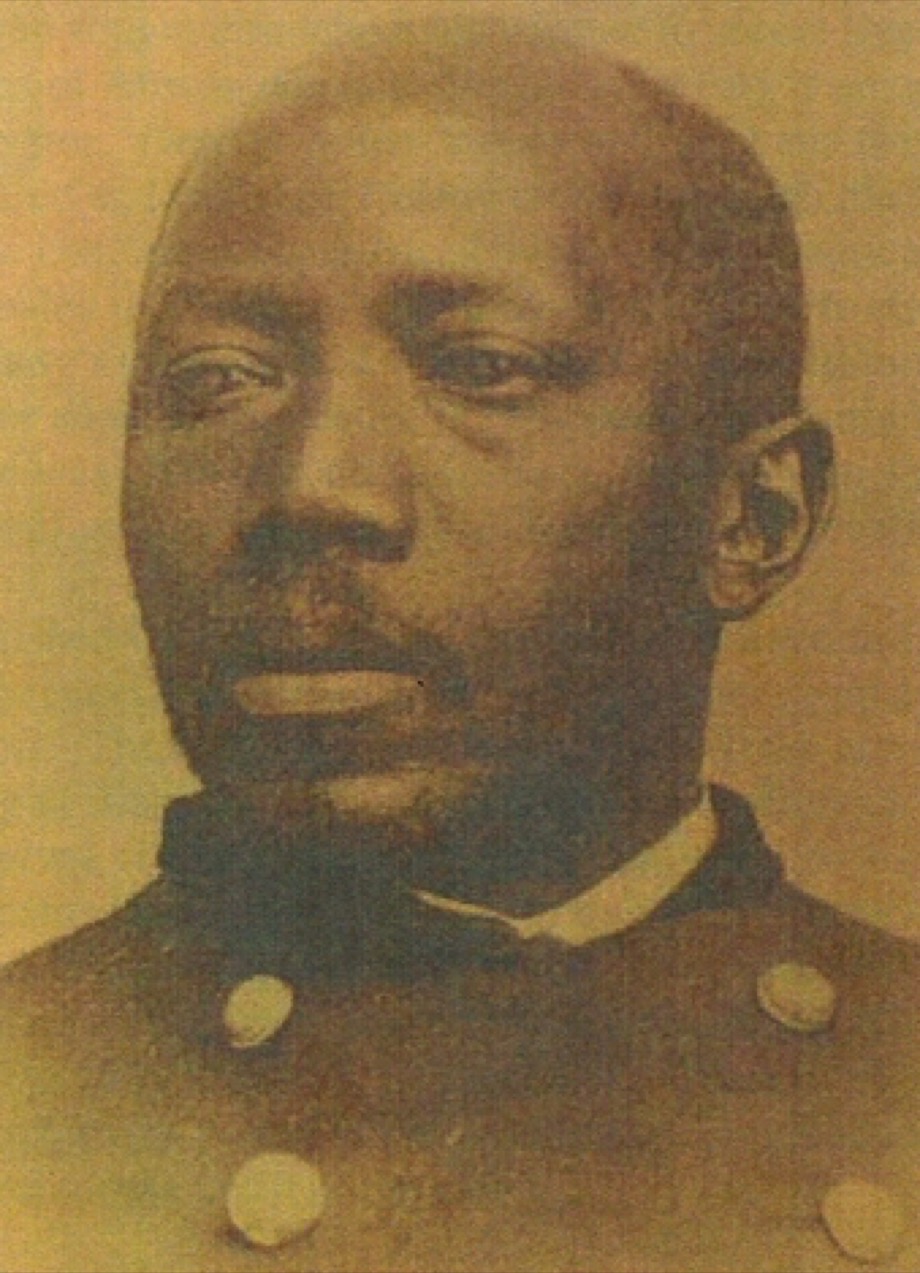
Photographic Portrait of Martin Delany
A Nation, Built in the Mind Before It Existed Anywhere Else
Martin Delany never waited for the world to hand him a role. Born free in Virginia in 1812, he taught himself to read from a banned primer, walked to Pittsburgh to study medicine, and treated the dying during two cholera epidemics when white doctors fled the city. In 1850 he became one of the first Black students admitted to Harvard Medical School — and was expelled after one term when white students protested his presence. He absorbed the lesson not as despair but as data: petitioning individual institutions for inclusion was a losing strategy, and a different, larger structure needed to be built instead.
That is the shape of an INTJ mind under pressure — one that responds to a closed door not by pounding on it but by drafting blueprints for a house across the ocean. Delany co-edited The North Star with Frederick Douglass, explored the Niger Valley to scout land for Black-led settlement, wrote the first systematic theory of Black nationalism in The Condition, Elevation, Emigration, and Destiny of the Colored People of the United States, and later became the U.S. Army's first Black field officer. Each phase looks, from the outside, like reinvention. From the inside, it is the same architecture applied to a new site.
Delany was an INTJ whose dominant Ni didn't dream of a better America — it designed an alternative to it, and then went looking for the ground to build on.
The Blueprint for a Country That Didn't Exist Yet
Delany's dominant Ni shows up not as vague prophecy but as a completed theory arriving years ahead of the events that would vindicate it. In 1852, a decade before emancipation and long before most abolitionists — Black or white — had abandoned hope of integration, he published a book-length argument that Black Americans would never achieve genuine equality inside a white-majority republic, and that the only durable answer was to build sovereign Black nations elsewhere. It was not a mood. It was a thesis, argued from historical pattern and demographic reasoning, with a proposed destination attached.
He then went and looked for the destination himself. Delany traveled to Liberia and up the Niger Valley in the 1850s, negotiating directly with African rulers for land where American Black emigrants could settle and govern themselves — treating the abstraction of "a Black nation" as a literal site-selection problem to be solved on foot, on the ground, years before most of his contemporaries could picture it as more than rhetoric.
The same faculty produced his break with Douglass. It wasn't a falling-out over pride or personality; it was two long-range models of history diverging, and Delany trusting his internal vision of where American race relations were structurally headed over the more immediate, encouraging signs Douglass was reading in the moment.
Vision, Then Machinery
What separates Delany from a purely visionary thinker is how quickly his Te converted every conviction into an institution or a chain of command. He didn't just believe medicine could serve Black communities — he earned formal training and ran a practice through two cholera outbreaks, treating patients under crisis conditions rather than theorizing about public health from a distance.
When the Civil War reopened the question of Black citizenship, Delany moved with the same efficiency: he recruited for Black regiments, secured a personal meeting with Lincoln to press for Black enlistment as a matter of hard national interest, and was rewarded with a field commission as major — the first Black officer to hold one in the U.S. Army. Afterward he took an administrative post with the Freedmen's Bureau in South Carolina, then moved into Reconstruction-era political organizing, always choosing the lever most likely to produce a structural result.
A Conviction He Would Not Trade for Company
Tertiary Fi in an INTJ rarely announces itself in speeches; it shows up as the private line a person will not cross even when crossing it would be easier. Delany's split with Douglass cost him his most valuable public partnership and put him at odds with the dominant current of Black abolitionist thought, which largely favored fighting for citizenship within the United States. He held his position anyway, because the disagreement wasn't strategic vanity — it was a settled internal judgment about what Black dignity actually required, and he would not perform consensus he didn't feel.
That same quiet conviction shows in his refusal to soften emigration into a metaphor. Plenty of contemporaries could gesture at "returning to Africa" as sentiment; Delany treated Black self-determination as a value serious enough to fund, travel for, and negotiate for in person — a principle to be lived up to, alone if necessary.
Why INTJ Over INTP
Why not INTP?
An INTP would have found Delany's ideas — the theory of Black nationalism, the case for emigration — but would more likely have left them as a body of argument to refine and debate. Delany funded and led actual scouting expeditions to specific West African territories, built a medical career and a newspaper on methodical follow-through rather than pure inquiry, and pivoted decisively into military organizing and a personal audience with Lincoln when the moment demanded action. That is Te imposing a vision on institutions, not Ti exploring a vision for its own sake.
The distinction matters because Delany is so often mistaken for a purely theoretical figure — the man who wrote the book on Black nationalism. But the book was a launch point, not a destination. Everywhere his Ni produced a conclusion, his Te went looking for the ship, the land deed, the commission, or the office that would make it real. That relentless conversion of insight into structure is the signature of a judging auxiliary, not a perceiving one, and it is why INTJ, not INTP, is the read that survives contact with his actual biography.
Connected Figures
Further Reading
- Martin Delany, Frederick Douglass, and the Politics of Representative Identity — Robert S. LevineThe definitive study of the two men's shared career and strategic divergence.
- The Making of an Afro-American: Martin Robison Delany, 1812–1885 — Dorothy SterlingA comprehensive biography covering medicine, journalism, and emigration.
- The Condition, Elevation, Emigration, and Destiny of the Colored People of the United States — Martin R. DelanyDelany's own 1852 manifesto for Black nationalism and emigration.
