 Historical Figure MBTI
#855 · 6-20-26 · The American Civil War
Harriet Tubman
Underground Railroad Conductor · Union Scout · Liberator
1822 — 1913
11 min read
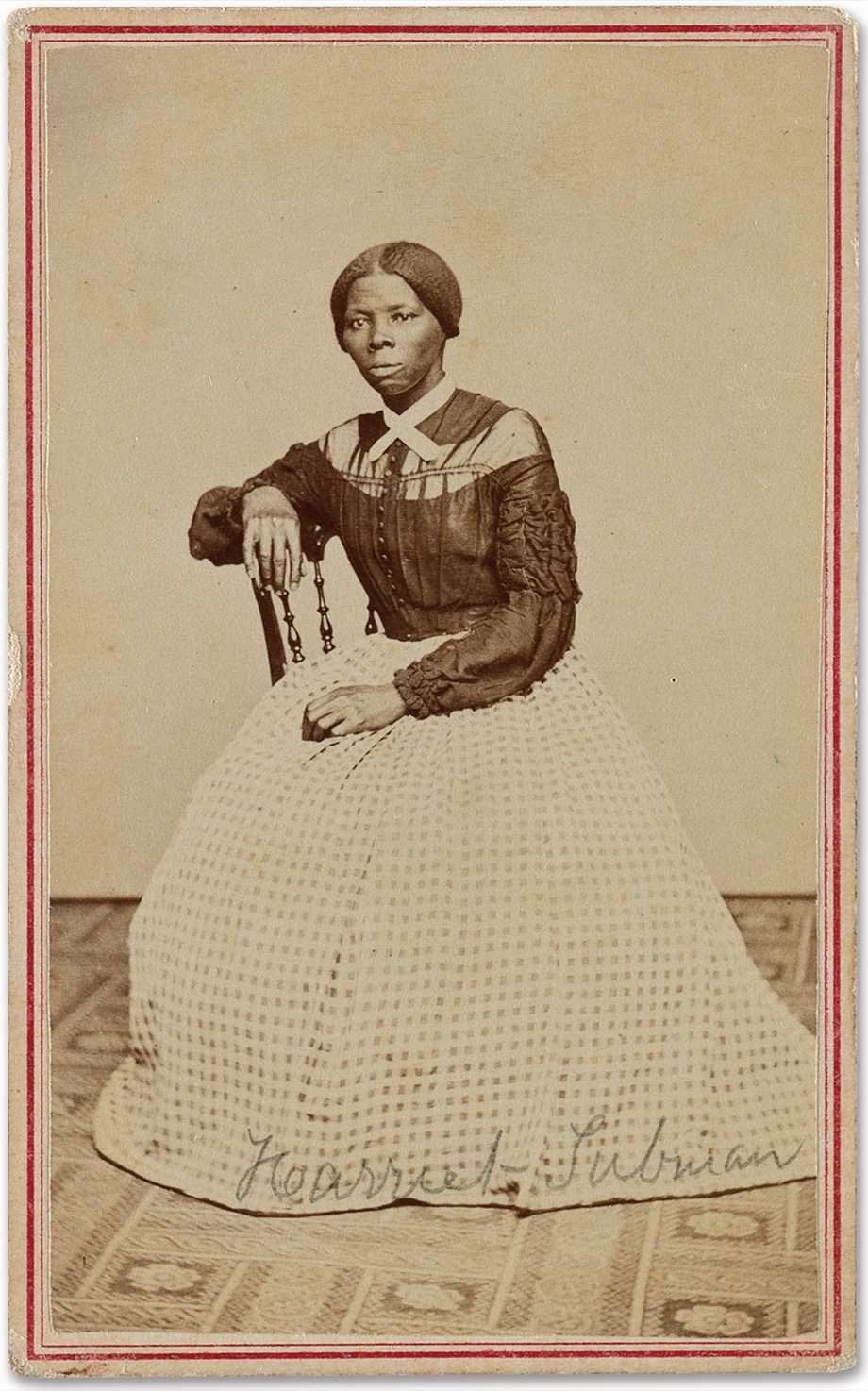
Portrait of Harriet Tubman
The Woman Who Walked Back
The remarkable thing about Harriet Tubman is not that she escaped. Thousands escaped. The remarkable thing is that she turned around. In the autumn of 1849 a woman then called Araminta Ross crossed the Mason-Dixon Line alone, on foot, guided by the North Star and a rough memory of safe houses, and arrived in Philadelphia a free person — and later described that arrival not with joy but with a strange, aching incompleteness. She was free and nobody she loved was. Freedom, for her, was not a destination she had reached. It was a condition she now had the standing to go back and impose on the world.
Over the next decade she made roughly thirteen return journeys into the slave state she had fled, leading some seventy people out of Maryland and into the North and, after 1850 made the North unsafe, all the way into Canada. She never lost a passenger. She was never caught. And she did it while carrying a set of neurological injuries that would have grounded almost anyone else: a teenage overseer had hurled an iron weight at another enslaved person, struck her in the skull instead, and left her with lifelong headaches, seizures, and abrupt trance-like episodes in which she saw vivid, insistent images she understood — without hesitation, for the rest of her life — as messages from God.
That interpretive move is the whole key to her. A different mind would have called those episodes a symptom. Tubman treated them as intelligence — and then applied to that certainty a discipline so exacting that in ten years of felony work against an armed and vigilant state, it never once failed.
Harriet Tubman was an INFJ — a dominant-Ni mind that did not decide what to do so much as see it, and then spent the rest of its life proving the vision right with logistics.
The Vision Arrives First
Dominant introverted intuition is not a talent for prediction. It is a way of knowing in which the conclusion presents itself whole, ahead of the evidence, and the conscious mind is left to work backward and find out why. Tubman lived at the extreme end of this. Her biographers record her describing dreams in which she flew over fields and rivers toward a line she could not cross, where women in white reached across to pull her over — years before she ran, and over terrain she would later recognize in daylight. She described being told, in a vision, that her brothers were about to be sold south; the sale was arranged within days. She reported knowing, mid-journey, that a particular road was wrong, and turning her party off it into freezing water rather than take it.
What matters typologically is not whether the visions were supernatural. The head injury almost certainly gave her the raw material — seizures, hypersomnia, hypnagogic imagery. What matters is what her psyche did with it. A thinking-dominant would have discounted the episodes as noise; Tubman integrated them instantly into a single unbroken narrative of purpose — she had been given the images because she had been given the work. The Ni dominant does not accumulate a worldview piece by piece. It receives one, and everything afterward is read in its light.
This is also why her courage never looked like recklessness. Bravado is an extraverted appetite; Tubman had none of it. She timed departures for Saturday nights, because runaway notices could not be printed until Monday. She moved in winter, when the nights were longest. She carried paregoric to quiet infants. She turned south when pursued, because no one hunts a fugitive heading deeper into slavery. Every one of these is a small tactical inversion of what an observer would expect — and taken together they are the signature of a mind that runs the whole scenario forward internally, sees where the pattern breaks, and acts on the break before it arrives. She was not gambling. She had already watched the trip happen.
The Pistol Was for Her Own People
The auxiliary in an INFJ is extraverted feeling, and it is the function that turns private vision into obligation toward actual human beings. Tubman is one of the cleanest illustrations in the archive of how unsentimental that obligation can be. She did not return to Maryland for an abstraction. She returned first for her niece Kessiah and her children, then her brothers, then her aged parents — carrying her father and mother out by wagon in 1857 when both were far too frail to walk — and only then for strangers. The circle widened outward from the specific people she loved, which is how Fe almost always works: not as generalized benevolence but as a chain of concrete responsibilities, each one non-negotiable.
And the same function supplied the hardness. The most quoted image of Tubman is the revolver she carried, and the line attached to it: that she would level it at any escapee who lost his nerve and wanted to turn back, telling him he would go on or die. Modern readers reach for the word ruthless. It is the opposite. A man who returned would be beaten until he gave up the route, the safe houses, the names, and the conductor — and every other passenger on that line would be lost with him. The gun was an instrument of collective protection, aimed by someone who had done the arithmetic of who else would die. Fe under pressure does not soften; it triages.
Her later life kept the same shape. After emancipation she took the aged and destitute into her house in Auburn, New York, so far beyond her means that she was chronically broke, and in 1908 formalized the arrangement into a home for elderly Black Americans on her own land — where she herself, at the end, became a resident. She spoke for suffrage alongside Susan B. Anthony. It was the same instinct that made her turn around in 1849, extended over sixty more years.
A Private System, Kept in the Head
Tubman could not read or write. This is worth sitting with, because the operations she ran would strain a literate staff officer. She held in memory the geography of the Eastern Shore and the corridor north through Delaware into Pennsylvania; the identities and reliability of dozens of station-keepers, Black and white, Quaker and free-Black and sailor; the tidal and seasonal rhythms that made certain crossings possible in certain weeks; the going rate of the bounties on her; and the running status of every passenger under her care. Tertiary introverted thinking builds exactly this kind of thing — a private, internally consistent model that answers to its own logic rather than to any external manual — and Tubman's was carried entirely unwritten, which is also why it was uncrackable.
Her tradecraft shows the same signature. She used spirituals as a signaling layer, altering tempo and verse to mean stop, move, or danger; she disguised herself as an elderly woman and, on one telling, sat reading a newspaper in a station where the fugitive on the poster was known to be illiterate. These are not folk customs she inherited. They are solutions to specific problems, worked out by someone who reasoned continuously about what an adversary could observe and infer. When William Still and the Philadelphia Vigilance Committee documented her arrivals, they were recording the output of a system they had not designed and did not fully see.
The Combahee River Raid is the same faculty at industrial scale. Sent to the South Carolina Lowcountry in 1862, Tubman spent months cultivating an intelligence network among enslaved people on the rice plantations — the only human sources who knew where the Confederates had sunk their torpedoes in the river. She converted their scattered local knowledge into a route, and on the night of June 2, 1863, three Union gunboats followed her charting past the mines. More than seven hundred people came out. She is generally credited as the first woman in American history to plan and lead an armed military operation, and the plan itself was an act of pure Ti: a model assembled from testimony, tested against terrain, and trusted absolutely.
A Body She Could Not Rely On
Inferior extraverted sensing is the INFJ's most awkward inheritance: a real capacity for decisive physical action, but one that arrives unevenly, is difficult to modulate, and tends to be spent in bursts rather than sustained. Tubman's case is unusually literal, because her body genuinely could not be relied upon. The seizures came without warning. She would drop mid-sentence, mid-march, sometimes for minutes, sometimes longer, and wake and continue as though nothing had interrupted her. A leader with a merely ordinary relationship to the physical world could not have run a route under that condition. She built her entire method around it — small parties, long margins, night movement, the assumption that the conductor herself might go down at any moment and the passengers must keep still until she came back.
When Se did fire, it fired hard and briefly. The confrontation that maimed her began with a seventeen-year-old girl physically blocking a doorway to keep an overseer from a fleeing man. Decades later, aboard a Union gunboat, she watched liberated families swarm the rowboats in a panic that threatened to swamp them, and steadied hundreds of terrified people by singing to them until they let the boats go. Both are acts of immediate, embodied nerve. Neither is a habit. They are the inferior function surfacing under enormous pressure and doing, for a few minutes, precisely what was needed.
The cost shows in the shape of her later life. She was never drawn to comfort or spectacle or accumulation; she gave away what she had, lived in chronic poverty, and around 1898 submitted to brain surgery in Boston — reportedly without anesthesia, biting a bullet the way she had seen soldiers do — to quiet the headaches that had followed her since childhood. A fitting last image of the type: a mind so committed to what it saw that it treated its own skull as one more obstacle on the route.
Why INFJ Over ISFJ
Why not ISFJ?
ISFJ is the obvious near-miss: quiet, dutiful, physically brave, organized around protecting specific people. But ISFJ moves by precedent — dominant Si works from what has been done, refines an existing procedure, and is uneasy operating where there is no established practice to fall back on. Tubman had no precedent. She invented routes, timings, and signaling conventions that no one had used, and she kept revising them as the danger changed: after the Fugitive Slave Act of 1850 she simply extended the whole line several hundred miles into Canada rather than trust the free states. That is a mind re-projecting the future, not conserving a method.
The decisive evidence is how she related to authority. Seasoned white abolitionists — people who had run this work for years — were repeatedly startled by what she proposed and by the flat certainty with which she proposed it, and she went ahead whether or not they were reassured. She backed John Brown, whose plan most of the movement regarded as suicidal, helped him recruit in Canada, and called him the truest friend her people ever had — and only illness kept her from Harpers Ferry. An ISFJ defers to the structure and works inside it. Tubman treated every existing structure, including the abolitionist establishment and eventually the United States Army, as a resource to be recruited into a plan she had already seen. The vision came first; the institutions were asked to catch up.
Connected Figures
Further Reading
- Bound for the Promised Land: Harriet Tubman, Portrait of an American Hero — Kate Clifford LarsonThe standard modern biography — archival, skeptical of legend, and the best account of the Eastern Shore networks she actually used.
- Harriet Tubman: The Road to Freedom — Catherine ClintonPlaces her inside the wider abolitionist and wartime world, and traces how the Moses legend was built around her.
- Combee: Harriet Tubman, the Combahee River Raid, and Black Freedom during the Civil War — Edda L. Fields-BlackA deep reconstruction of the 1863 raid and the Lowcountry intelligence network that made it possible.
- Harriet, the Moses of Her People — Sarah H. BradfordThe 1886 biography written with Tubman's cooperation — hagiographic and unreliable in detail, but the closest thing to her own testimony about the visions.
- The Underground Railroad: A Record — William StillThe Philadelphia Vigilance Committee's contemporaneous case files, including entries for passengers Tubman delivered.
