 Historical Figure MBTI
#859 · 6-20-26 · The American Civil War
Robert Gould Shaw
Colonel of the 54th Massachusetts
1837 — 1863
6 min read
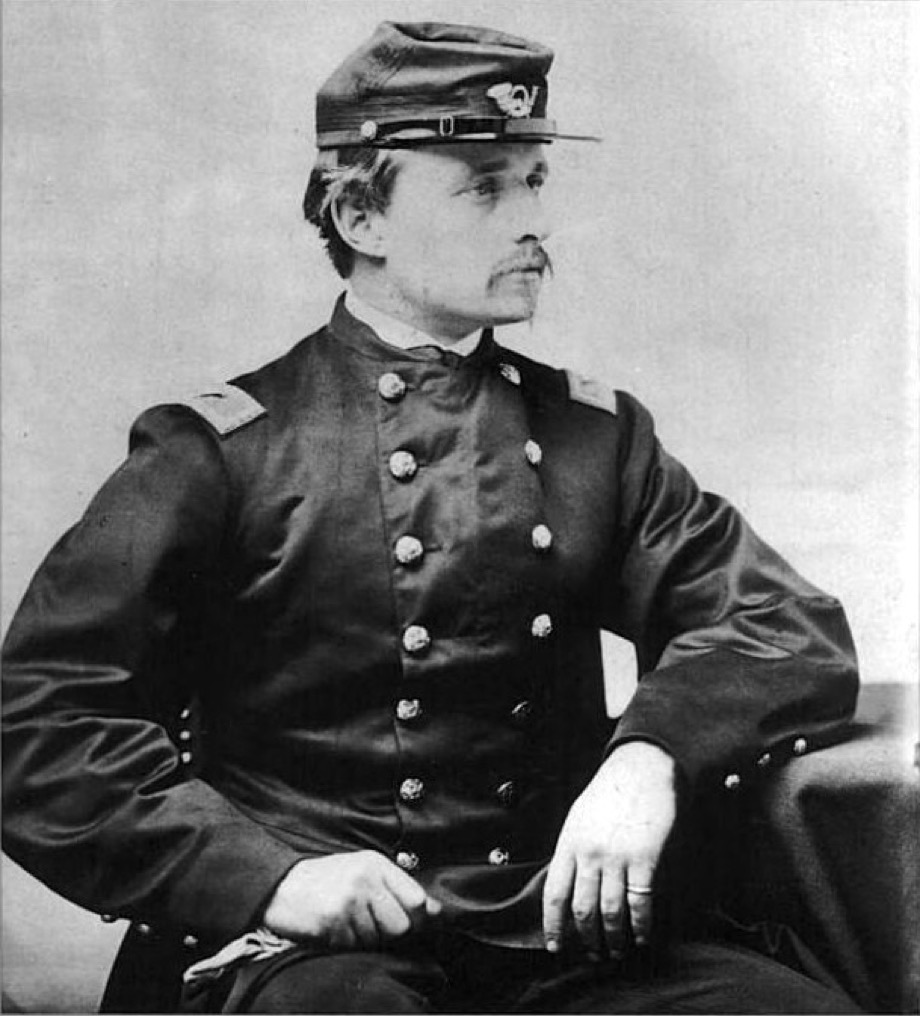
Portrait of Robert Gould Shaw
A Reluctant Man Who Could Not Do Things by Half
When the offer came to command the 54th Massachusetts, Robert Gould Shaw did not leap at it. He was twenty-five, already a veteran of two years' hard fighting, and the son of a Boston family whose parlor conversations had shaped the abolitionist movement itself. By any external measure he was the obvious man for the job. And yet his letters home from that spring of 1863 are full of hedging, doubt, second-guessing — he worried the appointment would sideline a conventional career, worried he wasn't equal to it, worried about failure in a way that had nothing to do with cowardice and everything to do with the seriousness with which he weighed the decision. He initially declined the post before reversing himself within days.
That reversal is the whole man in miniature. Once Shaw let himself actually sit with what the regiment meant — not as a career move but as a test of whether Black citizenship could be proven on a battlefield in front of a skeptical nation — the ambivalence burned off entirely, replaced by a resolve so complete it carried him, seven weeks later, to the parapet of Fort Wagner and into a shallow grave with his own men. This is the signature of an INFP: a private, deliberate conscience that moves slowly toward its convictions and then, once arrived, does not know how to hold back.
Shaw was not a natural soldier of ambition. He was a soldier of conscience — an INFP whose dominant Fi turned private moral clarity into total, irreversible commitment.
A Private Ledger of Right and Wrong
Fi does not announce itself; it accumulates in silence and then acts all at once. Shaw's letters to his parents and his fiancée show a man auditing his own motives with almost uncomfortable honesty — was he taking this command out of vanity, out of duty, out of love for his family's cause, or something harder to name that was simply his own? He did not resolve this by consulting anyone else's opinion. He worked it out alone, on paper, in the weeks before he said yes.
Once his own values were settled, external opposition became almost irrelevant. When the War Department paid Black soldiers less than white soldiers of the same rank, Shaw backed his men's refusal to accept the discriminatory wage — a year without pay, on principle, until Congress corrected it — even though the protest cost him politically with some of his superiors. This was not strategy. It was a man refusing to let his regiment be insulted in a way his own conscience could not tolerate.
The clearest proof of that inner compass is the decision to lead the Fort Wagner assault from the very front of the column, at the head of men most of the army doubted, rather than direct it from the rear as protocol allowed. Fi does not calculate the odds of survival when a value is at stake; it simply insists that this is where the person holding it belongs.
What This Regiment Could Mean
What tipped Shaw's decision was not a narrow military calculation but an expansive one — Ne's habit of tracing a single choice outward into all the futures it might unlock. He came to see, in the space of a few weeks, that the 54th's fate would ripple far past South Carolina: that a Black regiment's failure would confirm every Northern prejudice about Black soldiers, while its success could reshape the entire argument for citizenship and enlistment nationwide. That is a large, abstract, future-facing leap, and it is exactly the leap an ISFP contrast type would be unlikely to make on its own — it required holding many possible consequences in mind at once, not just reacting to the moment in front of him.
That same expansive imagination shows up in how relentlessly Shaw trained his regiment against skepticism that assumed Black men could not be disciplined soldiers. He drilled the 54th as rigorously as any white unit in the Union Army, not because regulations demanded it but because he could see, ahead of any battle, exactly the doubts his men would have to answer and exactly what would be required to answer them.
The Discipline of a Man Who Distrusted Discipline
Te, buried at the bottom of Shaw's stack, surfaces under pressure as an almost overcorrected insistence on order and results — visible in the punishing drill schedule he imposed on the 54th and in his blunt, businesslike letters requesting equipment, provisions, and fair treatment from a War Department slow to grant any of it. He wanted outcomes, not sentiment, when it came to proving his regiment's competence on paper and on the parade ground.
But it never became his native mode. Shaw's command style leaned on personal example and earned trust rather than cold organizational authority, and his most consequential decisions — refusing the discriminatory pay, leading the charge himself — were never the efficient choice. An inferior Te that occasionally demands order from a man who is, underneath it, driven by conscience rather than results.
Why INFP Over ISFP
Why not ISFP?
ISFP would explain Shaw's private, values-first ambivalence, but not the abstract, future-oriented reasoning that resolved it. His hesitation was not a reactive feeling about the moment in front of him — it was a months-long wrestling with what the regiment's success or failure could mean for the entire question of Black citizenship, a conceptual leap that belongs to Ne, not Si. An ISFP lives closer to the present; Shaw's decision was made by imagining futures that had not happened yet.
What makes Shaw legible as INFP rather than any more assertive or extraverted type is the shape of the decision itself: slow, internal, undramatic until the moment it wasn't. He did not campaign for the command, and he did not rationalize his way into it with Te logic about career advancement. He simply worked out, privately, what he believed — and once he believed it, he gave it everything, including his life.
Connected Figures
Further Reading
- Blue-Eyed Child of Fortune: The Civil War Letters of Robert Gould Shaw — Robert Gould Shaw, ed. Russell DuncanShaw's own letters, including his ambivalence before accepting command
- Thunder at the Gates: The Black Civil War Regiments That Redeemed America — Douglas R. EgertonThe 54th Massachusetts and its sister regiments in full context
- One Gallant Rush: Robert Gould Shaw and His Brave Black Regiment — Peter BurchardA biography focused on Shaw's command and the Fort Wagner assault
