 Historical Figure MBTI
#1167 · 8-27-26 · The Three Kingdoms
Pang Tong
The Fledgling Phoenix · Rival Genius to the Dragon · Fallen at Luo Castle
179 — 214
9 min read
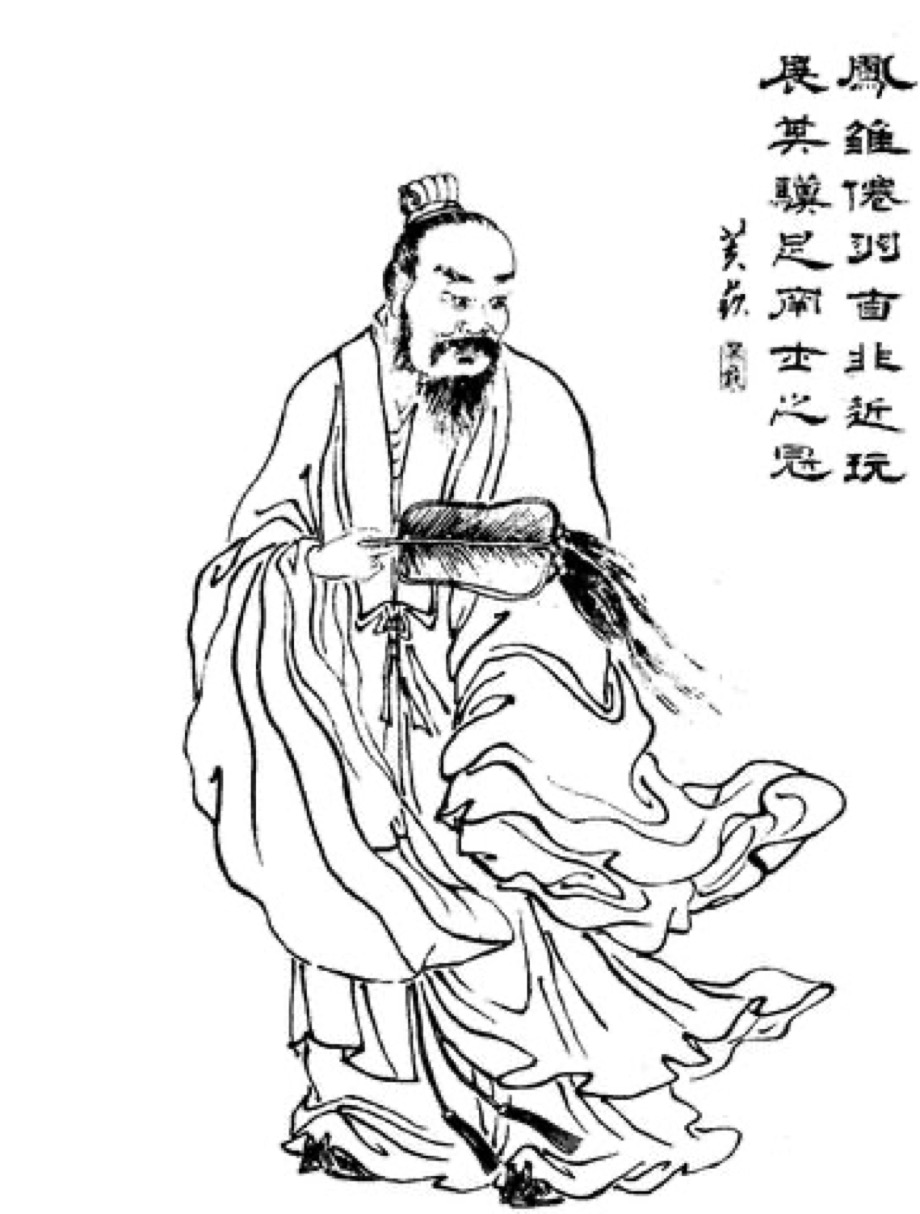
Portrait of Pang Tong
The Man Who Looked Like Nothing
The talent-assessors of the late Han were a kind of institution — men whose judgment on a stranger’s capacity could make or unmake a career before that career had produced a single act. Their verdict on the young men of Jing Province came down as a pair of names. Zhuge Liang was the Sleeping Dragon. Pang Tong was the Fledgling Phoenix. Two birds of one flight, rated equal, and whoever secured either was told he could settle the empire. Liu Bei eventually got both. He very nearly threw one away.
The problem was that Pang Tong did not look the part. Zhuge Liang was tall, striking, self-consciously theatrical — a man who understood that a strategist is also a performance. Pang Tong was plain to the point that the sources bother to mention it, unpolished in conversation, and had already failed to impress once, drifting through Sun Quan’s court in the south without anyone deciding he was worth much. When he came to Liu Bei, he was handed a county magistracy in Leiyang and effectively forgotten. The reputation said genius; the man in the room said clerk. Liu Bei — normally the finest reader of men in the empire — believed the room.
What corrected the error was not charm but demonstration. Left in his backwater, Pang Tong let the county’s legal business pile up unresolved and drank. When an inspection finally came, he sat down and cleared the entire accumulated backlog in a single afternoon, reasoning each case out loud, drunk, without hesitation or error, and finished with the observation that none of it had been difficult enough to be worth doing sooner. Both Lu Su and Zhuge Liang wrote separately to say the same thing: this man is not a hundred-li official, give him something the size of his mind. Liu Bei gave it to him, and for the next three years Pang Tong was the sharpest instrument in his camp.
Pang Tong is the archive’s clearest late-Han INTP — a dominant-Ti intelligence that solved whatever was in front of it faster than observers could follow, and never once bothered to look impressive doing it.
A Year of Cases in an Afternoon
The Leiyang episode is the single most diagnostic anecdote in his record, and it is diagnostic because of the manner, not the outcome. Anyone diligent can clear a docket. What Pang Tong displayed was the dominant-Ti signature: the cases were not work to him, they were structure, and structure resolves at the speed you can see it. He had not been idle out of contempt for duty so much as out of an inability to be interested in a problem before it became large enough to be a problem. Given the whole heap at once, he processed it as one object with many branches rather than many objects — which is precisely why it took an afternoon and not a season.
That same internal-logic engine ran on people. His advice to Liu Bei is consistently the advice of a man who has stripped a situation down to what is actually true about it and reports the result without sanding the edges. When Liu Bei held a victory banquet after taking Fu, delighted at his own success, Pang Tong told him flatly that treating the invasion of another man’s province as an occasion for joy was not the conduct of a benevolent lord. Liu Bei, drunk and angry, threw him out; when he sobered and recalled him, Pang Tong resumed his seat and ate without apologizing or gloating, and when pressed on which of them had been wrong, answered that both of them had been. It is a wonderfully unsentimental piece of accounting — the ruler was wrong to celebrate, the subject was wrong to shame him publicly, and neither error cancels the other.
Nothing in his surviving record shows him constructing a system to live inside. He built no doctrine, left no governing philosophy, wrote no manifesto. He evaluated. The evaluation was faster and cleaner than anyone else’s, and that was the whole of the gift.
Three Plans, and the Nerve to Name the Worst One
In 211 Liu Bei entered Yi Province as the invited guest of its governor Liu Zhang, ostensibly to help against Zhang Lu to the north. Pang Tong was the voice arguing that the invitation was the opportunity and that hospitality was a formality standing between his lord and a province — take Yi by force and deception, he urged, or spend a lifetime as a landless commander borrowing territory from allies. It was the ugliest counsel in the tent and the correct one; the campaign that made Liu Bei a state rather than a guest began with Pang Tong telling him to break faith.
The Ne shows most clearly in how he delivered it. Rather than press a single scheme, he laid out three at once — the superior plan (a lightning strike on Chengdu with a picked force), the middling plan (lure and seize Liu Zhang’s frontier generals, then march on the capital with their armies), and the inferior plan (retreat to Baidi and take the province slowly from the east) — and invited his lord to choose. That is not the shape of a mind with one vision it must realize. It is the shape of a mind that generates the branching possibilities of a situation, ranks them honestly including the options it dislikes, and hands the whole tree over. Liu Bei took the middle path, which was neither man’s favorite and which worked.
Set that beside Zhuge Liang, who came to Liu Bei with one plan — Longzhong — and spent the rest of his life executing it. Pang Tong never produced an equivalent. He produced options, and he produced them in the moment they were needed, which meant his value was inseparable from his presence. When he died, nothing he had built kept running in his absence, because he had built nothing; he had only ever been the fastest thinker in the room.
The Precedents He Kept in His Pocket
Pang Tong was trained in the Jing Province circle of Sima Hui and the Pang clan — an environment of classical study and mutual assessment — and it left him with a stocked memory he drew on as ammunition. His arguments reach for historical precedent the way a lawyer reaches for case law: when he told Liu Bei that seizing Yi was not a betrayal of principle, he framed it in terms of earlier rulers who had annexed and then governed well, so that the annexation was retroactively justified by the government that followed. The past was not a value to him. It was a reference shelf.
Tertiary Si also shows in the sourness of his relationship with reputation. He was reportedly generous in his assessments of others, praising men beyond their merits, and when challenged explained that in a collapsing age it was better to inflate the good so that the ambitious would have something worth imitating. It is a characteristically INTP move — a stored moral observation about how the world used to work, converted into a deliberate policy he applies uniformly, without much interest in whether the individual in front of him deserves the compliment.
The Cost of Not Bothering to Charm
Everything that went wrong in Pang Tong’s career went wrong at the interface. He failed to impress at Sun Quan’s court and was let go without regret. He was handed a nothing post by Liu Bei on the evidence of his face. He required not one but two powerful patrons — Lu Su from the rival camp, Zhuge Liang from within — to write on his behalf before anyone would test him. A man with functioning Fe does not need to be vouched for twice; he manages the impression himself. Pang Tong could not, or would not, and treated the whole business of being liked as an overhead he declined to pay.
When inferior Fe did surface, it surfaced badly timed and too blunt — the banquet at Fu, where the observation was true, the moment was wrong, and the delivery cost him a night’s standing with his lord. His recovery was equally telling: no apology, no smoothing, just an even-handed audit assigning fault to both parties. That is an inferior function being operated by the dominant one, correctness substituted for warmth. Liu Bei, to his credit, had by then learned to value the correctness.
In 214, directing the siege of Luo Castle, Pang Tong rode close enough to the walls to be hit by a stray arrow, and died at thirty-six. The loss was severe enough that Liu Bei had to summon Zhuge Liang west out of Jing Province to finish the conquest — the redeployment that stripped Guan Yu of his strategic partner and set in motion the collapse of Jing five years later. Liu Bei is said to have wept whenever Pang Tong’s name came up afterward. The man nobody could be bothered to look at twice turned out to be load-bearing.
Why INTP Over INTJ
Why not INTJ?
The comparison is unavoidable, because the age itself made it: Fledgling Phoenix against Sleeping Dragon, rated equal by the same assessors. But equal in capacity is not identical in kind. Zhuge Liang arrived with the Longzhong Plan — a single long-horizon architecture of the empire that he then spent twenty-seven years building toward, adjusting the world to fit the vision. Pang Tong built no such thing and never tried. His genius was reactive and fast: a year of court cases dissolved in an afternoon, three ranked invasion options generated on the spot and handed over for someone else to choose from. Ni commits to one future; Pang Tong catalogued futures and declined to prefer. Add the visible neglect of self-presentation — an INTJ of that caliber manages his reputation as a strategic asset, and Pang Tong let his rot until two other men rescued it — and the Ti-Ne reading is the only one the record supports.
The other tempting misread is ENTP, and it fails on the same evidence from the other side. An ENTP sells; Pang Tong did not sell, which is exactly why he spent years underemployed. His three-plan presentation at Yi was not a pitch but a disclosure — here is the branching structure, including the branch I think is worst, you decide. The energy in his record is all inward and analytical, surfacing only when a problem is placed directly in front of it, and going quiet again the moment the problem is solved.
Connected Figures
Further Reading
- Records of the Three Kingdoms — Chen ShouThe primary source: Pang Tong's biography in the Shu section, including the Leiyang backlog, the three plans for Yi, and the quarrel at Fu.
- Fire over Luoyang: A History of the Later Han Dynasty — Rafe de CrespignySituates the Jing Province talent circles and the collapse that produced them.
- A Biographical Dictionary of Later Han to the Three Kingdoms — Rafe de CrespignyThe standard English reference entry on Pang Tong, his clan, and the assessors who ranked him beside Zhuge Liang.
- Generals of the South — Rafe de CrespignyUseful on Sun Quan's court, where Pang Tong served without impressing anyone before he went west.
