 Historical Figure MBTI
#1014 · 7-27-26 · The Second World War
Raoul Wallenberg
The Diplomat of Last Resort · Budapest's Protector · Vanished Into the Gulag
1912 — 1947
9 min read
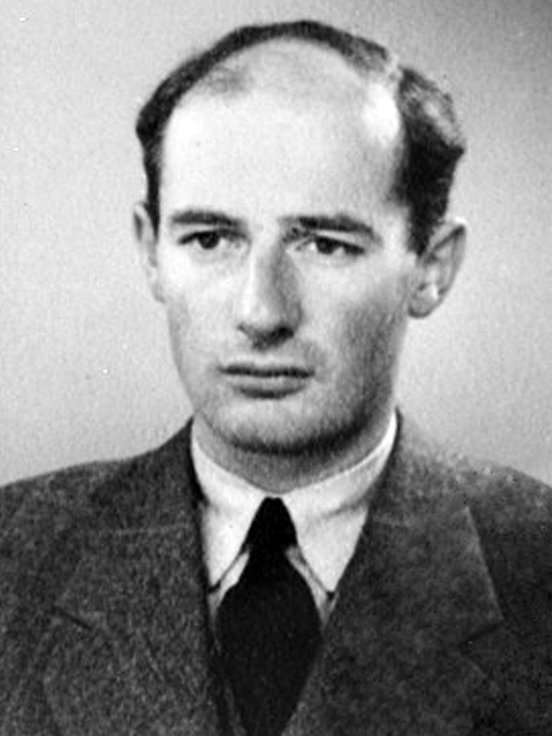
Portrait of Raoul Wallenberg
Six Months, and Then Nothing
He was thirty-two years old when he arrived in Budapest, and he had done almost nothing with his life. Raoul Wallenberg was born in 1912 into the most powerful banking family in Sweden and spent his twenties failing to find a place inside it — an architecture degree from Michigan that Sweden would not license, a bank posting in Haifa, a stint in South Africa, and finally a middling partnership in a Stockholm import-export firm trading with Hungary. He was charming, restless, and by the standards of his relatives a disappointment. Then in the summer of 1944 the Americans and the Swedish foreign ministry needed someone who knew Budapest, spoke the languages, and would go, and they sent him.
What he found there was the fastest deportation in the history of the Holocaust. Between May and July, some 437,000 Hungarian Jews had been shipped to Auschwitz under Adolf Eichmann's personal direction — the provinces emptied in eight weeks. What remained was the Jewish population of Budapest itself, roughly 200,000 people, waiting. Wallenberg arrived on 9 July 1944 with diplomatic accreditation, a list of names, and no instrument whatever except the assumption that the Reich, in its final months, still cared what neutral countries thought.
He built the instrument himself. Within weeks he was issuing the Schutz-Pass — a "protective passport" in blue and yellow, stamped with the three crowns of Sweden, asserting that its bearer was awaiting repatriation and therefore under the Crown's protection. It had no basis in international law. It was, in the plainest terms, a beautiful fake. It worked because it looked official, because he printed and distributed it with total confidence, and because he had correctly read that the men enforcing the deportations were bureaucrats who could be made to hesitate.
Wallenberg is what an INFJ looks like when Ni stops contemplating and starts building: a single, unwavering image of what could be saved, executed through an invented bureaucracy and defended in person on the platform.
The Fiction That Had to Be Believed
Dominant introverted Intuition works by converging on a single interpretation of a situation and then treating it as fact. Wallenberg's convergence was this: the deportation machinery was not, in late 1944, a force of nature — it was a collection of frightened men calculating their own postwar positions, and it could be stalled by anything that raised the cost of proceeding. From that reading everything else followed. Not sentiment, not protest, but the manufacture of doubt.
So he made the doubt physical. He designed the Schutz-Pass himself, with an architect's eye for what authority looks like — heavy stock, coats of arms, serial numbers, signatures — and he negotiated the Hungarian government up from a few hundred permitted documents to 4,500, then simply issued three times that many. He rented some thirty buildings in Pest, hung Swedish flags and legation plaques on them, declared them extraterritorial Swedish soil, and packed roughly 15,000 people inside. He organized soup kitchens, a hospital, a nursery. He staffed an office of hundreds of Jewish employees, all of whom were thereby diplomatic personnel and thereby exempt. None of this existed in July. All of it existed by October.
The clearest Ni signature is that he never lost the thread when the situation changed shape. When the Arrow Cross seized power in October 1944 and the deportations resumed as forced marches toward Austria, the passes became less useful and he adapted the same insight to new material: forged Hungarian documents, bribes, food convoys sent along the march route, appeals routed through officials he had already compromised. In January 1945, with the Red Army closing in, he learned that Eichmann and the Arrow Cross were preparing to massacre the ghetto outright, and had a warning delivered to the German commander August Schmidhuber that he would personally be hanged for it after the war. The massacre was called off. Some 70,000 people were alive in that ghetto when the Soviets arrived.
The Voice That Worked on Everyone
Auxiliary extraverted Feeling gave the vision its hands. Wallenberg was, by every account, extraordinary at reading what a particular man needed to hear and supplying it in the register that man responded to — flattery for the vain, menace for the venal, appeals to legality for the bureaucrats, appeals to the gallows for the ones who could count Soviet divisions. He dined with Eichmann and spent the evening telling him, courteously, that National Socialism was finished. He bribed and threatened the same official in the same conversation. He was simultaneously the most polite and the most frightening diplomat in Budapest.
And he used Fe where it costs the most: in the open, in front of armed men. The stories that survive are physically specific. He climbed onto the roofs of deportation trains at the Józsefváros station, walking the length of the cars and pushing bundles of passes through the ventilation slats while gendarmes shouted and, in some accounts, fired over his head — then stood on the platform demanding that every holder of one of "his" documents be released, and walked them off in a column to waiting cars. He intercepted the death marches to Hegyeshalom in November, driving the route with a loudspeaker and a stack of papers, pulling people out of the line by calling names that were not always on any list.
This is Fe as instrument rather than as warmth. He did not talk about compassion; he manufactured social pressure and then applied it at the exact point of failure. The Hungarian gendarme who let a hundred people go did not do so out of pity. He did so because a tall Swede in a good overcoat had made continuing feel like the riskier option. That is a very specific skill, and it made Wallenberg, in six months, the most effective single rescuer of the war — credited with tens of thousands of lives, a figure that no accounting has been able to pin down and none has been able to reduce below the astonishing.
The Architect's Habit of Mind
He had trained as an architect, and the training shows in everything he built in Budapest. Tertiary introverted Thinking in an INFJ typically appears as a private fascination with how systems are actually assembled — a compulsion to take the mechanism apart and find the part that gives. Wallenberg applied it to a bureaucracy of murder and found several: the neutral legations' standing, the Hungarian government's desire for a negotiated exit, the SS officers' awareness of an approaching reckoning, the gap between what a document legally meant and what a man holding a rifle believed it meant.
He also ran his own operation with unglamorous rigor. Section C of the Swedish legation grew to some 350 staff with departments for housing, transport, medical care, and records; he kept card indexes, standardized the pass forms against counterfeits, and coordinated with the Swiss vice-consul Carl Lutz and the Vatican and Portuguese missions so that the protective systems reinforced rather than undercut each other. He was, in the middle of a siege, running an administration.
Ti in the tertiary position also carries a cost, and Wallenberg's was a confidence in his own analysis that admitted no correction from outside. He had concluded that the correct posture toward the incoming Soviets was the same one that had worked on the Germans: present yourself as an accredited neutral with a legitimate mission and negotiate directly with the highest authority available. Against the Third Reich in collapse, that read was right. Against Stalin's security apparatus, it was catastrophically wrong — a wealthy Swede with American funding, a private network across Budapest, and a habit of walking into headquarters uninvited was not a diplomat. He was a textbook espionage profile.
The Body He Kept Putting in the Way
Inferior Sensing rarely looks like Wallenberg's did, and the exception is instructive. Under sufficient pressure the inferior function does not stay dormant; it erupts, and the introvert who has spent his life a step removed from physical confrontation discovers he can walk into one without hesitating. For six months Wallenberg lived almost entirely in that state — sleeping little, moving between safe houses, changing his address nightly as the Arrow Cross hunted him, standing on train roofs and in the paths of columns. Colleagues described a man running on nerves and cigarettes, exhausted, unable to stop.
It was not comfortable competence. It was the inferior function seized and used at enormous cost, and it made him reckless in ways a Se-dominant would not have been. He drove into gunfire. He confronted militia who had already shot people into the Danube that week. He assumed, repeatedly, that the sheer presence of an unarmed diplomat asserting authority would freeze a room — and because he believed it utterly, it usually did. The gap between the risk he ran and the protection he actually had was, from July to January, essentially total.
On 17 January 1945 he left Budapest for Soviet headquarters at Debrecen, intending to present a plan for the relief and reconstruction of the Jewish community to the new occupying power. He told a colleague he was not sure whether he was going as a guest or a prisoner. He was never seen in the West again. The Soviet government denied holding him for years, then in 1957 produced a document stating that prisoner Wallenberg had died of a heart attack in Lubyanka on 17 July 1947, at thirty-four. Sightings by other prisoners continued to be reported for decades; the Swedish-Russian working group that examined the case for a decade closed without resolving it. He was declared dead by Sweden only in 2016.
Why INFJ Over ISFJ
Why not ISFJ?
The ISFJ reading fits a certain image of the wartime rescuer — quiet, dutiful, protective, doing what decency requires within the role he was given. But Wallenberg was not working within his role; he invented one that did not exist. The Schutz-Pass had no legal force, the "Swedish houses" had no diplomatic standing, and both were conjured out of an intuition about how authority could be simulated. An Si-dominant works from precedent and issues what the regulations permit; Wallenberg issued three times the agreed quota and dared anyone to audit him. Nor does Si-Fe explain the confrontations — climbing onto deportation trains under fire, threatening an SS general with the noose, driving down a death march calling out names. That is Ni conviction spending an inferior Se it had no business spending, sustained by certainty rather than by duty.
The INFJ reading also makes sense of the ending, which the dutiful-functionary reading cannot. Wallenberg went to Debrecen because his model of the world said that a man carrying an unambiguous humanitarian mission could speak to any power and be heard — the same model that had worked, spectacularly, against a disintegrating Reich. It was a vision applied one situation too far, into a system that did not deal in moral standing at all. The quality that saved tens of thousands of people and the quality that walked him into Lubyanka were the same quality. That is usually how the dominant function ends its story.
Connected Figures
Further Reading
- Raoul Wallenberg: The Heroic Life and Mysterious Disappearance of the Man Who Saved Thousands of Hungarian Jews from the Holocaust — Ingrid CarlbergThe definitive modern biography, built on Swedish and Russian archival material — the fullest account of both the Budapest mission and the Soviet aftermath.
- Wallenberg: Lost Hero — Danny SmithAn early campaigning biography that helped keep the case of his disappearance politically alive in the West.
- Wallenberg: Missing Hero — Kati MartonA Hungarian-born journalist's narrative of the Budapest months and the decades-long search that followed.
- Righteous Among the Nations: Raoul Wallenberg — Yad VashemThe 1963 recognition file, including survivor testimony on the Schutz-Pass system and the Swedish houses.
