 Historical Figure MBTI
#757 · 6-6-26 · The Age of Exploration
Antonio Pigafetta
Chronicler of the First Circumnavigation
c. 1491 — c. 1531
5 min read
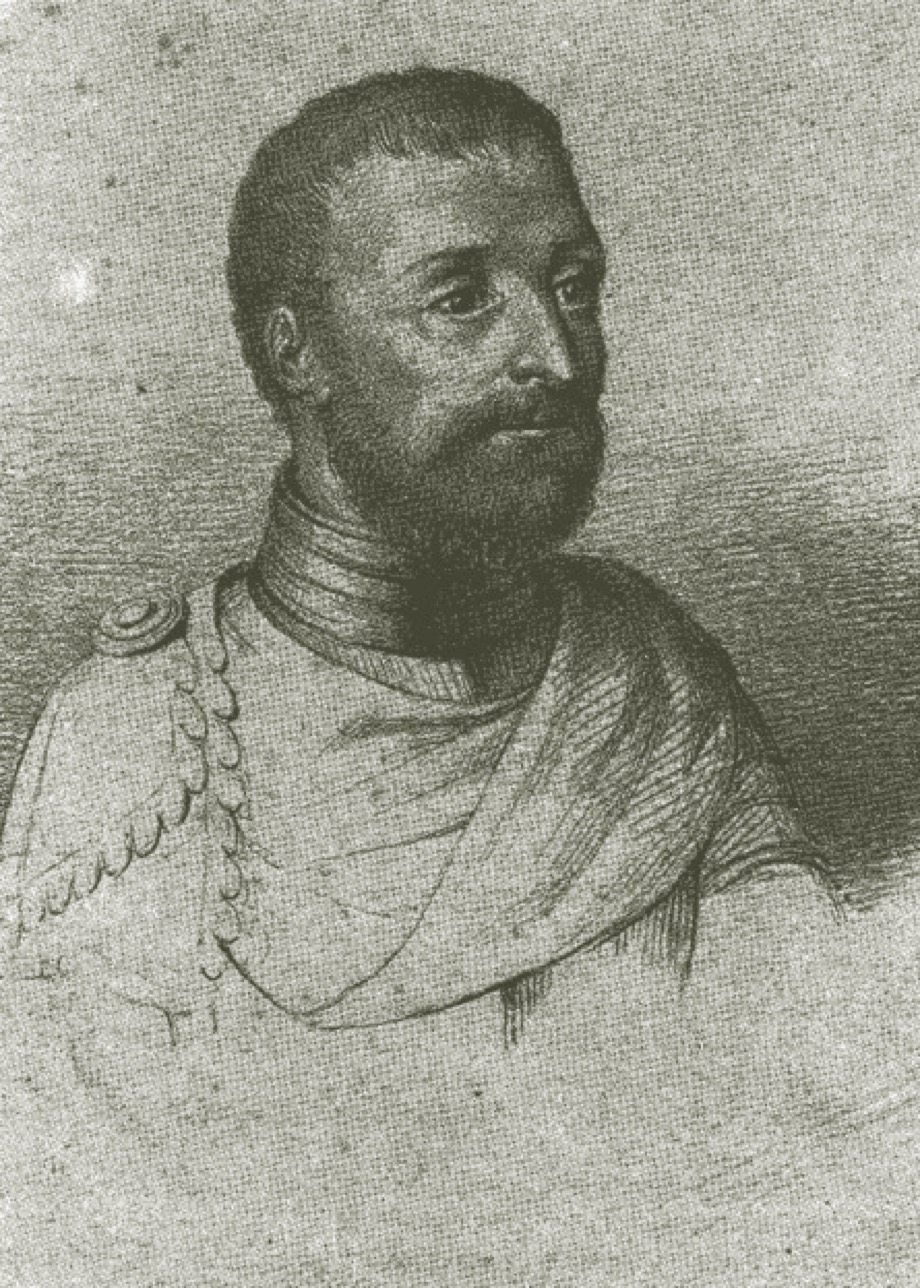
Portrait of Antonio Pigafetta
The Man Who Asked to Come
In the spring of 1519, a Venetian gentleman named Antonio Pigafetta, then in Spain in the retinue of the papal nuncio Francesco Chiericati, heard that a fleet was being fitted out to sail west to the Moluccas, and asked to go along. He had no post to fill. He was not a sailor, soldier, merchant, or priest — on the muster rolls he is a supernumerary, a passenger with no assigned function, who talked his way onto the most dangerous voyage yet attempted by Europeans because, in his own words, he desired to see “the very great and awful things of the ocean.” It is the strangest résumé in the literature of exploration, and the whole of the man.
Of the roughly 270 men who left Sanlúcar de Barrameda under Ferdinand Magellan that September, eighteen returned aboard the Victoria three years later. Pigafetta — wounded in the face by a poisoned arrow at Mactan, starved and scorbutic across the Pacific and Indian Oceans — was one of them. The fleet’s official log did not survive, and almost no other firsthand account of the voyage does either. The strait, the fifteen-week Pacific crossing on rotten biscuit and rat meat, Magellan’s death on a Philippine beach, and the Victoria’s solitary return all reach the modern world filtered through the notebook of a tourist who came along to look. Pigafetta was ESFP, and the type explains the notebook: a mind built to register the physical world with such appetite that it produced, almost as a byproduct of his own curiosity, the founding document of a global age.
He signed on for no wage and no rank, purely to see — and what his dominant Se saw became the only record the first circumnavigation of the earth would ever have.
Powder, and Full of Worms
Pigafetta’s account is, before anything else, an inventory of sensation. He recorded what the ship’s biscuit tasted like after weeks in the hold — reduced to powder and “full of worms,” stinking “strongly of the urine of rats” — and how the crew chewed ox-hides soaked in seawater for days and grilled soft. He priced things: a rat, when one could be caught, sold for half a ducat, and even then buyers were not always found. He described the flying fish breaking around the ships, the “trees of the sea,” and the Patagonian captive who at one sitting ate a full basket of biscuit and drank half a bucket of water. None of it served any strategic purpose. He simply could not stop noticing.
That noticing extended to people. Island by island he catalogued tattoos, ornaments, diet, and ritual, describing the mass conversions at Cebu in exact ceremonial detail and the color and smell of the cloves loaded at Tidore as if still turning them in his hand. And he did something almost no other chronicler of the age did: he sat with Patagonian, Cebuano, and Moluccan speakers and built word lists — vocabularies of hundreds of terms, transcribed phonetically, for no reason beyond wanting to fix the sound of a language he might never hear again. Those lists are still consulted today as primary sources for sixteenth-century Philippine languages. It is what dominant Se does with no professional brief: everything gets recorded, because everything is interesting.
Our Mirror, Our Light
The other current running through the diary is personal, and largely unembarrassed about it. Pigafetta attached himself to Magellan with an intensity that shapes the whole account; when the captain-general was killed wading ashore at Mactan on 27 April 1521, defending a rearguard he did not need to defend, Pigafetta’s documentary calm gives way. He calls Magellan “our mirror, our light, our comfort, and our true guide,” a line that reads less like a subordinate’s obituary than a personal loss.
That same private loyalty decided who else got credit and who got blame. Pigafetta holds Enrique of Malacca, Magellan’s interpreter, responsible for the massacre that followed at Cebu — an accusation the record cannot fully test, but which Pigafetta states as settled fact. And when the Victoria finally limped home under Juan Sebastián Elcano, a former mutineer who had actually delivered the survivors and the spices to Spain, Pigafetta’s account credits him — but grudgingly, without warmth. Judgment follows attachment, not rank or outcome: auxiliary Fi quietly, immovably deciding who deserved love, while dominant Se kept filling the page with everything else.
Why ESFP Over ISFP
Why not ISFP?
The case for ISFP is real: Pigafetta’s aesthetic sensibility, his fierce loyalty to Magellan, and his indifference to rank or reward all look, at a glance, like introverted feeling steering a quiet observer. But an ISFP’s attention is selective and inward, filtering the world for what resonates personally; Pigafetta’s is the opposite — outward, indiscriminate, and inexhaustible, cataloguing biscuit-worms and rat prices with the same appetite he brings to Magellan’s death. He also sought the experience out, at absurd risk and for no pay, then spent years hawking his manuscript through the courts of Europe — Se seeking stimulus and pushing outward for an audience, not Fi retreating into private meaning.
An ISFP might have kept a private journal of what moved him; Pigafetta produced an indiscriminate, encyclopedic record — of worms, wounds, word lists, and grief alike. Se made him the great noticer of the age of exploration; Fi told him, afterward, whom to mourn.
Connected Figures
Further Reading
- The First Voyage Around the World, 1519–1522 — Antonio Pigafetta, ed. Theodore J. Cachey Jr.The best modern scholarly edition of Pigafetta's own account.
- Magellan's Voyage: A Narrative Account of the First Circumnavigation — trans. R. A. SkeltonTranslated from the Yale Beinecke manuscript of Pigafetta's diary.
- Over the Edge of the World — Laurence BergreenA narrative history of the voyage that draws heavily on Pigafetta's testimony.
- Straits: Beyond the Myth of Magellan — Felipe Fernández-ArmestoA skeptical, revisionist account that weighs Pigafetta's reliability as a source.
- Barangay: Sixteenth-Century Philippine Culture and Society — William Henry ScottUses Pigafetta's Visayan word lists as primary evidence for pre-colonial Philippine society.
