 Historical Figure MBTI
#756 · 6-6-26 · The Age of Exploration
Juan Sebastián Elcano
Master · Captain of the Victoria
c. 1487 — 1526
7 min read
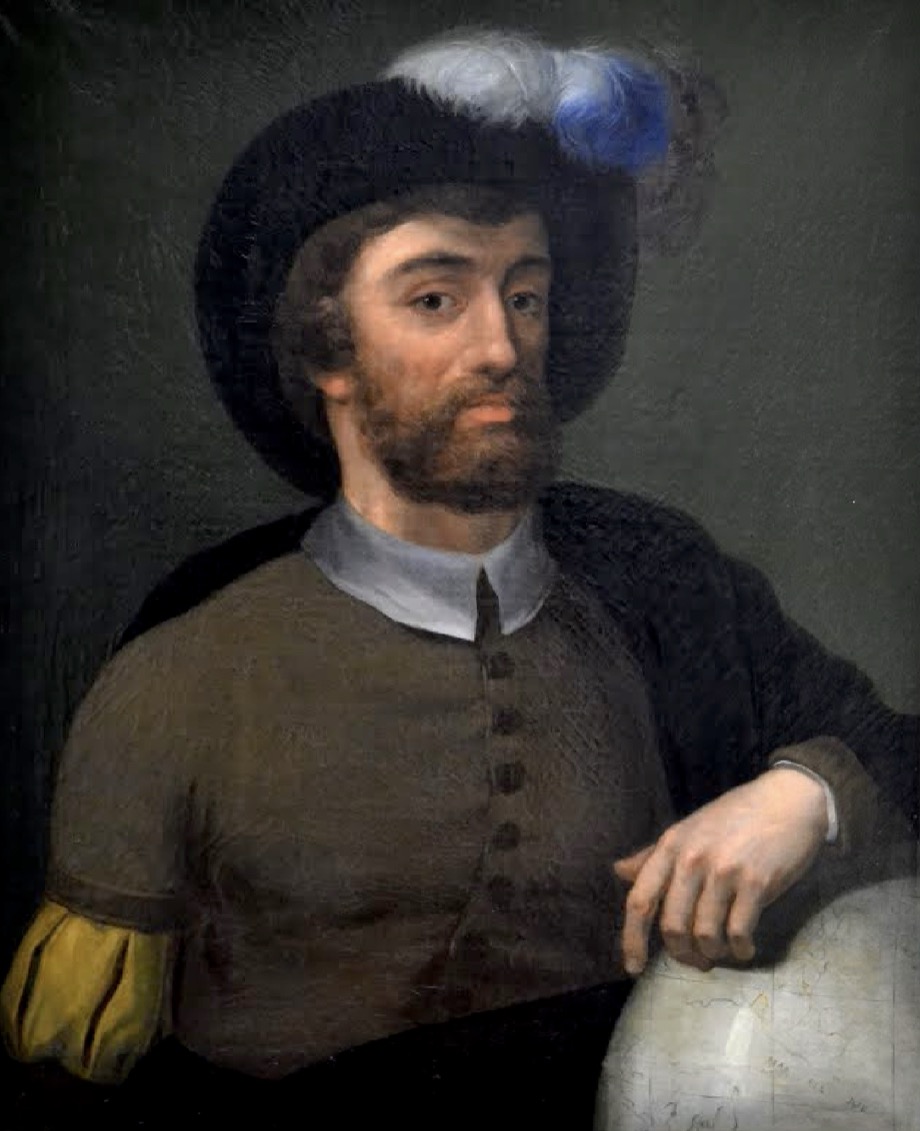
Portrait of Juan Sebastián Elcano
The Man Who Brought the Ship Home
History remembers the man with the idea. Ferdinand Magellan conceived the westward passage to the Spice Islands, argued it past a sceptical court, held a quarrelsome fleet together through a mutiny and a Patagonian winter, found the strait that still carries his name — and then waded into knee-deep water off Mactan to fight a battle he did not need, and was killed there. What happened afterwards was in nobody's plan. A Basque master named Juan Sebastián Elcano — no title, no patron, a mutiny on his record — took the last ship that would still swim and eighteen months later dropped anchor at Sanlúcar de Barrameda with eighteen survivors of some two hundred and seventy men. He had gone all the way around.
He had been at sea since boyhood, and by his thirties was master of a merchant ship — a working technician's rank, responsible for the hull, the stowage and the sailing of the vessel, as distinct from the gentleman who commanded it. What follows is about the distance between having the idea and being able to bring the ship home. Magellan is the visionary; Elcano is the professional still competent when the vision ran out, who solved the century's hardest navigational problem from first principles with no chart for any of it. He is a very clean ISTP.
An ISTP of the purest working kind — dominant Ti applied not to theory but to a worm-eaten hull, a contrary wind, and a set of options that all looked fatal.
The Ship as a Mechanism
A master understood a ship the way a millwright understands a mill: a system of loads and stresses with known tolerances. The Victoria's passage from Tidore to Sanlúcar is that internal model run continuously under conditions it was never built for — a worm-eaten, leaking hull, pumps manned around the clock for months, no charts for a course no European had sailed in that direction, and a crew dying faster than the work could be reduced.
The clearest flash of Ti is the cloves. At Tidore he loaded the Victoria deep with them — the spice was the whole commercial justification of the voyage. Then the hull began to work and take water under the weight, and he put cargo over the side: his own decision undone without ceremony, because the numbers had changed. Nothing in the chain was settled by rank, precedent, or what the crew wanted to hear. He was not executing a plan well — there was no plan — and he would sacrifice the point of the voyage to keep the voyage afloat, which is a thoroughly Ti order of priorities.
Hands on the Rope
Ti without Se is a man who can explain a ship. Elcano could sail one. Everything the Victoria did on the way home was hand-work: jury-rigged spars, patched canvas, seams caulked at sea, the physical reading of weather and water that no instrument of 1522 could do for you. Off the Cape of Good Hope she spent weeks beating against westerly gales, lost a mast and was driven back before she got round — not a decision, but one man's judgement against a sea, resolved by seamanship.
Se also explains Cape Verde, the least admirable and most characteristic episode of the return. Starving, having avoided every landfall for months to stay out of Portuguese hands, he put in at the Portuguese islands under a lie: his people were to say they were storm-damaged and coming home from the Americas. It worked twice. On the third boat-trip the Portuguese saw the cloves, understood exactly where the ship had been, and seized thirteen men ashore. Elcano did not negotiate or wait for morning; he cut the cable and ran for the open Atlantic. Assess, discard, move, now — it cost thirteen men their liberty and saved eighteen lives, and he never appears to have argued the point afterwards.
West, Through Enemy Water
He had one strategic idea in his life and it was the right one. By the time the survivors reached the Moluccas, Magellan was dead at Mactan, much of the officer corps had been killed at the treacherous banquet at Cebu, the Concepción had been burned for want of men to sail her, and at Tidore the Trinidad was found leaking badly. Two hulls, two theories of how to get home.
The Trinidad's people chose to repair and recross the Pacific eastward toward Spanish America — the legally safe route, back the way they had come. They were beaten back by contrary winds month after month, lost most of their crew and were finally taken by the Portuguese. Elcano had already concluded that the eastward Pacific was closed, that the winds would not permit it, and that the only road home ran the other way: west across the Indian Ocean, south of every established route, round the Cape of Good Hope and up the Atlantic — the whole distance through seas Portugal claimed and patrolled, in a Spanish ship carrying contraband spice, with no right to enter any harbour on earth.
That is tertiary Ni behaving as tertiary functions do: not a habit of vision but a single unhedged picture of how the future must go, formed once and never reopened. He committed, avoided every port for months, and was proved right by arrival.
No Instinct for Men
At Puerto San Julián in 1520 the Spanish captains rose against their Portuguese commander, and Elcano was among them, on the losing side. Quesada was beheaded, Juan de Cartagena marooned on a bare shore and never seen again; Elcano was pardoned and put to hard labour in irons, for the coldly practical reason that Magellan could not spare a man who knew how to run a ship. The man who completed Magellan's voyage had first tried to end it. Both facts are true and neither cancels the other.
What they show is a man with no political ear. He never claimed to have loved his commander, and at the debriefing in Valladolid he and other survivors gave testimony markedly hostile to Magellan, at a moment when generosity would have cost nothing and bought a great deal. He asked, in the same breath as the greatest feat of seamanship in European history, for a pardon for the mutiny — the shadow had never lifted — and he was rewarded but not given the next fleet. Inferior Fe rarely looks like coldness; it looks like this: a man who could hold sixty dying men to the pumps for months on the sheer authority of competence, and could not manage a room of courtiers for an afternoon.
Why ISTP Over ISTJ
Why not ISTJ?
The case deserves stating first: Elcano was reliable where brilliant men were not, professionally disciplined, physically inexhaustible, and fundamentally an executor rather than an originator. That is a recognisable ISTJ silhouette — the silhouette of Vasco da Gama, whose Cape route he stole home along. But an ISTJ's authority is rooted in procedure and precedent, and Elcano had no precedent for anything he did: no chart, no prior voyage to consult, no standing orders covering a Spanish hull in Portuguese water. His defining choice — west, unresupplied, through enemy seas — was a calculated gamble against every rule of prudence a careful officer is trained to hold. And then San Julián: dominant Si holds the chain of command precisely when the commander seems wrong, and Elcano broke it the moment his analysis said so.
The distinction is between two ways of being competent. Si stores what has worked and applies it faithfully; Ti asks what is true of this hull, in this water, this week. Elcano's voyage is unrepeatable precisely because it was never procedural — a leaking ship, a route nobody had sailed, a bluff at Cape Verde, a cut cable, eighteen men. He was not the archive's most dutiful sailor. He was its best mechanic.
Connected Figures
Further Reading
- The First Voyage Around the World, 1519–1522 — Antonio Pigafetta (trans. Theodore J. Cachey Jr.)The eyewitness account by one of the eighteen survivors — indispensable, and quietly stingy toward Elcano.
- Over the Edge of the World — Laurence BergreenThe fullest popular narrative of the expedition, strongest on the mutiny at San Julián and the ordeal of the return.
- Straits: Beyond the Myth of Magellan — Felipe Fernández-ArmestoA deflationary revisionist reading that cuts Magellan down and, by implication, restores the seamen who finished the job.
- Magellan — Tim JoynerA meticulous documentary biography that follows the surviving crews, including the Trinidad's failed eastward attempt.
- The European Discovery of America: The Southern Voyages — Samuel Eliot MorisonWritten by a sailor: the best technical account of what the Victoria's route actually demanded of her master.
