 Historical Figure MBTI
#347 · 3-31-26 · The Habsburg Court
Gerard van Swieten
Court Physician · Reformer of Medicine and University · Debunker of Vampires
1700 — 1772
6 min read
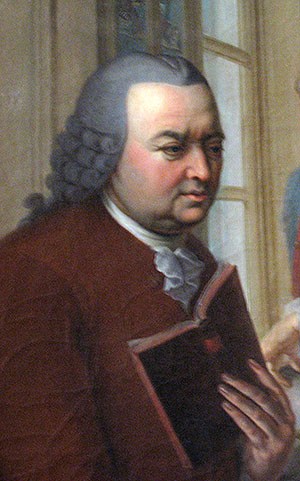
Portrait of Gerard van Swieten
The Physician Who Dispatched an Empire's Vampires
In the late 1750s a panic spread through the eastern marches of the Habsburg monarchy. In Moravian and Serbian borderland villages, people were dying in clusters, swearing dead relatives had visited them in the night. Survivors dug up the recently buried, found the corpses ruddy and fresh, and pronounced them vampires — then drove in the stakes and burned the remains. Maria Theresa sent her personal physician to find out what was happening. He came back with a report so coolly devastating it ended the matter by law.
The man she sent was Gerard van Swieten (1700–1772), and the vampire commission was the smallest of his labors. Trained under Herman Boerhaave, Europe's greatest clinical teacher, he absorbed a method fusing bedside observation with rigorous reasoning — then found himself barred from a professorship for his Catholic faith in a Protestant republic. Maria Theresa summoned him to Vienna in 1745 and gave him what Holland would not. In return he became the architect of the Austrian Enlightenment in medicine, science, and education.
Van Swieten was the INTJ set loose on an empire—a dominant Ni that saw a whole rational order where others saw scattered institutions, joined to an auxiliary Te that rebuilt those institutions, faculty by faculty and law by law, to match the vision in his head.
The Vision of a Rational Order
Ni — dominant
Dominant introverted intuition resolves particulars into a single underlying structure and commits to it with a certainty that can look like stubbornness from outside. Behind everything van Swieten touched lay one converging vision: a medicine, a university, a state purged of inherited error. The disparate offices he accumulated — court physician, dean of the medical faculty, head of the imperial library, president of the censorship commission — were the levers a single mind needed to move a single design.
The vampire commission is the miniature of this function. Confronted with reports of corpses found ruddy and uncorrupted, fresh blood at the mouth, van Swieten did not investigate vampires. He looked past the phenomenon to its cause: ordinary decomposition in cool soil; premature burial; the suggestibility of grief in close villages. His Vampyrismus dissolved the supernatural into the natural in a few cold pages — the refusal to take the surface of a thing as its meaning, the instinct to ask what hidden process generates the appearance.
The Will to Rebuild the Machinery
Te — auxiliary
A vision unbuilt is only a private conviction; what made van Swieten an architect rather than a critic was auxiliary extraverted thinking. He rewrote the statutes of the medical faculty, imposed a standardized curriculum, established clinical instruction at the bedside, set examinations, controlled appointments, and regulated physicians and apothecaries across the monarchy. The Older Vienna Medical School was not an idea he published — it was an apparatus he constructed and set running, and it outlasted him by generations.
The same energy spread across the state: reorganizing the imperial library, wresting the censorship commission from the Jesuits, codifying a secular standard for what could be printed. Te does not persuade an opponent; it reorganizes the field so the opponent's position no longer holds an office — that is how van Swieten beat the scholastics and the Jesuits, not in debate but in administration. The insight was the intuition's; the law was the thinking function's.
The Quiet Conscience of Reason
Fi — tertiary
It would be easy to read van Swieten as a pure intellect — cold, administrative, indifferent. But his rationalism was not merely a method — it was a kind of conscience. Tertiary Fi, held quietly and never announced, meant he believed truth was owed to people: that the sick deserved competent care, that the terrified peasants of the borderlands deserved protection from their own superstition and from the men who exploited it.
That his Catholicism survived a lifetime of dismantling superstition marks this function well. He drew, privately and firmly, a line between faith and credulity — a line no external authority dictated. Tertiary Fi simply knows where it stands, and proceeds from there with a calm that needs no audience. His loyalty to Maria Theresa bore the same stamp: not the fidelity of a courtier, but of a man whose sense of obligation ran deep and unspoken.
The Indifference to Spectacle
Se — inferior
Inferior extraverted sensing is the INTJ's relative deafness to show, physical presence, and the power of spectacle to move a crowd. Van Swieten left no glittering court persona, founded no cult of personality; his reputation rests on institutions that ran quietly long after his name had faded from palace gossip.
The vampire panics were a triumph of Se over a frightened population — and van Swieten's flatness of sensory response was his strength. The terror was entirely sensory: the dug-up corpse with blood at its lips, the body that refused to decay. He felt no dread at all — only the cool registration of a chemical process. He prevailed less by charm than by the sheer correctness of his systems. It was enough.
Why INTJ Over ENTJ
Why not ENTJ?
The shared NiTe machinery makes ENTJ a real temptation. But the ENTJ leads with extraverted thinking: it commands people, drives organizations from the front, reads a room. Van Swieten did the opposite. He led with the inward vision and reached the world through systems—no court charisma, no taste for spectacle. His Se was inferior, not auxiliary; he governed through statutes and curricula, not through the floor of a crowded hall.
The decisive difference is the direction of the energy. The ENTJ's drive is centrifugal — outward onto people, organizations, the visible field of command. Van Swieten's was the inward visionary's: he carried a private picture of a rational order and built outward toward it through the patient reconstruction of institutions, content to let the machinery run without his standing over it. He changed an empire not by leading its men but by rewriting its rules.
Connected Figures
Further Reading
- Maria Theresa: The Great Empress — Barbara Stollberg-RilingerThe definitive modern biography of van Swieten's patron — covers his role as court physician and architect of her educational and medical reforms.
- The Habsburg Monarchy, 1618–1815 — Charles W. IngraoStandard scholarly survey of the Habsburg state; situates van Swieten's reforms in the broader context of Theresian and Josephine administrative modernization.
- Vampyrismus (Abhandlung des Daseins der Gespenster) — Gerard van SwietenVan Swieten's own 1768 treatise debunking the vampire panics — a primary source and a model of Enlightenment empirical reasoning.
- The Enlightenment in National Context — Roy Porter and Mikuláš Teich (eds.)Comparative essays including the Austrian and German Enlightenments; essential context for understanding van Swieten's secular reform program.
