 Historical Figure MBTI
#346 · 3-31-26 · The Habsburg Court
Wenzel Anton von Kaunitz
State Chancellor · Architect of the Diplomatic Revolution · The Coachman of Europe
1711 — 1794
6 min read
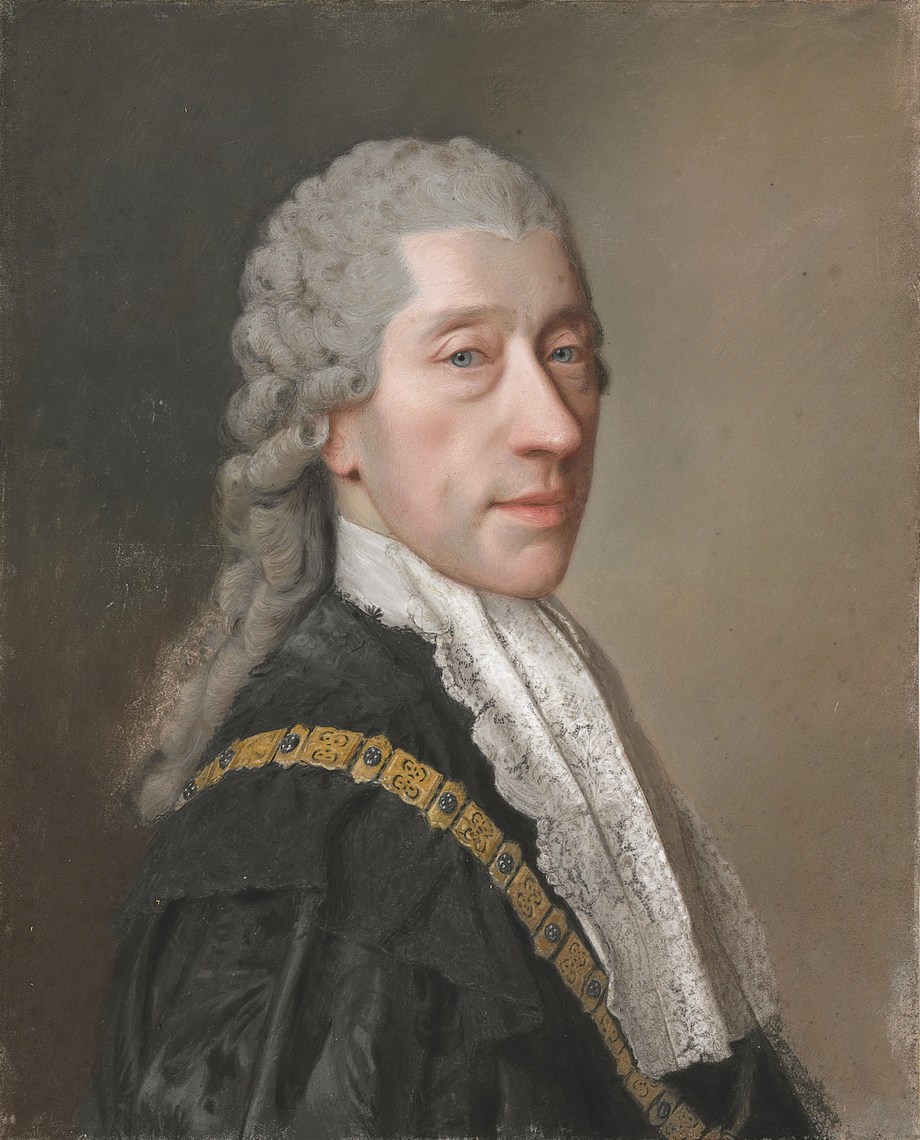
Portrait of Wenzel Anton von Kaunitz
The Coachman Who Re-Drew the Map
In the spring of 1756 the oldest enmity in European politics was quietly reversed. Austria abandoned its ancient alliance with the maritime powers and bound itself to France, its hereditary foe, to face the Prussia of Frederick the Great, which had torn Silesia from Maria Theresa sixteen years before. This was the Diplomatic Revolution, the renversement des alliances—the work of one man: a fastidious, supremely confident Moravian aristocrat who had argued for years that Austria's foreign policy rested on a miscalculation, and who then rebuilt it from the ground up.
Wenzel Anton von Kaunitz (1711–1794) was State Chancellor for nearly forty years under Maria Theresa, Joseph II, and Leopold II—“the coachman of Europe,” steering the continental system wherever his long calculation directed, and also a lifelong hypochondriac who organized his household around the avoidance of drafts, disease, and any mention of death. The INTJ mind shows in both: dominant Ni holding a single decades-long vision; auxiliary Te executing it across three reigns; tertiary Fi as prickly independence; inferior Se curdled into anxious tyranny over his own body. He re-made the balance of Europe from behind a closed draft-free door.
Kaunitz was the INTJ as grand strategist—a dominant introverted intuition that saw, years ahead, the shape the European system would have to take, married to an auxiliary extraverted thinking that built the alliances and ran the machinery of state to make that vision real.
The Single Far-Seeing Idea
Ni — dominant
Dominant Ni generates one idea and holds it. Kaunitz's whole career rests on a single convergent insight: that Austria's alliance against France was obsolete, that the real danger was now Prussia, and that the unthinkable answer was to bind Vienna to Paris. He did not arrive at this by tallying immediate advantages; he arrived at it by perceiving the structural logic of a new European order before it had fully arrived, then laid the analysis in long memoranda to Maria Theresa and waited. The Diplomatic Revolution of 1756 was the surfacing, after years of patient advocacy, of a vision carried privately and entire. Even his great failure—the inability to recover Silesia in the Seven Years' War—did not shake it; he continued on the same long premises for another generation. Four decades of statecraft built on exactly one idea.
The Machinery That Made the Vision Real
Te — auxiliary
Auxiliary Te turned the inner picture into working structure. Kaunitz reorganized Austrian foreign affairs under the State Chancellery, running it as a professional apparatus rather than an extension of court favor—marshaling ambassadors, sequencing negotiations. The Treaties of Versailles were Te made paper. He then held the essential structure of Austrian strategy intact across Maria Theresa, the impatient Joseph II, and Leopold II, governing not by charisma but by steady process: power must be institutionalized, an idea survives only when embedded in machinery that outlasts moods and reigns. The same instrumental cast of mind backed the Josephinist program of secularization not from principle but because the monarchy worked better when its resources were directed by the state. Te in the service of capacity.
The Private Standard and the Prickly Vanity
Fi — tertiary
Tertiary Fi is not warmth; it is a private register of what one will and will not stoop to, regardless of the room's opinion. In Kaunitz this showed as an almost impregnable independence of judgment. He did not flatter, did not bend his analysis to please, and held his own counsel against sovereigns and courtiers alike. With Maria Theresa he was famously, often tediously insistent, lecturing his empress and refusing to soften conclusions she did not want to hear; she found him exasperating and indispensable in equal measure.
The same inward valuation curdled into vanity: notoriously aloof, self-regarding, condescending to those he judged his inferiors in intellect. His was not a hunger for applause but a serene certainty of his own distinction—the egoism of Fi rather than Fe. That independence was also the faculty that let him hold the lonely conviction of the French alliance against an entire court's inherited prejudice. Tertiary Fi underwrites dominant Ni's stubbornness: the vision can be carried against universal resistance because the man carrying it answers only to his own inner judgment.
The Tyranny of the Draft-Free Room
Se — inferior
Inferior Se is the physical world which the INTJ's visionary mind tends to grip with anxious intensity. In Kaunitz it took its most legible form: all-consuming hypochondria. The man who contemplated the realignment of a continent with Olympian calm was reduced to a fretful tyrant by his own body—obsessed with his health, terrified of disease, fanatical about drafts. His refusal to permit any mention of death in his presence was the extraordinary culmination: the bodily finite fact the visionary mind cannot integrate and therefore tries to banish from the room entirely. The strategist who needed no audience and the hypochondriac who feared the open window are the same INTJ seen from two sides—dominant intuition luxuriating in the closed room, inferior sensation making a prison of that same enclosure.
Why INTJ Over ENTJ
Why not ENTJ?
The ENTJ shares the strategic ambition and the commanding extraverted thinking, and a chancellor who re-engineered the European order is an obvious candidate for the type. But the ENTJ leads with Te—it commands outwardly, energizes the room, drives people and events by direct, present force of will, and is at its best in open contest. Kaunitz was almost the inverse: he did not command rooms, he avoided them; he was aloof, withdrawn, indifferent to the immediate theater of power, and he worked by long private calculation rather than by the marshaling presence of a general. His extraverted thinking was the patient servant of an inner vision, not the lead engine of a forceful outward personality. The hypochondriac who governed from a sealed chamber is no Te-dominant; he is an Ni-dominant whose Te ran the machinery from behind a closed door.
The decisive difference is where the genius lives. The ENTJ seizes the present and imposes order through projected will. Kaunitz's gift was the cold, far-seeing inner architecture of strategy—executed not by dominating the room but by perceiving, years ahead, the shape the system would take, and building patiently toward it from the wings. That is INTJ, not ENTJ.
Connected Figures
Further Reading
- Kaunitz and Enlightened Absolutism, 1753–1780 — Franz A. J. SzaboThe definitive English-language study of Kaunitz's political thought and his role in the Theresian reforms.
- The Diplomatic Revolution: Austria, France and the Reversal of Alliances, 1756 — D. B. HornClassic account of the alliance reversal Kaunitz engineered, situating it in the broader European system.
- Maria Theresa: The Great Empress — Barbara Stollberg-RilingerComprehensive biography of Kaunitz's sovereign; essential for understanding the court in which he operated.
- The Seven Years War — Franz A. J. SzaboReframes the war from the Austrian perspective, with Kaunitz's strategy at its center.
- Joseph II: In the Shadow of Maria Theresa, 1741–1780 — Derek BealesThe leading biography of Kaunitz's second sovereign — indispensable for the later phase of his chancellorship.
