 Historical Figure MBTI
#348 · 3-31-26 · The Habsburg Court
Friedrich Wilhelm von Haugwitz
Administrative Reformer · Architect of the Centralized State · Maria Theresa's Minister
1702 — 1765
6 min read
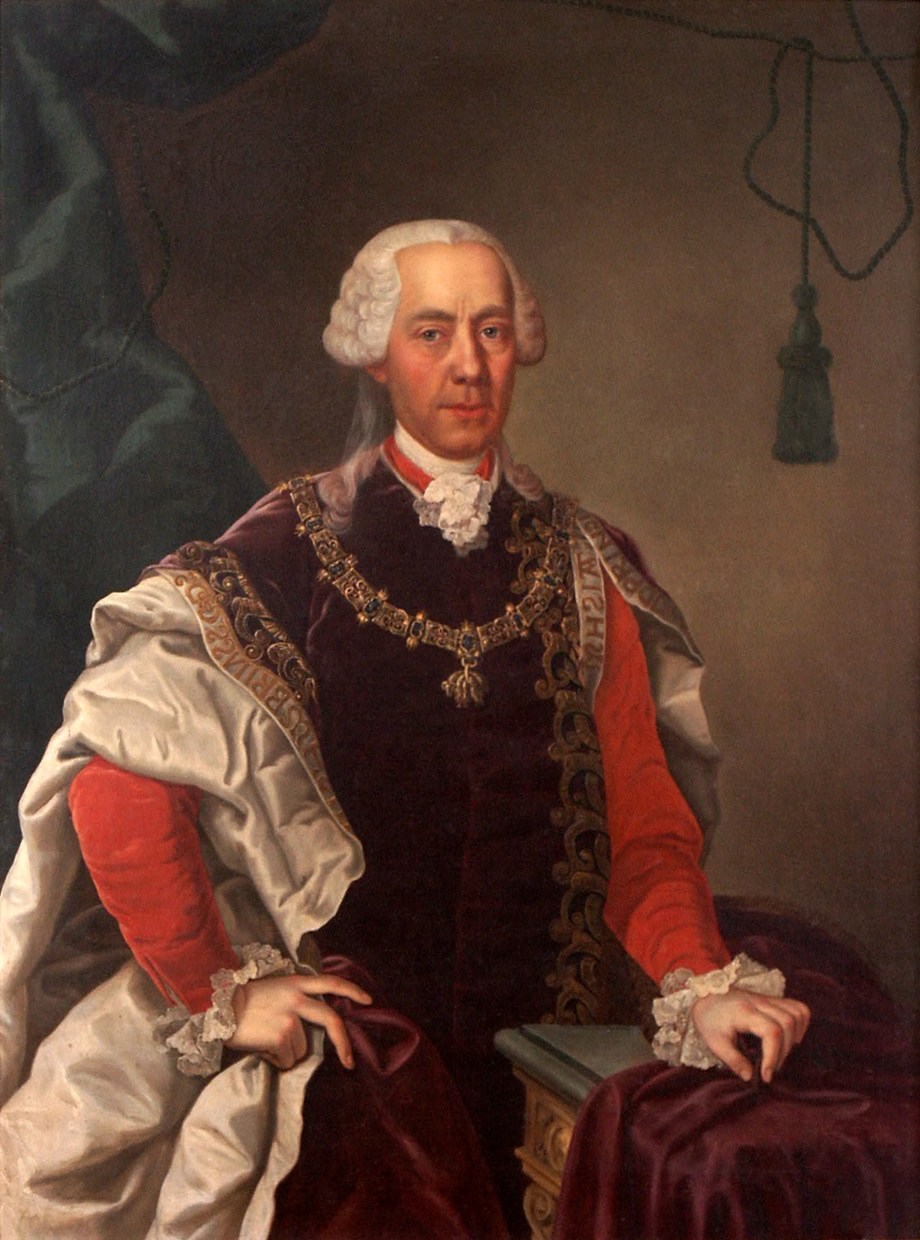
Portrait of Friedrich Wilhelm von Haugwitz
The Man Who Rebuilt the Engine
When the War of the Austrian Succession ended in 1748, Maria Theresa had kept her throne but lost Silesia to Frederick the Great—and the loss exposed something worse: the Habsburg state was rotten. The monarchy was a loose feudal assemblage whose provincial estates bargained over taxes year by year, answered the crown only when it suited them, and left the army chronically underfunded. Prussia, a fraction the size, had a centralized treasury and a standing army it could pay.
Into that gap stepped Friedrich Wilhelm von Haugwitz—administrator, not soldier. From 1748 he prised taxation from the provincial estates, secured a ten-year grant (Decennalrezess) to fund a standing army, and fused the Austrian and Bohemian chanceries into a single Directorium in publicis et cameralibus. The backbone he built let Austria contest Prussia for the rest of the century. The temperament is the ISTJ—dominant Si mastering concrete machinery; Te imposing order on chaos; Fi as plain loyalty; inferior Ne leaving him a builder rather than a visionary.
Haugwitz was the ISTJ who rebuilt the engine of the Habsburg state—a dominant introverted sensing that mastered the concrete machinery of administration, harnessed to an auxiliary extraverted thinking that imposed fiscal and bureaucratic order on a chaotic, decentralized monarchy.
Mastery of the Concrete Machinery
Si — dominant
Dominant Si builds competence the slow way—absorbing concrete detail, trusting the accumulated weight of precedent over any abstract scheme. The Si-dominant does not reinvent; he masters. As administrator of the remnant of Austrian Silesia, Haugwitz had seen at first hand how the Prussian system extracted reliable revenue, and he carried that observed model into the heart of the monarchy as a template to adapt, not a theory to impose.
The reforms bear the stamp of Si patience. Rather than abolishing the provincial estates in one stroke, Haugwitz negotiated province by province a fixed ten-year tax grant: concrete enough to write down, durable enough to fund a standing army. Where the old monarchy had improvised, he installed routine. There is nothing flashy in the record he left—only a state that worked better in 1760 than in 1740.
Order Imposed on Chaos
Te — auxiliary
Auxiliary Te asks: why so many jurisdictions, and could fewer do the work better? Finance and military funding were scattered across bodies that duplicated effort. Haugwitz merged the Austrian and Bohemian chanceries into a single Directorium and made the ten-year tax grant not merely revenue but control—the power of the purse transferred to a central administration that could sustain a standing army on a fixed foundation. His Te operated through institutions rather than force of personality, and the results held through the Seven Years' War. He never recovered Silesia—but he built the structure that made the contest possible.
The Quiet Loyalty
Fi — tertiary
Tertiary Fi produces not charm but a quiet code of duty that the ISTJ enacts rather than announces. There is little record of Haugwitz's inner life—he was not a man who performed his feelings. What he did was serve steadily, without hunger for reward. His fidelity to Maria Theresa was not a courtier's allegiance but the plainer conviction of a man who believed the work was owed and gave it.
This shows in what Haugwitz did not do. He built no faction, fought no pamphlet war when Kaunitz rose and his structure was reorganized out from under him. The tertiary feeler's values are internal; they require no external vindication. Haugwitz measured himself by the soundness of the work, and that inward standard let him accept his eclipse with a self-effacement a more ambitious man could never have managed.
The Builder, Not the Visionary
Ne — inferior
Inferior Ne marks the natural horizon of the ISTJ's gift. Haugwitz adapted the Prussian model he had observed; he did not conjure a novel theory of the state. Where he centralized finance through dogged incremental labor, Kaunitzcould reverse the entire alliance system of Europe in the “Diplomatic Revolution.” As Kaunitz rose, Haugwitz was overshadowed by men who saw further—if they could not have built as soundly.
The inferior function is not a flaw but the natural horizon of a particular kind of excellence. Haugwitz did the thing he was built to do—master the concrete, impose order, make the apparatus reliable—and he did it superbly. The visionaries get the histories written about them. The Haugwitzes get the engine built, and then get half-forgotten by the people the engine carries.
Why ISTJ Over ESTJ
Why not ESTJ?
The ESTJ shares the same SiTe values and leads with the very extraverted thinking that drove Haugwitz's centralizing reforms, which makes the misread tempting. But the ESTJ leads with Te outward—commanding people directly, presiding visibly. Haugwitz did nothing of the kind: his was the behind-the-desk diligence of a man who built institutions and let the institutions command. The leading function is inward Si; the outward Te serves it, not the reverse.
The decisive evidence is Haugwitz's self-effacement. An ESTJ of comparable achievement would have made himself the visible center of the administration and fought openly to defend his authority. Haugwitz receded, claiming little credit and accepting his eclipse without a public struggle. His satisfaction came from the soundness of the structure, not from standing at its head—the inward orientation of the ISTJ, not the commanding ESTJ.
Connected Figures
Further Reading
- Finance and Government under Maria Theresia, 1740-1780 — P. G. M. DicksonThe direct study of the fiscal and administrative machinery Haugwitz built after the loss of Silesia.
- Maria Theresa: The Habsburg Empress in Her Time — Barbara Stollberg-RilingerCovers the sovereign who empowered Haugwitz to centralize taxation and fuse the Austrian and Bohemian chanceries.
- The Habsburg Monarchy, 1618-1815 — Charles IngraoSets Haugwitz's reforms within the monarchy's long struggle to match Prussia's centralized state.
- Maria Theresa — Edward CrankshawTraces how Haugwitz's ten-year fiscal grant let Austria rebuild its army to contest Frederick the Great.
