 Historical Figure MBTI
#443 · 4-11-26 · The Age of Travelers
Güyük Khan
Third Great Khan · The Haughty Heir of Ögedei
1206 — 1248
8 min read
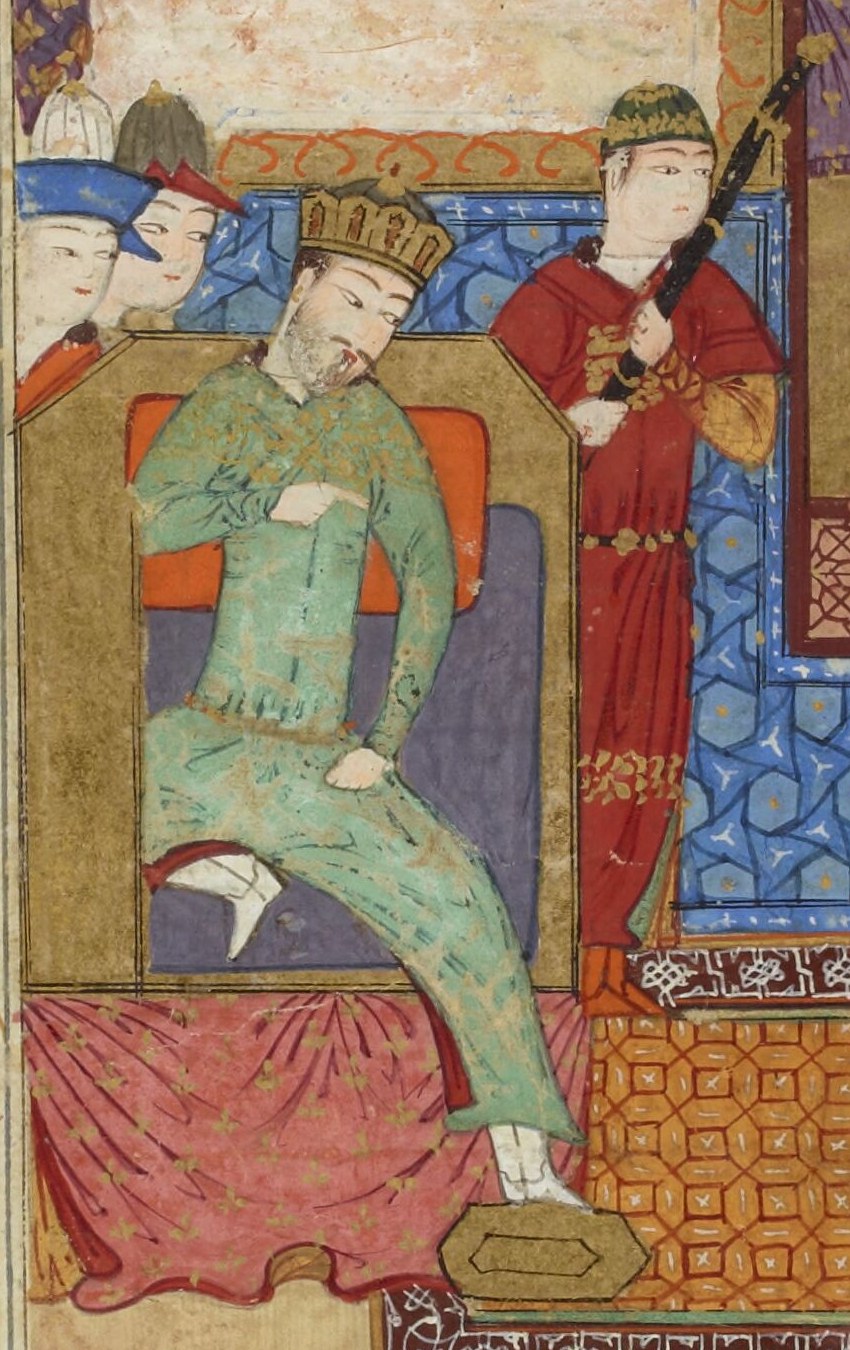
AI-assisted Portrait of Güyük Khan
The Heir Who Demanded the World
When the Franciscan friar Giovanni da Pian del Carpine reached the Mongol heartland in the summer of 1246, he arrived to witness a coronation staged for the conquest of the earth. Two thousand envoys from every subjugated nation knelt on the grass of the Orkhon valley; tents of white felt stretched to the horizon; tribute in silk and gold lay heaped before a man who, at his enthronement, was acclaimed master of all peoples under heaven. That man was Güyük — grandson of Genghis Khan, third Great Khan of the Mongol Empire, and the heir who would spend his short reign insisting that the world already belonged to him and had merely failed to admit it.
He was the son of Ögedei, the second Great Khan, and of Töregene Khatun, the formidable regent who governed the empire for five years and bent its machinery — bribes, alliances, the great assembly itself — to put her son on the throne in 1246. What she handed him was the largest contiguous land empire the world had yet seen. What he did with it was govern by command: he purged his mother's officials, reasserted the Genghisid claim to universal dominion, dispatched to Pope Innocent IV a letter of breathtaking arrogance demanding the submission of the West, and then marched his armies westward — most likely to make war on his cousin Batu, lord of the Golden Horde. He died on that march in 1248, after barely two years in power, broken by gout and drink. He was a hard, imperious, conventional man who enforced an empire and built nothing new within it.
Güyük was the ESTJ on the throne of the world — Te commanding submission by decree and force, Si rooted not in any vision of his own but in the inherited order his grandfather had built. He did not imagine a new empire. He demanded obedience to the one he was handed.
Submission by Decree
Te — dominant
Dominant Te treats the world as a system of subordinates to be organized and commanded, and Güyük's signature act — the only document of his reign that survives in his own voice — is pure Te. To Pope Innocent IV, who had written hoping to convert the Mongols and halt their slaughter, Güyük replied not with theology but with a chain of command. “You must come in person,” he wrote, “to do us homage… and if you do not, we shall know you as our enemies.” There is no argument in the letter, no persuasion, no interest in the Pope's framework at all — only a demand for obedience backed by the threat of force. The very premise of the West's independence does not register as a position to debate; it registers as insubordination to be corrected.
The same instinct ran through his domestic rule. He came to the throne owing his crown to his mother's faction, and his first move as Great Khan was to dismantle it: he executed or removed Töregene's most powerful officials, including the Persian financier and the formidable minister who had run the regency, and installed his own men. This was not gratitude or sentiment — it was an executive consolidating control of the apparatus he now headed. Te does not ask who helped it to power; it asks who answers to it now. He audited the empire's accounts, reaffirmed the tax and postal systems, and reasserted central authority over the fractious princes of the blood — governing, in every register, as a man clearing a chain of command and demanding it report upward to him.
The letter to the Pope is the whole man in miniature: not a case to be won but an order to be obeyed. Te does not negotiate with a world it regards as already conquered — it issues terms.
The Inherited Mandate
Si — auxiliary
What gave Güyük's commands their certainty was auxiliary Si: a deep, literal reverence for an established order and the precedent it set. The claim he pressed on the Pope was not his own invention. It was the doctrine of universal sovereignty laid down by his grandfather Genghis Khan — the belief that Eternal Heaven had granted the Mongols dominion over the whole earth, and that every unconquered people was simply a rebel who had not yet been brought to heel. Güyük did not reinterpret this inheritance or extend it into new strategy. He recited it. His letter grounds its demand explicitly in “the command of the living God,” invoking the founder's mandate as settled, sacred precedent that admitted no revision.
This is the conservative cast of the ESTJ: authority derives from what has been established, and the ruler's task is to enforce the inherited code, not to dream past it. Where a visionary conqueror might have asked what the empire should become, Güyük asked only that it continue to be obeyed on the terms already written. He restored the structures of his father's and grandfather's reigns, leaned on the law-code and the assembly that had elevated him, and treated the Genghisid order as a fixed inheritance to be defended rather than a foundation to build upon. His was a custodial imagination — loyal to precedent, suspicious of novelty, certain that the past had already settled what the present owed.
The Suspicions of a Closed Mind
Ne — tertiary
Tertiary Ne is a minor, often unhealthy current in the ESTJ — not open curiosity but a tendency, under pressure, to spin out suspicions and worst-case scenarios. In a secure ruler it can supply a useful wariness; in a man as rigid and besieged as Güyük it curdled into something closer to paranoia. He saw conspiracies in his own family and moved against them preemptively: he broke with his cousin Batu almost immediately, nursing an old grudge from their campaign in the West, and rather than tolerate the rivalry he chose to imagine it as a threat to be eliminated by force. The march that killed him was, by most accounts, an army assembling to fall on a kinsman who had not yet declared war.
What Güyük's Ne never produced was the thing a genuine intuitive leader supplies — a new conception of what the empire might be, an unexpected synthesis, a vision beyond the inherited mandate. His imagination ran toward enemies, not possibilities. Confronted with the unfamiliar — a Pope writing of one God and peace, a Christendom that did not recognize his sovereignty — he could not engage it as a new idea to explore; he could only file it under threats. The closed, threat-scanning quality of his Ne is exactly what separates him from the strategic visionary he is sometimes mistaken for.
Grudge, Drink, and a Buried Self
Fi — inferior
Inferior Fi is the ESTJ's blind quarter: an inner life of personal values and feeling that goes unexamined and erupts crudely. In Güyük it surfaced as raw grudge and self-destruction. He could not metabolize the resentment he carried toward Batu — a private grievance he never resolved and never set aside, only escalated until it pointed an army at his cousin. The same unattended interior showed in his body. He drank heavily and constantly; he was wracked by gout and chronic illness; the eyewitnesses Carpine and his companions described a sick, prematurely aged man, hard-faced and joyless beneath the splendor of his court. The Great Khan of all the earth could command nations and not himself.
There was no warmth in him that the sources record, no loyalty that outweighed his suspicions, no cause beyond his own authority that moved him. The dominant Te ran the empire by command while the buried Fi corroded the man — grudge he could not let go of, appetites he could not master, an interior he never turned to look at. He died on the road in 1248, almost certainly of drink and disease, before he reached the war his resentment had set in motion. With him the line of Ögedei lost its grip on the throne, and within a few years the succession passed to the Toluid branch and his cousin Möngke.
Why ESTJ Over ENTJ
Why not ENTJ?
The ENTJ is the empire-builder — Te in the service of a long-range, world-reshaping vision supplied by Ni. That is precisely what Güyük lacked. He inherited a claim and enforced it by raw command and arrogance; he originated no strategy, no new conception of dominion, no design that outlasted him. His mother Töregene and his cousin Batu — both far closer to the ENTJ's calculating, future-oriented ambition — out-maneuvered and outlasted him. Güyük ran an order he was handed; the ENTJ would have remade it.
The decisive evidence is what his short reign produced: nothing. An ENTJ in his seat would have used those two years to extend, restructure, or reorient the empire — the visionary appetite to build is the type's core. Güyük's every recorded act was custodial or punitive: assert the inherited mandate, purge the disloyal, demand submission, march against a rival. He commanded by precedent and force, not by vision. That is Te yoked to Si — the conventional, imperious administrator enforcing an order he did not create — and it is the signature of the ESTJ, not the empire-architect ENTJ.
Connected Figures
Further Reading
- The Secret History of the Mongols — trans. Igor de RachewiltzThe foundational Mongol chronicle of the house of Genghis — indispensable for the dynastic world Güyük inherited.
- The Mongols — David MorganThe standard one-volume history in English; lucid on the succession crises and the brief, troubled reign of Güyük.
- Mission to Asia — ed. Christopher DawsonCollects Carpine's eyewitness account of Güyük's enthronement and court — the primary European source for the reign.
